

1. Introduction
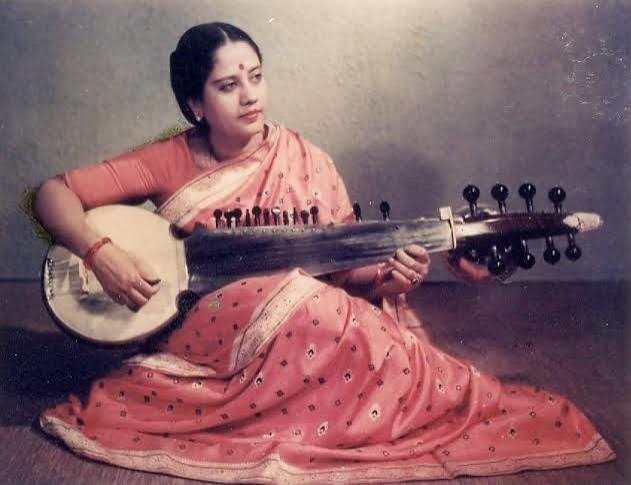
Vidushi Sharan Rani Backliwal—revered globally as the “Queen of Sarod” or “Sarod Rani”—was a legendary Indian classical instrumentalist, music scholar, and cultural icon. Breaking deep-rooted societal barriers, she became India’s first woman sarod maestro and the first woman instrumentalist to achieve international acclaim. A senior disciple of the legendary Ustad Allauddin Khan, she spent over seven decades on the global stage, serving as a true cultural ambassador for India and enriching the nation’s musical heritage through historic performances, rare instrument preservation, and profound academic research.
2. Quick Facts
- Full Name: Sharan Rani Backliwal (née Mathur)
- Native Name: शरन रानी बाकलीवाल
- Date of Birth: April 9, 1929
- Place of Birth: Old Delhi, Delhi, India
- Nationality: Indian
- Occupation/Profession: Classical Musician (Sarod), Music Scholar, Author, and Philanthropist
- Field of Achievement: Hindustani Classical Instrumental Music & Cultural Heritage Preservation
- Years Active: Late 1930s – 2008 (Spanning over 70 years)
3. Award Information (Padma Bhushan)
- Award Name: Padma Bhushan
- Award Category: Civil Honour (Third-highest civilian award in India)
- Award Year: 2000
- Presented By: President of India (Government of India)
- Date of Ceremony: Spring 2000 (Annual Investiture Ceremony)
- Citation/Official Reason: For distinguished service of a high order to the nation in the field of art, music, and cultural preservation.
- Previous Recipients: Eminent artists, scientists, and nation-builders recognized for lifetime distinction.
- Next Recipients: Succeeding batches of national civilian honorees.
4. Why They Received the Award
Sharan Rani received the Padma Bhushan (following her Padma Shri in 1968) in recognition of her monumental role as a pioneering pathbreaker for women in Indian classical music. She was honored for popularizing the sarod globally, upholding the rigorous purity of the Maihar-Senia gharana, and selflessly donating her priceless, centuries-old collection of historical musical instruments to the National Museum to preserve India’s cultural soul.
5. Early Life
Born into a wealthy, traditional, and conservative business-and-educationist family in the walled city of Old Delhi, Sharan Rani developed an intense spiritual inclination toward music from early childhood. Long before she could touch a professional stage, she faced immense familial and social opposition. In mid-20th-century India, public performance was heavily stigmatized for women from respectable backgrounds. Defying convention, she pursued her passion with fierce resolve, turning her home into a temple of rigorous riyaz (practice).
6. Education
- Schooling & College: Studied at the prestigious Indraprastha College for Women, Delhi.
- University Degrees: Earned her Bachelor of Arts (B.A. Hons) in 1951 and a Master’s degree in Hindi from Delhi University in 1953.
- Classical Dance Training: Formally trained in Kathak under Achhan Maharaj and Manipuri dance under Nabha Kumar Sinha before dedicating herself entirely to instrumental music.
- Musical Guidance: Trained under iconic Gurus, including Baba Allauddin Khan and his son Ali Akbar Khan of the Maihar-Senia gharana.
7. Career Journey
- Concert Breakthrough: Began performing professionally in the late 1930s, scaling the concert circuit across India despite gender barriers.
- Global Pioneer: Became the first Indian classical instrumentalist to tour extensively internationally, recording for UNESCO and major labels in the US, UK, and France.
- Media Pioneer: Became one of the earliest featured artists on All India Radio (AIR) and Doordarshan.
- Generosity in Teaching: Taught dozens of disciples strictly through the traditional Guru-Shishya parampara, housing many of them as resident students free of charge and never charging a fee.
8. Major Achievements
- First Woman Sarod Maestro: Smashed patriarchal glass ceilings to establish the sarod—traditionally dominated by male ustads—as an instrument masterable by women.
- Authoring The Divine Sarod: Authored the authoritative text The Divine Sarod: Its Origin, Antiquity and Development (released in 1992 by Vice President K.R. Narayanan).
- Museum Curator & Donor: Assembled a massive, priceless collection of 370 rare historical musical instruments spanning the 15th to 19th centuries, donating them to create a permanent national gallery.
9. Contribution to the Nation
Sharan Rani bridged the gap between traditional Indian classical art and global appreciation. Prime Minister Jawaharlal Nehru famously hailed her as the “Cultural Ambassador of India” for introducing foreign audiences to the depth of Hindustani music. Furthermore, her monumental donation of antique instruments led to the creation of the Sharan Rani Backliwal Gallery of Musical Instruments at the National Museum, New Delhi (inaugurated in 1980 by Prime Minister Indira Gandhi), safeguarding India’s organological heritage for posterity.
10. Other Awards and Honours
- Padma Shri (1968): Awarded by the Government of India.
- Sangeet Natak Akademi Award (1986): For excellence in Hindustani Instrumental Music (Sarod).
- Sahitya Kala Parishad Award (1974) & Tantri Vilas (1979).
- Rajiv Gandhi Award for Vocational Excellence (1993).
- Maharana Mewar Foundation Award (2004).
- Honorary Doctorates: Conferred by multiple universities in India and the United States.
11. Legacy and Influence
Sharan Rani’s legacy is two-fold: she proved that musical mastery transcends gender, and she single-handedly saved hundreds of historical instruments from being lost or forgotten. Her life opened doors for countless female instrumentalists who followed in her footsteps. Her academic writing and museum gallery remain foundational pillars for musicologists studying South Asian music history.
12. Interesting Facts
- The “Sarod Rani” Moniker: Her mastery and complete command over the heavy, complex wooden instrument earned her the permanent title of Sarod Rani (Queen of Sarod).
- Honoring the Dhrupad Tradition: Deeply concerned that the ancient Dhrupad style was fading, she uniquely structured many of her solo recitals to be accompanied by both the Tabla and the Pakhawaj.
- Historic Instrument Treasures: Her donated museum collection includes rare masterworks like an 1850 Mayuri Sitar from royal Rajasthan, a Tiger-Head Rabab from Kashmir, and ancient Vinas.
13. Quotes
“Sharan Rani has achieved perfection in music. She will therefore get the love of the entire world.”
— Dr. Zakir Husain (Former President of India)
“I hasten to add my voice to the many admiring and grateful ones which would try to express the love and respect we feel for this great artiste.”
— Yehudi Menuhin (Legendary Yehudi Menuhin)
14. Timeline
- April 9, 1929: Born in Old Delhi into a business-educationist family.
- Late 1930s–1940s: Commences rigorous training under Ustad Allauddin Khan; begins public performances.
- 1953: Completes her Master’s degree from Delhi University.
- 1960: Marries art expert and businessman Sultan Singh Backliwal.
- 1968: Conferred the Padma Shri by the Government of India.
- 1980: First major donation of rare instruments to the National Museum, inaugurated by PM Indira Gandhi.
- 1986: Receives the Sangeet Natak Akademi Award.
- 1992: Releases her seminal book, The Divine Sarod.
- 2000: Honored with the Padma Bhushan.
- April 8, 2008: Passes away peacefully in New Delhi, just one day shy of her 79th birthday.
15. References
- National Museum, New Delhi – Sharan Rani Backliwal Gallery of Musical Instruments archives.
- The Divine Sarod: Its Origin, Antiquity and Development by Sharan Rani Backliwal.
- Sangeet Natak Akademi & Ministry of Culture, Government of India records.
- Delhi University Alumni archives.
16. Related Personalities
- Ustad Allauddin Khan (Legendary founder of the Maihar gharana and her primary Guru)
- Ustad Ali Akbar Khan (Maestro sarod player and guru-bhai)
- Pandit Ravi Shankar (Contemporary pioneer of Indian classical music globally)
17. Frequently Asked Questions (FAQ)
- Q: Who was Sharan Rani Backliwal?
- A: She was India’s first woman sarod maestro, a celebrated classical instrumentalist, musicologist, and author, famously dubbed the “Queen of Sarod”.
- Q: What are her major contributions to Indian culture?
- A: Apart from breaking gender barriers on the concert stage, she authored authoritative books on the sarod and donated a rare collection of 370 historical musical instruments to the National Museum in New Delhi.
- Q: What civilian awards did she receive?
- A: She was honored with the Padma Shri in 1968 and the Padma Bhushan in 2000.
About the Author




