Introduction
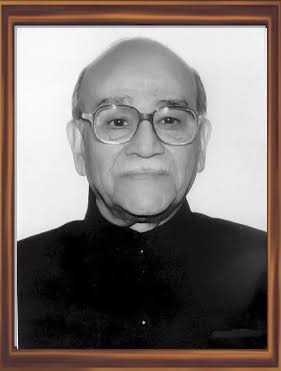
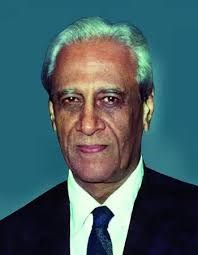
Satish Dhawan was one of India’s most distinguished aerospace engineers, scientists, and institution builders. He is widely regarded as the architect of India’s modern space programme. As the Chairman of the Indian Space Research Organisation (ISRO) from 1972 to 1984, he guided the organization through a transformative period, laying the foundation for India’s achievements in satellite technology and launch vehicle development. In recognition of his exceptional contributions to science, engineering, and national development, he was awarded the Padma Vibhushan in 1981.
Why Did He Receive the Padma Vibhushan Award?
Satish Dhawan received the Padma Vibhushan in 1981 for his outstanding contributions to:
- Aerospace engineering and scientific research.
- Leadership of India’s space programme.
- Development of indigenous satellite launch vehicles.
- Advancement of space technology for national development.
- Excellence in education and institution building.
His visionary leadership strengthened India’s capabilities in space science and technology and positioned ISRO among the world’s leading space agencies.
Career and Achievements
Satish Dhawan had an extraordinary career in science, engineering, and education.
Some of his major achievements include:
- Served as Chairman of the Indian Space Research Organisation (ISRO) from 1972 to 1984.
- Led the development of India’s Satellite Launch Vehicle (SLV-3) programme, which successfully placed the Rohini satellite into orbit in 1980.
- Strengthened India’s satellite communication, remote sensing, and space research programmes.
- Served as Director of the Indian Institute of Science for over two decades, making it one of India’s leading research institutions.
- Established advanced research facilities in fluid mechanics, aerodynamics, and aerospace engineering.
- Encouraged young scientists, including future President A. P. J. Abdul Kalam, to lead major national projects.
Early Life
Satish Dhawan was born in Srinagar, then part of British India. He displayed exceptional academic ability from a young age and developed a keen interest in mathematics, physics, and engineering. His passion for scientific research eventually led him to become one of India’s most respected aerospace engineers.
Birth Date and Death
- Born: 25 September 1920
- Birthplace: Srinagar
- Died: 3 January 2002
- Place of Death: Bengaluru
- Age at Death: 81 years
Education and Career
Education
Satish Dhawan had an exceptional academic background.
- Bachelor’s degree in Mathematics and Physics from the University of the Punjab.
- Bachelor’s degree in Mechanical Engineering.
- Master of Science in Aerospace Engineering from the University of Minnesota.
- Ph.D. in Aeronautics and Mathematics from the California Institute of Technology.
Career
- Professor of Aerospace Engineering at the Indian Institute of Science.
- Director of the Indian Institute of Science (1962–1981).
- Chairman of ISRO (1972–1984).
- Chairman of the Space Commission.
- Played a central role in India’s satellite launch and space research programmes.
Field of Achievement
Satish Dhawan made remarkable contributions in:
- Aerospace Engineering
- Space Science
- Aeronautics
- Fluid Mechanics
- Scientific Research
- Higher Education
- Space Technology
- Institution Building
Awards and Honours
Satish Dhawan received numerous prestigious honours, including:
- Padma Bhushan (1971)
- Padma Vibhushan (1981)
- Indira Gandhi Award for National Integration
- Fellow of several leading scientific academies in India and abroad.
- Multiple honorary doctorates from Indian and international universities.
Interesting Facts
- He accepted the position of ISRO Chairman only after ensuring he could continue serving as Director of the Indian Institute of Science until a suitable successor was appointed.
- After the unsuccessful SLV-3 launch in 1979, he took public responsibility for the failure. When the mission succeeded in 1980, he gave full credit to his team—a leadership style that became widely admired.
- He played a key role in mentoring A. P. J. Abdul Kalam, who later became the President of India.
- The Satish Dhawan Space Centre, India’s primary spaceport, is named in his honour.
- He was internationally respected for his research in boundary-layer theory and turbulence.
Legacy and Inspiration
Satish Dhawan’s leadership transformed ISRO into a world-class space organization. His emphasis on scientific excellence, teamwork, and self-reliance laid the foundation for India’s later achievements, including lunar missions, Mars exploration, and advanced satellite programmes.
His humility, integrity, and commitment to nurturing young scientists continue to inspire engineers, researchers, and students across India.
Contribution to the Nation
Satish Dhawan made lasting contributions to India by:
- Building a strong and self-reliant space programme.
- Advancing indigenous satellite launch technology.
- Strengthening satellite communication and remote sensing.
- Developing world-class scientific and research institutions.
- Mentoring generations of scientists and engineers.
- Promoting the peaceful use of space technology for national development, including agriculture, weather forecasting, communication, and disaster management.
His vision significantly enhanced India’s scientific capabilities and global reputation in space technology.
Conclusion
Satish Dhawan was an extraordinary scientist, educator, and visionary leader whose contributions transformed India’s space programme and scientific research landscape. As Chairman of ISRO, he guided the organization through a crucial phase of growth, enabling India to become a major spacefaring nation. His pioneering work in aerospace engineering, institution building, and scientific leadership earned him the Padma Vibhushan in 1981. Today, his legacy continues to inspire scientists and innovators, and his contributions remain central to India’s success in space exploration and technology.
About the Author