

1. Introduction
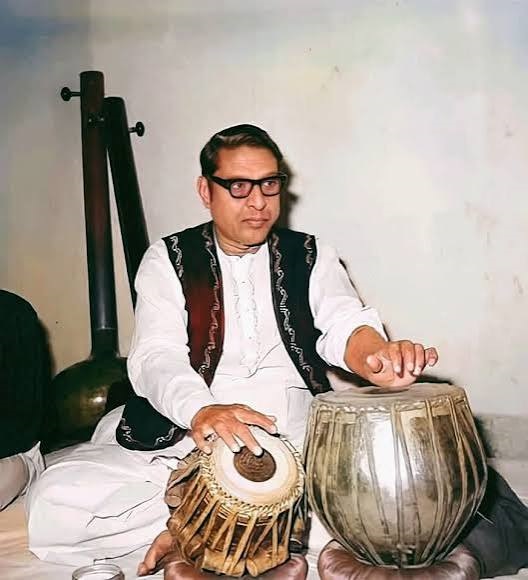
Pandit Samta Prasad, affectionately known as Gudai Maharaj, was one of India’s most celebrated tabla maestros of the Benares gharana. Renowned for his thunderous yet deeply melodic playing style, speed, and incredible command over rhythm, he left an indelible mark on Indian classical music and cinema.
2. Quick facts
- Full Name: Samta Prasad
- Native Name: समता प्रसाद
- Date of birth: 20 July 1921
- Place Of birth: Kabir Chaura, Varanasi, Uttar Pradesh, India
- Nationality: Indian
- Occupation/ Profession: Tabla Maestro, Classical Musician
- Field of Achievement: Hindustani Classical Music (Tabla Performance)
- Years Active: 1930s–1994
3. Award Information
- Award Name: Padma Shri
- Award Category: India’s Fourth-Highest Civilian Award
- Award Year: 1972
- Presented By: President of India
- Date of Ceremony: Spring 1972
- Citation/Official Reason: For distinguished service and contribution in the field of Indian classical music and arts.
- Previous Recipients (optional): Eminent classical musicians and artists.
- Next Recipients: Subsequent stalwarts in music and culture.
4. Why they Receive the award?
He received the Padma Shri and subsequent honours for his unmatched mastery of the tabla and his tireless efforts to propagate the unique repertoire of the Benares gharana on national and international stages. His rhythmic virtuosity and ability to accompany vocalists, instrumentalists, and Kathak dancers with equal brilliance made him a towering cultural icon.
5. Early Life
Born into a family of hereditary musicians in the Kabir Chaura locality of Varanasi, Samta Prasad was immersed in rhythm from infancy. His father, Pandit Hari Sahai, was a legendary tabla player himself. Following his father’s early demise, young Samta was raised and rigorously trained by his uncle, Pandit Bachcha Ji, enduring immense hardship before emerging as a prodigy.
6. Education
His education was anchored entirely in the traditional guru-shishya parampara of the Benares gharana. Hours of relentless daily riyaz on the tabla constituted his true schooling, training his ear to grasp complex laya patterns, bols, and traditional compositions passed down through generations.
7. Carrier Journey
- 1942: Performed at a major music conference in Allahabad, stunning veteran musicians with his lightning-fast execution.
- 1950s onward: Became a regular featured artist at major music festivals across India and began collaborating with top-tier instrumentalists and vocalists.
- 1956: Provided memorable tabla accompaniment for the classical dance sequences in V. Shantaram’s classic film Jhelum Se Jhelum and later Basant Bahar.
- Late career: Toured globally, representing Indian classical percussion on prominent international stages.
8. Major Achievements
- Mastered the heavy, resonant, and complex phat padant and open-hand techniques characteristic of the Benares gharana.
- Played the tabla for iconic songs and background scores in several classic Hindi films, most notably Satyajit Ray’s Goopy Gyne Bagha Byne, where his dynamic tabla solo formed the soundscape for the famous ghost dance sequence.
- Conferred with the prestigious Sangeet Natak Akademi Award in 1979.
9. Contribution to the nation
Pandit Samta Prasad elevated the status of rhythm and percussion in Indian classical music, demonstrating that the tabla could express profound emotional depth alongside mathematical precision. Through his concerts, recordings, and teaching, he preserved and popularized the rich heritage of the Benares rhythm tradition.
10. Other Awards and Honours
- Padma Shri: 1972
- Sangeet Natak Akademi Award: 1979
- Doctorate (Honoris Causa): From various Indian universities for lifetime musical excellence
11. Legacy and influence
Gudai Maharaj remains an eternal legend among percussionists. His distinct style—characterized by crystal-clear stroke articulation and vibrant stage presence—inspired generations of tabla players. His disciples continue to uphold the rigorous standards of the Benares style globally.
12. Interesting Facts
- He earned the moniker “Gudai Maharaj” during a childhood performance where he played with such astonishing speed and stamina that elders playfully remarked he was teasing or playing with time.
- In Satyajit Ray’s classic film Goopy Gyne Bagha Byne, the famous duel of the ghosts features fast-paced tabla playing entirely performed and improvised by Samta Prasad.
- He could seamlessly accompany any genre of Indian music—from heavy dhrupad and khyal vocal styles to light folk music and intricate Kathak dance.
13. Quotes
“For a tabla player, the drum is not just an instrument of accompaniment; it speaks the language of the human heart.” — Pandit Samta Prasad
14. Timeline
- 1921: Born on 20 July in Varanasi, Uttar Pradesh
- 1942: Breakthrough performance at Allahabad music conference
- 1969: Performed legendary tabla tracks for Satyajit Ray’s Goopy Gyne Bagha Byne
- 1972: Conferred with the Padma Shri
- 1979: Awarded the Sangeet Natak Akademi Award
- 1994: Passed away on 30 May in Pune, Maharashtra
15. References
- Wikipedia: Samta Prasad biographical records
- Sangeet Natak Akademi archival profiles
- Documentaries on the Benares gharana of tabla
16. Related Personalities
- Pandit Ravi Shankar (Sitar maestro and frequent collaborator)
- Ustad Alla Rakha (Renowned contemporary tabla maestro)
- Pandit Kishan Maharaj (Fellow legendary Benares gharana tabla exponent)
17. Frequently Asked Questions (FAQ)
- Q: Who was Samta Prasad?A: He was a legendary Indian tabla maestro belonging to the Benares gharana, widely known by his popular nickname Gudai Maharaj.
- Q: What is he most famous for?A: He is famous for his virtuosic tabla accompaniment in classical concerts and his iconic tabla performance in Satyajit Ray’s film Goopy Gyne Bagha Byne.
- Q: Which major civilian award did he receive?A: He was awarded the Padma Shri in 1972 for his contributions to Indian classical music.
About the Author




