

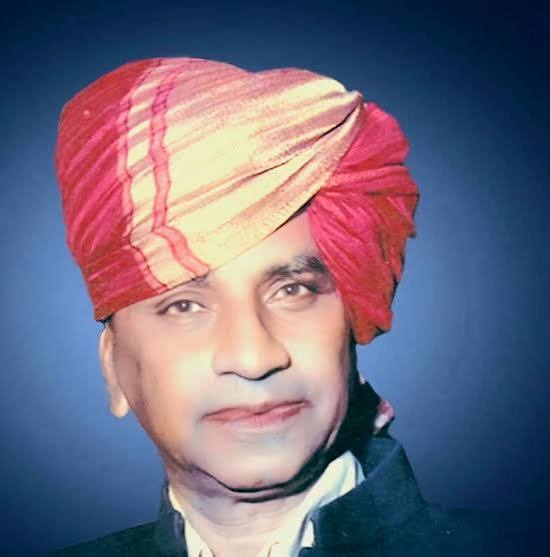
1. Introduction
Pandit Basavaraj Rajguru was a legendary Indian classical vocalist belonging to the Kirana and Gwalior gharanas. Renowned for his powerful, soaring voice, expansive range, and deep emotional expression, he was a master of both khyal and vachana gayana, holding a revered position in Hindustani classical music.
2. Quick facts
- Full Name: Basavaraj Rajguru
- Native Name: ಬಸವರಾಜ ರಾಜಗುರು
- Date of birth: 24 August 1917
- Place Of birth: Yallapur village, Dharwad district, Karnataka, India
- Nationality: Indian
- Occupation/ Profession: Classical Vocalist, Teacher
- Field of Achievement: Hindustani Classical Music
- Years Active: 1930s–1991
3. Award Information
- Award Name: Padma Bhushan
- Award Category: India’s Third-Highest Civilian Award
- Award Year: 1991
- Presented By: President of India
- Date of Ceremony: Spring 1991
- Citation/Official Reason: For distinguished service and contribution in the field of classical music and arts.
- Previous Recipients (optional): Eminent classical musicians and artists.
- Next Recipients: Subsequent stalwarts in music and culture.
4. Why they Receive the award?
He received the Padma Bhushan and earlier prestigious state honours for his lifetime devotion to Hindustani classical music and his unique style that blended the introspective depth of the Kirana gharana with the robust melodic richness of the Gwalior school. His mastery over intricate ragas and devotional compositions made him a cultural pillar of Karnataka and India.
5. Early Life
Born in Yallapur near Dharwad in Karnataka, Basavaraj displayed an early fascination with music. He received his foundational training under his father, Veeranagouda, and later underwent rigorous traditional tutelage under master vocalists, most notably Pandit Sawai Gandharva, the legendary guru of the Kirana gharana.
6. Education
His education followed the demanding guru-shishya parampara. Spending years living with his master in disciplined seclusion, he perfected svara control, laya precision, and raga grammar through exhaustive daily practice.
7. Carrier Journey
- 1930s onward: Began performing at major concerts and radio stations across India, quickly gaining acclaim for his rich voice and technical brilliance.
- 1950s–1980s: Performed extensively at premier music festivals nationwide, including the prestigious Tansen Samaroh and Sawai Gandharva Music Festival.
- Later years: Served as a mentor and guru, teaching and inspiring numerous younger classical vocalists who went on to preserve his distinctive gayaki.
8. Major Achievements
- Seamlessly synthesized the contemplative aesthetics of the Kirana gharana with the expansive taan patterns of the Gwalior tradition.
- Popularized classical-infused devotional and vachana singing in Karnataka, bridging elite classical music with regional spiritual traditions.
- Conferred with the Sangeet Natak Akademi Award in 1975 and the Padma Shri in 1975.
9. Contribution to the nation
Pandit Basavaraj Rajguru enriched India’s cultural landscape by keeping the pristine standards of Hindustani vocal music alive in South India. Through his powerful renditions and educational commitment, he transformed Dharwad into one of India’s leading hubs for classical music heritage.
10. Other Awards and Honours
- Padma Shri: 1975
- Sangeet Natak Akademi Award: 1975
- Padma Bhushan: 1991
- Karnataka Sangeeta Nritya Academy Award: 1970
- Kalidas Samman: 1989
11. Legacy and influence
Remembered as a titan of Indian classical singing, his powerful vocal resonance and emotional depth continue to be studied by students of the Kirana and Gwalior traditions. The Pandit Basavaraj Rajguru National Memorial Trust in Dharwad keeps his musical memory alive through annual festivals and awards.
12. Interesting Facts
- Despite being trained deeply in orthodox Hindustani khyal, he had an equal command over light classical genres like thumri, natya sangeet, and Kannada vachanas.
- His voice possessed an extraordinary natural resonance and volume, capable of carrying effortlessly across large concert halls without amplification.
- He shared a close artistic brotherhood with fellow Dharwad music legends like Pandit Bhimsen Joshi.
13. Quotes
“Music is not merely a performance for applause; it is an inner prayer that reaches the soul of the listener.” — Pandit Basavaraj Rajguru
14. Timeline
- 1917: Born on 24 August in Yallapur, Karnataka
- 1975: Awarded the Padma Shri and Sangeet Natak Akademi Award
- 1989: Conferred with the prestigious Kalidas Samman
- 1991: Honored with the Padma Bhushan
- 1991: Passed away on 21 July at Dharwad, Karnataka
15. References
- Wikipedia: Basavaraj Rajguru biographical records
- Sangeet Natak Akademi archival archives
- Cultural publications by the Government of Karnataka
16. Related Personalities
- Pandit Sawai Gandharva (Guru and Kirana gharana master)
- Pandit Bhimsen Joshi (Eminent peer and fellow vocalist from Dharwad)
- Gangubai Hangal (Renowned contemporary classical vocalist from Karnataka)
17. Frequently Asked Questions (FAQ)
- Q: Who was Pandit Basavaraj Rajguru?A: He was a celebrated Indian classical vocalist representing the Kirana and Gwalior gharanas of Hindustani music.
- Q: What is his musical style known for?A: His style is known for its powerful voice projection, emotional intensity, and a unique synthesis of Kirana and Gwalior idioms.
- Q: Which major civilian awards did he receive?A: He received the Padma Shri in 1975 and the Padma Bhushan in 1991.
About the Author




