1. Introduction
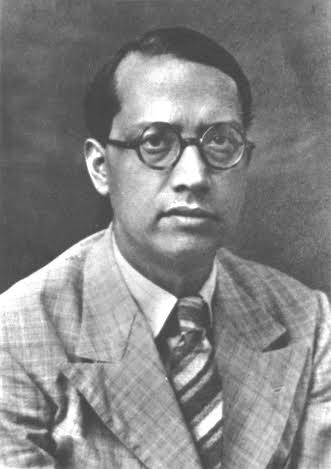
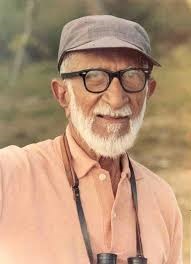
Salim Ali (12 November 1896 – 20 June 1987), popularly known as the “Birdman of India,” was one of India’s greatest ornithologists and naturalists. He played a pioneering role in developing the scientific study of birds in India and was among the first Indians to conduct systematic bird surveys across the country.
Through his extensive field research, books, and conservation efforts, Salim Ali created awareness about India’s rich bird diversity and influenced generations of wildlife researchers. His famous book “The Book of Indian Birds” introduced bird study to millions of Indians.
For his exceptional contribution to ornithology, wildlife conservation, and environmental awareness, he received several honours, including the Padma Bhushan (1958) and Padma Vibhushan (1976).
2. Quick Facts
| Item | Details |
|---|---|
| Full Name | Sálim Moizuddin Abdul Ali |
| Native Name | सलीम मोईज़ुद्दीन अब्दुल अली |
| Popular Name | The Birdman of India |
| Date of Birth | 12 November 1896 |
| Place of Birth | Bombay (present-day Mumbai), Maharashtra, India |
| Date of Death | 20 June 1987 |
| Nationality | Indian |
| Occupation / Profession | Ornithologist, Naturalist, Wildlife Conservationist, Author |
| Field of Achievement | Ornithology, Ecology, Wildlife Conservation |
| Years Active | 1920s–1987 |
| Known For | Bird surveys and conservation of Indian wildlife |
3. Award Information
Padma Vibhushan Award
| Item | Details |
|---|---|
| Award Name | Padma Vibhushan |
| Award Category | Science & Engineering |
| Award Year | 1976 |
| Presented By | President of India |
| Date of Ceremony | 1976 |
| Citation / Official Reason | Exceptional contribution to zoology, ornithology, and wildlife conservation |
| Previous Recipients | Various distinguished Indian personalities |
| Next Recipients | The award continued to be given annually |
Earlier Major Honour
| Item | Details |
|---|---|
| Award Name | Padma Bhushan |
| Award Year | 1958 |
| Category | Science & Engineering |
4. Why Did Salim Ali Receive the Award?
Salim Ali received India’s highest civilian recognition for his lifelong contribution to bird science and conservation.
He was honoured for:
- Conducting pioneering bird surveys across India.
- Establishing ornithology as a scientific field in India.
- Writing important books on Indian birds.
- Promoting wildlife conservation.
- Creating awareness about protecting natural habitats.
His research became the foundation for modern bird studies in India.
5. Early Life
Salim Moizuddin Abdul Ali was born on 12 November 1896 in Bombay.
He lost his parents at a young age and was raised by relatives. His interest in birds began when he was a child after observing a bird closely. This early curiosity developed into a lifelong passion for ornithology.
A turning point came when he identified a bird and sought guidance from experts, which encouraged him to pursue scientific bird study.
6. Education
Salim Ali studied at:
- University of Bombay
He later travelled to Germany, where he studied ornithology under:
Erwin Stresemann
His training helped him introduce modern scientific methods of bird research in India.
7. Career Journey
Early Career
- Worked at the Bombay Natural History Society (BNHS).
- Developed expertise in bird identification and classification.
Bird Surveys
Salim Ali conducted extensive bird surveys in:
- Himalayas.
- Western Ghats.
- Kerala.
- Assam.
- Hyderabad.
- Other regions of India.
These surveys created valuable scientific records of Indian birds.
Author and Researcher
His famous publications include:
The Book of Indian Birds (1941)
- Became one of India’s most popular bird guides.
- Introduced ordinary people to bird watching.
Handbook of the Birds of India and Pakistan
- A major multi-volume reference work.
- Co-authored with S. Dillon Ripley.
Conservation Work
He played an important role in protecting:
- Bird habitats.
- Wildlife sanctuaries.
- Endangered species.
8. Major Achievements
Major achievements of Salim Ali include:
- Became India’s leading ornithologist.
- Known worldwide as the Birdman of India.
- Conducted the first systematic bird surveys in many Indian regions.
- Authored important books on birds.
- Helped establish bird conservation programmes.
- Played a role in protecting wildlife habitats.
- Received the Padma Bhushan and Padma Vibhushan.
9. Contribution to the Nation
Wildlife Conservation
Salim Ali contributed greatly to India’s environmental movement by:
- Promoting protection of forests and wetlands.
- Supporting wildlife sanctuaries.
- Highlighting the importance of biodiversity.
Scientific Research
- Created detailed records of India’s bird species.
- Encouraged scientific wildlife studies.
Public Awareness
- Made bird watching popular among Indians.
- Inspired young people to study nature.
His work helped shape India’s modern conservation policies.
10. Other Awards and Honours
Major honours received by Salim Ali:
- Padma Bhushan (1958)
- Padma Vibhushan (1976)
- Sahitya Akademi Award (1978) for his autobiography The Fall of a Sparrow
- J. Paul Getty Wildlife Conservation Prize (1975)
- Several honorary doctorates from Indian universities
11. Legacy and Influence
Salim Ali’s legacy continues through:
- Bird research institutions.
- Wildlife conservation programmes.
- Birdwatching communities across India.
- Environmental education.
The Salim Ali Centre for Ornithology and Natural History was established in his honour.
Many Indian conservationists and scientists were inspired by his work.
12. Interesting Facts
- He is called the “Birdman of India.”
- He studied thousands of bird specimens during his career.
- He travelled extensively through difficult terrains for research.
- His autobiography was titled “The Fall of a Sparrow.”
- A species of bird, the Salim Ali’s Fruit Bat, was named in his honour.
- He helped make birdwatching a popular hobby in India.
13. Quotes
“A bird is a symbol of freedom and beauty, and its study opens a window into nature.”
(A statement reflecting his conservation philosophy; not a verified direct quotation.)
Another famous thought associated with his work:
“The future of wildlife depends on our understanding and respect for nature.”
14. Timeline
| Year | Event |
|---|---|
| 1896 | Born on 12 November in Bombay |
| 1910s | Developed interest in birds |
| 1920s | Began professional ornithological work |
| 1930s–1940s | Conducted major bird surveys |
| 1941 | Published The Book of Indian Birds |
| 1958 | Received Padma Bhushan |
| 1976 | Received Padma Vibhushan |
| 1978 | Received Sahitya Akademi Award |
| 1987 | Passed away on 20 June |
15. References
- Government of India Padma Awards archives.
- Bombay Natural History Society publications.
- Salim Ali’s books on Indian birds.
- Wildlife conservation records of India.
- Academic writings on Indian ornithology.
16. Related Personalities
- S. Dillon Ripley
- Madhav Gadgil
- E. P. Gee
- Valmik Thapar
- M. Krishnan
17. Frequently Asked Questions (FAQ)
Q1. Who was Salim Ali?
Salim Ali was a famous Indian ornithologist and wildlife conservationist known as the Birdman of India.
Q2. When was Salim Ali born?
He was born on 12 November 1896 in Bombay.
Q3. Which awards did Salim Ali receive?
He received the Padma Bhushan (1958) and Padma Vibhushan (1976).
Q4. Why is Salim Ali famous?
He is famous for his pioneering research on Indian birds and wildlife conservation efforts.
Q5. Which book made Salim Ali famous?
His book “The Book of Indian Birds” became one of India’s most popular bird guides.
Q6. What was Salim Ali’s profession?
He was an ornithologist, naturalist, author, and conservationist.
Q7. What was Salim Ali’s contribution to India?
He documented India’s bird species, promoted conservation, and encouraged scientific study of wildlife.
Q8. When did Salim Ali die?
He died on 20 June 1987.
About the Author