
1. Introduction
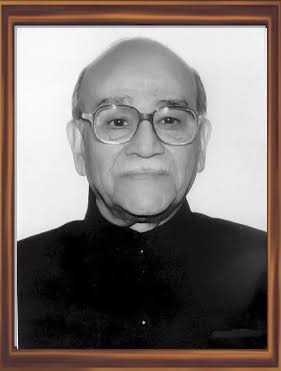
Shantanurao Laxmanrao Kirloskar, popularly known as S. L. Kirloskar or Shantanurao Kirloskar, was one of India’s pioneering industrialists of the 20th century. Born on 28 May 1903, he was the eldest son of industrialist Laxmanrao Kirloskar, founder of the Kirloskar Group.
Trained as a mechanical engineer at the Massachusetts Institute of Technology (MIT) in the United States, Shantanurao returned to India in 1926 and devoted his career to expanding his family’s engineering enterprise. Under his leadership, the Kirloskar business grew from a relatively small manufacturing operation into a diversified engineering group.
He was particularly associated with the development of diesel engines, pumps, electrical equipment and machine tools in India. His industrial philosophy emphasised technological capability, self-reliance and the belief that Indian companies could compete internationally.
The Government of India honoured him with the Padma Bhushan in 1965 for Trade and Industry.
2. Quick Facts
| Particular | Information |
|---|---|
| Full Name | Shantanurao Laxmanrao Kirloskar |
| Common Name | S. L. Kirloskar / Shantanurao Kirloskar |
| Born | 28 May 1903 |
| Birthplace | Solapur, Bombay Presidency, British India |
| Died | 24 April 1994 |
| Place of Death | Pune, Maharashtra |
| Nationality | Indian |
| Profession | Industrialist, entrepreneur and business leader |
| Field of Achievement | Trade and Industry |
| Education | Massachusetts Institute of Technology |
| Degree | B.S. in Mechanical Engineering |
| Father | Laxmanrao Kirloskar |
| Major Organisation | Kirloskar Group |
| Major Award | Padma Bhushan |
| Award Year | 1965 |
| Award Field | Trade and Industry |
| Autobiography | Cactus and Roses |
| Active Period | Mainly 1926–1994 |
The Indian Institute of Management Ahmedabad archives describe him as a leading Indian business leader who played a pivotal role in the rise of the Kirloskar Group.
3. Award Information
Padma Bhushan
| Award Detail | Information |
|---|---|
| Award Name | Padma Bhushan |
| Award Category | Trade and Industry |
| Award Year | 1965 |
| Official Name in Database | Shri Shantanu Lakshman Kirloskar |
| State/Place Recorded | Maharashtra |
| Presented By | President of India |
| Reason/Field | Contribution to Trade and Industry |
| Individual Citation | A detailed individual citation is not provided in the current online Padma database |
| Previous Recipients | Padma Bhushan recipients from earlier years |
| Next Recipients | Padma Bhushan recipients in subsequent years |
The official Government of India Padma Awards database specifically records Shantanu Lakshman Kirloskar – Padma Bhushan – 1965 – Trade and Industry – Maharashtra.
Why was he awarded the Padma Bhushan?
The award recognised his contribution to Indian trade and industry, particularly his role in developing engineering manufacturing and expanding the Kirloskar Group.
Kirloskar’s own organisation describes him as an industrial visionary whose contribution helped build a strong industrial base in India.
Blog tip: Use “Trade and Industry” as the official award category rather than “Business” or “Industrial Development.”
4. Why Did S. L. Kirloskar Receive the Award?
S. L. Kirloskar received the Padma Bhushan in 1965 for Trade and Industry.
His recognition followed decades of work in Indian engineering and manufacturing. Some of his major contributions included:
- Expanding the Kirloskar engineering business.
- Promoting indigenous manufacturing.
- Establishing Kirloskar Oil Engines Limited.
- Establishing Kirloskar Electric Company.
- Developing India’s diesel-engine manufacturing capabilities.
- Promoting machine-tool manufacturing.
- Expanding Indian engineering products into international markets.
- Encouraging technological education and industry-academia interaction.
The official Padma database establishes the award category; the broader details of his industrial contribution are documented by the Kirloskar Group and IIMA archives.
5. Early Life
Shantanurao Laxmanrao Kirloskar was born on 28 May 1903 in Solapur, then part of the Bombay Presidency.
He was the eldest son of Laxmanrao Kirloskar, who had founded the Kirloskar industrial enterprise and established Kirloskarwadi. His father’s work in agricultural implements and engineering provided Shantanurao with an early exposure to manufacturing and entrepreneurship.
He grew up in Kirloskarwadi, the industrial township established by his father, and later attended the New English School in Pune.
From an early age, he developed a strong interest in machinery and engineering. His eventual decision to study mechanical engineering abroad reflected his ambition to acquire modern technical knowledge and bring it back to India.
6. Education
Education played an important role in Shantanurao Kirloskar’s career.
After his schooling in India, he travelled to the United States and joined the Massachusetts Institute of Technology (MIT).
He studied Mechanical Engineering and earned a Bachelor of Science degree in 1926. He was among the early Indians to graduate from MIT.
While in the United States, he also gained practical industrial experience. His autobiography describes working on the production floor of Pratt & Whitney and observing American manufacturing practices.
This combination of academic engineering education and practical factory experience strongly influenced his later approach to industrial management.
7. Career Journey
Early exposure to the family business
After completing his education, Shantanurao returned to India in 1926.
He joined the family business and began applying the technical and management knowledge he had gained in the United States.
His objective was not simply to manufacture existing products but to expand the company’s technological capabilities.
Expansion into machine tools
In 1940, he founded Mysore Kirloskar Ltd., which manufactured machine tools. This was part of the broader effort to develop India’s domestic engineering capabilities.
Post-World War II industrial expansion
The years after the Second World War were particularly important for the Kirloskar Group.
In 1946, Shantanurao established:
- Kirloskar Oil Engines Limited in Pune
- Kirloskar Electric Company in Bangalore
These enterprises helped diversify the Kirloskar business beyond agricultural machinery into engines and electrical engineering.
Indigenous diesel-engine manufacturing
One of his important industrial contributions was the development of indigenous diesel-engine manufacturing.
At a time when India depended heavily on imported industrial equipment, domestic production of engines and machinery supported the country’s broader effort toward economic self-reliance.
International outlook
Shantanurao was also strongly interested in international trade.
He believed Indian manufacturers needed to produce goods capable of competing with products from developed industrial economies. Under his leadership, the Kirloskar Group expanded its international presence.
Leadership of IIMA
Shantanurao Kirloskar also contributed to the development of management education in India.
The archives of the Indian Institute of Management Ahmedabad record him as Chairman of the institution from 24 July 1969 to 23 July 1974.
Mahratta Chamber of Commerce
He was also an important figure in the business community of Pune and Maharashtra. The Mahratta Chamber of Commerce, Industries and Agriculture records him as its president from 1958 to 1969.
8. Major Achievements
1. Expansion of the Kirloskar Group
Shantanurao transformed the family enterprise into a diversified engineering group with operations across several industrial sectors.
2. Development of diesel engines
He played an important role in developing India’s indigenous diesel-engine manufacturing capabilities.
3. Establishment of major engineering companies
His industrial initiatives included the establishment of Kirloskar Oil Engines Limited and Kirloskar Electric Company in 1946.
4. Promotion of machine-tool manufacturing
Through Mysore Kirloskar Ltd., he contributed to India’s machine-tool industry.
5. Promotion of Indian manufacturing
He strongly believed that Indian manufacturers should develop the technical capability to produce high-quality industrial products domestically.
6. Padma Bhushan
The Government of India awarded him the Padma Bhushan in 1965 for Trade and Industry.
7. Contribution to management education
His service as Chairman of the Indian Institute of Management Ahmedabad from 1969 to 1974 was another important contribution to India’s business and management ecosystem.
9. Contribution to the Nation
S. L. Kirloskar’s contribution to India extended beyond the creation of a successful business.
His generation of industrialists helped build the manufacturing infrastructure of post-independence India.
At a time when India was attempting to reduce dependence on imported machinery, Kirloskar companies manufactured products such as engines, pumps, electrical equipment and machine tools domestically.
His approach combined:
- Engineering education
- Indigenous manufacturing
- Industrial management
- Export orientation
- Technological innovation
- Skill development
- Private-sector entrepreneurship
His career therefore forms part of the story of India’s transition from a largely colonial economy to a more diversified industrial economy.
10. Other Awards and Honours
Padma Bhushan – 1965
The most important national honour received by S. L. Kirloskar was the Padma Bhushan, awarded in 1965 in the field of Trade and Industry.
Rashtrabhushan Award
The Kirloskar School’s biography also records the Rashtrabhushan Award of the FIE Foundation, Ichalkaranji, among his honours.
Commemorative postage stamp
On 26 February 2003, Prime Minister Atal Bihari Vajpayee released a commemorative postage stamp marking the centenary of Shantanurao Kirloskar’s birth.
11. Legacy and Influence
S. L. Kirloskar’s greatest legacy is the industrial organisation that grew under his leadership.
He demonstrated that Indian companies could develop sophisticated engineering capabilities and compete beyond India’s domestic market.
His influence can be seen in several areas:
Indian engineering
Kirloskar companies became associated with engines, pumps, electrical equipment and other industrial products.
Manufacturing culture
He promoted professional management, technical education and modern manufacturing methods.
Economic self-reliance
His emphasis on domestic production aligned with India’s post-independence objective of building indigenous industrial capacity.
Globalisation
At a time when many Indian businesses were focused primarily on domestic markets, Kirloskar promoted an international outlook.
Management education
His association with IIM Ahmedabad connected industrial experience with India’s emerging management-education system.
12. Interesting Facts
- S. L. Kirloskar was born in 1903 in Solapur.
- He was the son of Laxmanrao Kirloskar, founder of the Kirloskar Group.
- He was among the early Indians to graduate from MIT.
- He earned a B.S. in Mechanical Engineering in 1926.
- While studying in the United States, he obtained practical factory experience at Pratt & Whitney.
- He founded Mysore Kirloskar Ltd. in 1940.
- He established Kirloskar Oil Engines Limited and Kirloskar Electric Company in 1946.
- He received the Padma Bhushan in 1965.
- His official Padma category was Trade and Industry.
- He served as Chairman of IIM Ahmedabad from 1969 to 1974.
- He served as president of the Mahratta Chamber of Commerce, Industries and Agriculture from 1958 to 1969.
- He wrote an autobiography titled Cactus and Roses. The book describes his life, industrial experiences and the development of the Kirloskar enterprise.
- A commemorative postage stamp honouring him was released in 2003, on the centenary of his birth.
13. Quotes
S. L. Kirloskar’s own writings and the Kirloskar organisation preserve several statements associated with his industrial philosophy.
One particularly useful quotation for your blog is:
“I never wanted to be an industrialist. Our goal was to start a movement to make our country a strong, industrial nation.”
This quotation is published by Kirloskar’s official legacy website and reflects his view that industrial activity should contribute to India’s national development.
Another statement associated with his philosophy is:
“Economic preparedness is as vital as military preparedness.”
This reflects his belief that economic and industrial strength were essential components of national strength.
For publication, I recommend identifying these as quotes attributed to Shantanurao Kirloskar, rather than presenting unsourced sayings from secondary websites.
14. Timeline
| Year | Event |
|---|---|
| 1903 | Born on 28 May in Solapur |
| Early 1900s | Grew up in the Kirloskar industrial community |
| 1920s | Studied mechanical engineering in the United States |
| 1926 | Graduated from MIT with a B.S. in Mechanical Engineering |
| 1926 | Returned to India and joined the family enterprise |
| 1940 | Founded Mysore Kirloskar Ltd. |
| 1946 | Established Kirloskar Oil Engines Limited |
| 1946 | Established Kirloskar Electric Company |
| Post-1947 | Expanded Kirloskar’s industrial activities in independent India |
| 1958–1969 | President of Mahratta Chamber of Commerce, Industries and Agriculture |
| 1965 | Received Padma Bhushan for Trade and Industry |
| 1969–1974 | Chairman of IIM Ahmedabad |
| 1982 | Cactus and Roses autobiography published |
| 1994 | Died on 24 April in Pune |
| 2003 | Commemorative postage stamp issued on his birth centenary |
The IIMA archives independently confirm his 1969–1974 chairmanship, while the Padma database confirms the 1965 award.
15. References
1. Government of India – Padma Awards Database
The official Padma database confirms his Padma Bhushan (1965) and the category Trade and Industry.
Government of India – Padma Awards Database
2. Indian Institute of Management Ahmedabad Archives
IIMA’s archive provides information about his career and records him as Chairman from 1969 to 1974.
IIM Ahmedabad Archives – S. L. Kirloskar
3. Kirloskar Brothers Limited
The official Kirloskar Brothers website provides information about Cactus and Roses, his autobiography, and his role in developing the Kirloskar Group.
Kirloskar Brothers – Books and Cactus and Roses
4. Kirloskar Legacy
The Kirloskar legacy website contains information about Shantanurao’s industrial philosophy and contributions.
Kirloskar Legacy – Shantanurao Kirloskar
16. Related Personalities
For internal links on your blog, you can connect S. L. Kirloskar with:
- Laxmanrao Kirloskar – founder of the Kirloskar Group and S. L. Kirloskar’s father.
- Jamsetji Tata – pioneering Indian industrialist and founder of the Tata industrial enterprise.
- Walchand Hirachand – Indian industrialist and pioneer of indigenous manufacturing.
- Mokshagundam Visvesvaraya – engineer and industrial-development advocate.
- J. R. D. Tata – industrialist who played a major role in the development of Indian business and aviation.
- Ghanshyam Das Birla – pioneering Indian industrialist.
- Vikram Sarabhai – industrialist and scientist associated with India’s technological development.
- Dhirubhai Ambani – later-generation Indian entrepreneur who transformed India’s private-sector business landscape.
17. Frequently Asked Questions (FAQ)
Who was S. L. Kirloskar?
S. L. Kirloskar, or Shantanurao Laxmanrao Kirloskar, was a prominent Indian industrialist who played a major role in expanding the Kirloskar Group and India’s engineering industry.
When was S. L. Kirloskar born?
He was born on 28 May 1903 in Solapur, then part of the Bombay Presidency.
When did S. L. Kirloskar die?
He died on 24 April 1994 in Pune, Maharashtra.
Which award did S. L. Kirloskar receive?
He received the Padma Bhushan in 1965.
Why did S. L. Kirloskar receive the Padma Bhushan?
The official Padma Awards database lists his field as Trade and Industry, recognising his contribution to Indian industrial development.
Where did S. L. Kirloskar study?
He studied Mechanical Engineering at the Massachusetts Institute of Technology (MIT) in the United States.
When did S. L. Kirloskar graduate from MIT?
He earned his B.S. in Mechanical Engineering in 1926.
What companies did S. L. Kirloskar establish?
Among his major initiatives were Mysore Kirloskar Ltd., Kirloskar Oil Engines Limited and Kirloskar Electric Company.
What was S. L. Kirloskar’s contribution to Indian industry?
He helped develop indigenous manufacturing of engines and engineering equipment and transformed the Kirloskar enterprise into a major diversified engineering group.
Did S. L. Kirloskar write a book?
Yes. His autobiography is titled Cactus and Roses.
Was S. L. Kirloskar associated with IIM Ahmedabad?
Yes. He served as Chairman of the Indian Institute of Management Ahmedabad from 24 July 1969 to 23 July 1974.
About the Author