

1. Introduction
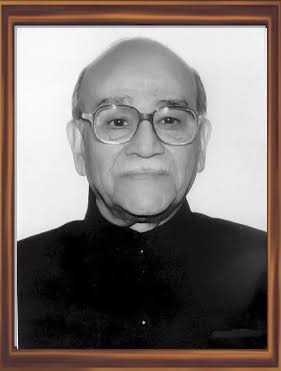
Raja Ramanna (1925–2004) was one of India’s most celebrated nuclear physicists, a visionary scientific administrator, and a foundational pillar of the country’s nuclear and defense programs. Best known as the scientific director of “Smiling Buddha” (Pokhran-I), India’s first peaceful nuclear explosion in 1974, Ramanna played an instrumental role in ensuring technological self-reliance. Beyond nuclear physics, he was an accomplished classical pianist, a philosopher of science, and a statesman who served as Union Minister of State for Defence.
2. Quick Facts
- Full Name: Raja Ramanna
- Native Name: ರಾಜ ರಾಮಣ್ಣ (Kannada)
- Date of Birth: January 28, 1925
- Place of Birth: Tumakuru, Princely State of Mysore, British India (present-day Karnataka)
- Nationality: Indian
- Occupation / Profession: Nuclear Physicist, Scientific Administrator, Politician, Musician
- Field of Achievement: Nuclear Physics, Defense Research, and National Science Policy
- Years Active: c. 1947 – 2004
3. Award Information
- Award Name: Padma Bhushan
- Award Category: Science and Engineering (India’s Third-Highest Civilian Honor)
- Award Year: 1973
- Presented By: Government of India (President V. V. Giri)
- Date of Ceremony: Spring 1973 (Rashtrapati Bhavan, New Delhi)
- Citation / Official Reason: Recognized for his exceptional contributions to nuclear science, research administration, and national technological infrastructure.
- Previous Recipients (Selected): Eminent scientists, scholars, and public figures from preceding annual civilian honors lists.
- Next Recipients: Followed by subsequent annual panels of national civilian laureates.
4. Why He Received the Award
Raja Ramanna was conferred the Padma Bhushan in recognition of his pioneering leadership in developing India’s nuclear research infrastructure. As a key driving force at the Bhabha Atomic Research Centre (BARC), his mathematical brilliance and administrative vision laid the groundwork for advanced reactor design and indigenous nuclear technology.
5. Early Life
Born in Tumakuru, Karnataka, into a cultured and educated Kannada-speaking family, Ramanna grew up with an intense intellectual curiosity. From an early age, he showed a rare aptitude for both exact sciences and Western classical music. Educated in Bangalore and Madras during the turbulent years leading up to Indian independence, he developed a deep patriotism combined with a global scientific outlook.
6. Education
- Schooling & Early College: Completed his intermediate studies in Bangalore before earning his Bachelor of Science (B.Sc.) and Master of Science (M.Sc.) degrees in Physics from the University of Madras (Loyola College and Presidency College).
- Doctoral Studies: Traveled to the United Kingdom on a government scholarship, earning his Doctor of Philosophy (Ph.D.) in Nuclear Physics from the University of Liverpool in 1948, specializing in neutron scattering and nuclear fission.
7. Career Journey
- Return to India & BARC: Joined the Tata Institute of Fundamental Research (TIFR) before moving to the Atomic Energy Establishment at Trombay (later renamed BARC) under Homi J. Bhabha.
- Scientific Leadership: Rose rapidly through the ranks, eventually serving as the Director of BARC and later as the Chairman of the Atomic Energy Commission (AEC) of India.
- Defense & Political Roles: Served as the Scientific Advisor to the Defence Minister, Director General of the Defence Research and Development Organisation (DRDO), and later as the Union Minister of State for Defence in 1990.
8. Major Achievements
- Architect of Pokhran-I (1974): Led the scientific team that successfully designed and executed India’s first underground nuclear test, code-named “Smiling Buddha”, establishing India’s technological capability globally.
- Reactor Construction: Directed the design and commissioning of major indigenous research reactors, including the Purnima series and the Dhruva reactor at Trombay.
- Academic Leadership: Instrumental in setting up advanced research centers and mentoring generations of Indian nuclear scientists.
9. Contribution to the Nation
Ramanna’s contributions transformed India’s strategic and technological status. At a time of strict international technology denial regimes, he built an indigenous supply chain of nuclear materials, heavy water, and reactor instrumentation. His work ensured that India could harness atomic energy for power generation, medicine, and national security independently.
10. Other Awards and Honours
- Padma Shri (1968): Conferred by the Government of India for early scientific contributions.
- Padma Vibhushan (1975): India’s second-highest civilian honor, awarded following the success of the 1974 nuclear test.
- Shanti Swarup Bhatnagar Prize (1963): Awarded in the Physical Sciences category by the CSIR.
- Meghnad Saha Medal (1984): Awarded by the Indian National Science Academy.
11. Legacy and Influence
Raja Ramanna is remembered as a quintessential Renaissance man. He proved that Indian science could achieve world-class breakthroughs under resource constraints. Beyond physics, his deep love for Western classical piano, philosophy, and Indian classical music (Carnatic and Hindustani) made him a unique cultural ambassador of Indian science.
12. Interesting Facts
- The Pianist Physicist: He was an accomplished concert-level pianist who frequently performed Western classical music, often noting the structural parallels between musical counterpoint and nuclear physics equations.
- Philosopher of Science: Authored a thought-provoking book titled The Structure of Music in Memory, exploring the cognitive and mathematical links between music and human consciousness.
- Direct Protégé of Bhabha: He was one of the closest and most trusted associates of Dr. Homi J. Bhabha, inheriting the monumental responsibility of carrying forward India’s atomic vision after Bhabha’s untimely death in 1966.
13. Quotes
“Science without art is dry, and art without science lacks structure; both spring from the same creative impulse of the human mind.”
“A nation’s security and self-respect depend on its capacity to innovate, master, and protect its own technology.”
14. Timeline
- 1925: Born on January 28 in Tumakuru, Karnataka.
- 1948: Completes his Ph.D. in Nuclear Physics from the University of Liverpool.
- 1949: Joins India’s nascent atomic energy program under Homi Bhabha.
- 1968: Awarded the Padma Shri.
- 1973: Conferred the Padma Bhushan by the Government of India.
- May 18, 1974: Directs the successful “Smiling Buddha” nuclear test in Pokhran, Rajasthan.
- 1975: Awarded the Padma Vibhushan.
- 1990: Serves as the Union Minister of State for Defence.
- 2004: Passes away on September 24 in Mumbai.
15. References
- Department of Atomic Energy (DAE), Government of India – Archives and Biographical Logs.
- Ramanna, Raja. Years of Pilgrimage (Autobiography, Viking / Penguin Books).
- Indian National Science Academy (INSA) – Biographical Memoirs of Fellows.
- Bhabha Atomic Research Centre (BARC) – Historical milestones documentation.
16. Related Personalities
- Homi J. Bhabha: Founder of India’s nuclear program and primary mentor to Ramanna.
- Vikram Sarabhai: Pioneer of India’s space program and close contemporary in national science planning.
- Indira Gandhi: Prime Minister of India who supported the execution of the 1974 nuclear test.
- A. P. J. Abdul Kalam: Prominent defense scientist and contemporary in India’s strategic research ecosystem.
17. Frequently Asked Questions (FAQ)
Q1: What was Raja Ramanna best known for? A: He is best known as the scientific director of India’s first nuclear test (Pokhran-I in 1974) and as a premier nuclear physicist who shaped India’s atomic energy and defense research infrastructure.
Q2: Did he hold political office? A: Yes, after retiring from active scientific administration, he briefly entered public life and served as the Union Minister of State for Defence in 1990.
Q3: What major civilian honors did he receive? A: He was honored with three of India’s highest civilian awards: the Padma Shri in 1968, the Padma Bhushan in 1973, and the Padma Vibhushan in 1975.
Q4: What were his hobbies outside of physics? A: He was an accomplished Western classical pianist, a keen student of philosophy, and an author who wrote extensively on the structural relationships between music and mathematics.
About the Author