Early Life and Education
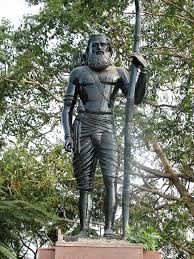
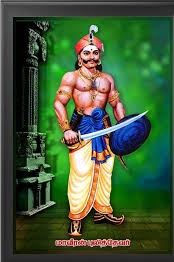
Puli Thevar, also known as Pooli Thevar, was one of the earliest Indian rulers to challenge foreign domination in South India. He was born around 1715 in Nerkattumseval, a village in the present-day Tenkasi district of Tamil Nadu. He belonged to the Maravar community and became the Palayakkarar (Poligar) of Nerkattumseval.
Formal educational institutions were uncommon during his time. Like many warrior-chieftains of the eighteenth century, Puli Thevar received traditional training within his family and community. His upbringing focused on leadership, administration, warfare, and the preservation of local customs and values.
Education & Skills
Although Puli Thevar did not receive modern academic education, he possessed several remarkable skills that established him as an effective leader:
- Military Strategy: He demonstrated exceptional ability in planning and executing defensive campaigns against powerful enemies.
- Leadership: He united various Palayakkarars of southern Tamil Nadu to resist external control.
- Diplomacy: Puli Thevar negotiated alliances with neighboring rulers and local chiefs.
- Knowledge of Local Terrain: His familiarity with the landscape helped him adopt successful guerrilla warfare tactics.
- Administrative Skills: As a Palayakkarar, he managed revenue collection, justice, and the welfare of his subjects.
These abilities earned him respect among both his supporters and adversaries.
Contribution to Tamil Literature
There is no substantial historical evidence indicating that Puli Thevar directly contributed to Tamil literature through writing or scholarly works. However, his heroic resistance inspired numerous Tamil folk songs, ballads, and historical narratives that celebrate his bravery and patriotism.
His legacy continues to influence:
- Folk traditions of southern Tamil Nadu.
- Historical novels and biographies.
- Stage dramas depicting the Poligar resistance.
- Educational discussions on early anti-colonial movements.
Thus, while not a literary figure himself, Puli Thevar occupies an important place in Tamil cultural memory.
Role in India’s Freedom Movement
Puli Thevar is widely regarded as one of the earliest freedom fighters in India. During the mid-eighteenth century, he opposed the growing influence of the British East India Company and the Nawab of Arcot, who sought to exert control over the Palayakkarar territories.
Between 1755 and 1767, he led a series of rebellions against forces commanded by the Nawab and supported by the British. Refusing to pay tribute, he asserted the independence of his kingdom and encouraged other Palayakkarars to resist foreign interference.
Some of his notable contributions include:
- Organizing one of the first coordinated resistances against British-supported authority in South India.
- Building alliances with neighboring chieftains to strengthen opposition.
- Employing guerrilla tactics to counter larger military forces.
- Inspiring later leaders such as Veerapandiya Kattabomman and the Marudhu brothers in their struggles against colonial rule.
Although his resistance ultimately faced setbacks, Puli Thevar’s defiance marked an important chapter in India’s long journey toward independence.
Personal Life
Historical records concerning Puli Thevar’s personal and family life remain limited. He devoted much of his life to governing Nerkattumseval and defending the autonomy of his people.
Contemporary accounts and oral traditions portray him as:
- Courageous and determined.
- Deeply committed to justice and self-rule.
- Protective of his subjects and their interests.
- Proud of Tamil traditions and regional independence.
His dedication to public duty often overshadowed details of his private life.
Death
The exact circumstances surrounding Puli Thevar’s death remain uncertain. Historians generally believe that he died around 1767, following years of conflict against the forces aligned with the Nawab of Arcot and the British East India Company.
Several local traditions offer differing accounts of his final days. However, regardless of the historical uncertainties, his sacrifice and unwavering resistance continue to be remembered with admiration throughout Tamil Nadu.
Conclusion
Puli Thevar stands as one of the earliest symbols of resistance against colonial expansion in India. Long before the large-scale freedom movements of the nineteenth and twentieth centuries, he challenged foreign domination and fought to preserve the independence of his land.
Though he left behind no literary works, his courage lives on through Tamil folklore, historical studies, and public memory. His life serves as a powerful reminder that the struggle for freedom in India began with many regional heroes whose contributions laid the foundation for later movements. Today, Puli Thevar is celebrated not only as a fearless warrior but also as a pioneer of India’s fight for self-rule.
About the Author