

1. Introduction
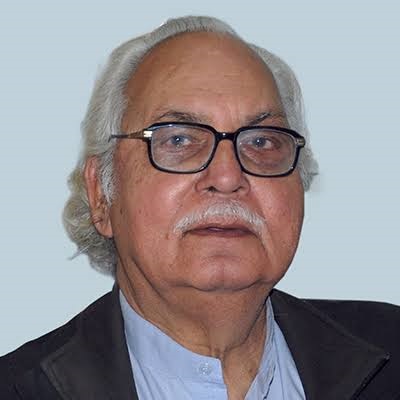
Professor Rajinder Kumar was one of India’s most distinguished chemical engineers, celebrated globally for his pioneering research on multiphase systems, fluid dynamics, and mathematical modeling. Spending nearly six decades at the Indian Institute of Science (IISc), Bengaluru, he transformed how engineers visualize and design chemical reactors. Famed for his ability to see complex mechanics hidden within simple physical phenomena—most notably the behavior of bubbles—Prof. Kumar shaped modern engineering education and industrial research in India.
2. Quick facts
- Full Name: Rajinder Kumar
- Native Name: ਰਾਜਿੰਦਰ ਕੁमार (Punjabi) / राजिन्दर कुमार (Hindi)
- Date of birth: September 9, 1934
- Place Of birth: Bajwara village, Hoshiarpur district, Punjab, British India
- Nationality: Indian
- Occupation/ Profession: Chemical Engineer, Researcher, Academic, and Institutional Leader
- Field of Achievement: Multiphase Phenomena, Bubble Dynamics, Sonochemistry, and Chemical Reactor Modeling
- Years Active: 1956 – 2022 (Active research and honorary mentorship spanning over six decades)
3. Award Information
- Award Name: Padma Bhushan
- Award Category: India’s Third-Highest Civilian Award
- Award Year: 2003
- Presented By: Government of India (Conferred by the President of India)
- Date of Ceremony: Republic Day honors cycle, 2003
- Citation/Official Reason: For exceptional and distinguished service to science, engineering, and the development of higher technological research in India.
- Previous Recipients (Examples): Prominent scientists, technologists, and public intellectuals.
- Next Recipients: Conferred annually as part of national civilian honors.
4. Why they Receive the award?
Prof. Rajinder Kumar was conferred the Padma Bhushan in recognition of his monumental contributions to chemical engineering science. His breakthrough mathematical models governing bubble formation, multiphase reactors, and sonochemical processes fundamentally optimized industrial design parameters. Furthermore, his administrative leadership at IISc and advisory roles across national scientific bodies significantly advanced India’s technological self-reliance.
5. Early Life
Born on September 9, 1934, in the rural village of Bajwara in Punjab, Rajinder Kumar grew up amidst challenging financial circumstances. His father was a schoolteacher and his mother a homemaker. Early in his career, financial hardships briefly forced him to work as a village school teacher—where local children affectionately nicknamed him a “one-pant teacher” due to his limited wardrobe. Recognizing his prodigious intellect, a local benevolent landlord stepped in to fund his initial higher educational expenses, setting the stage for an extraordinary academic ascent.
6. Education
- Schooling: Completed primary and secondary schooling in Bajwara, Punjab.
- Undergraduate Degree: Earned his Bachelor of Science (B.Sc. Honors) degree from DAV College, Hoshiarpur (Panjab University) in 1954.
- Master’s Degree: Obtained his M.Sc. (Tech) degree from Delhi Polytechnic (Panjab University) in 1955.
- Doctoral Research: Joined the Indian Institute of Science (IISc) on a Punjab government scholarship, completing his Ph.D. thesis on the electrolytic production of heavy water, officially awarded by Panjab University in 1965.
7. Carrier Journey
- Joining IISc: Joined the faculty of the Chemical Engineering Department at IISc in 1958 while still completing his doctoral research, becoming a full Professor in 1970.
- Administrative Leadership: Served terms as Chairman of the Chemical Engineering Department (1976–1979), Chairman of the Division of Mechanical Sciences (1980–1983), and Dean of Engineering (1990–1992) at IISc.
- Global Academic Exposure: Served as a visiting professor at Leeds University, UK (1971–1972).
- Post-Retirement Mentorship: Following his formal retirement, he continued active research and mentoring as an Honorary Professor at the Jawaharlal Nehru Centre for Advanced Scientific Research (JNCASR), Bengaluru.
8. Major Achievements
- Pioneering Bubble and Drop Dynamics: Utilized high-speed imaging to visualize and mathematically model bubble formation and coalescence, solving critical bottlenecks in industrial chemical reactor design.
- Shanti Swarup Bhatnagar Prize (1976): Awarded India’s highest science and technology prize in the Engineering Sciences category.
- Sonochemical Reaction Engineering: Developed pioneering models explaining how collapsing bubbles act as micro-reactors under ultrasonic influence.
- Academy Leadership: Elected as Vice-President of the Indian National Science Academy (INSA), the Indian Academy of Sciences, and the Indian National Academy of Engineering (INAE).
9. Contribution to the nation
Prof. Kumar bridged the gap between empirical trial-and-error manufacturing and rigorous mathematical science in India’s process industries. By training generations of chemical engineers to rely on first-principles physical visualization rather than rigid textbook memorization, he created a self-sustaining school of design. His insights directly optimized design protocols across India’s chemical, pharmaceutical, and petrochemical manufacturing sectors.
10. Other Awards and Honours
- Shanti Swarup Bhatnagar Prize (1976) – CSIR, Government of India
- IIChE Herdilia Award (1985)
- VASVIK Industrial Research Award (1986)
- K.G. Naik Gold Medal (1988) – M.S. University of Baroda
- INSA Syed Hussain Zaheer Medal (1989)
- Om Prakash Bhasin Award (1991)
- FICCI Award (1991)
- INSA Shanti Swarup Bhatnagar Medal (1997)
- Padma Bhushan (2003) – Government of India
- IIChE Lifetime Achievement Award (2008)
11. Legacy and influence
Prof. Kumar is remembered as a legendary teacher who viewed equations not as sterile formulas, but as windows into physical reality. His popular course on Modeling in Chemical Engineering at IISc became legendary among students. His rigorous methodology, characterized by imagination and deep mechanistic backing, remains the structural foundation of modern chemical engineering curricula in India.
12. Interesting Facts
- Seeing Beauty in Bubbles: While others saw simple rising gas pockets, Prof. Kumar visualized complex hydrodynamic forces, splitting patterns, and mass-transfer parameters, turning everyday bubbles into a lifelong scientific passion.
- A Life of Unmatched Resilience: Rising from extreme rural hardship in pre-independence Punjab to become one of India’s most decorated engineering minds, his personal life story is an ultimate testament to grit and intellectual curiosity.
- Childlike Mischief and Warmth: Despite his towering academic stature, colleagues and students remembered him for his infectious sense of humor, remarkable humility, and deep empathy for anyone seeking guidance.
13. Quotes
“What’s new?” — (His characteristic opening question that challenged students and researchers to push beyond conventional thinking).
“A good model does not merely fit data; it reveals the physical soul of the process happening inside the system.”
14. Timeline
- 1934: Born on September 9 in Bajwara, Punjab.
- 1954: Completes B.Sc. Honors from DAV College, Hoshiarpur.
- 1956: Joins the Indian Institute of Science (IISc) on a research fellowship.
- 1976: Awarded the prestigious Shanti Swarup Bhatnagar Prize.
- 1990–1992: Serves as Dean of Engineering at IISc and Vice-President of INSA.
- 2003: Conferred India’s third-highest civilian honor, the Padma Bhushan.
- 2022: Passes away on February 7 at the age of 87, leaving behind an immortal legacy in chemical engineering.
15. References
- Indian National Science Academy (INSA) – Year Books and Fellow Archives.
- Shanti Swarup Bhatnagar Prize Directorate – Official Awardee Biographies.
- Indian Institute of Science (IISc), Department of Chemical Engineering – Memorial Tributes and Obituaries (authored by Prof. R.A. Mashelkar).
- Shaastra Magazine – Special Feature: Rajinder Kumar: He saw Beauty in Bubbles.
16. Related Personalities
- Dr. R. A. Mashelkar (Renowned scientist, chemical engineer, and close colleague)
- Prof. D. Ramkrishna (Purdue University collaborator on stochastic modeling systems)
- Prof. K. S. Gandhi (Frequent collaborator and IISc research partner in chemical engineering)
17. Frequently Asked Questions (FAQ)
Q1: What is Prof. Rajinder Kumar most famous for?
A: Prof. Rajinder Kumar is celebrated worldwide for his pioneering work in mathematical modeling of multiphase phenomena, specifically bubble and drop dynamics, reactor engineering, and sonochemistry.
Q2: Which major civilian and science awards did he receive?
A: He received India’s highest science award, the Shanti Swarup Bhatnagar Prize (1976), and the third-highest civilian honor, the Padma Bhushan (2003), alongside numerous other research medals.
Q3: Where did he spend his academic career?
A: He spent nearly six decades at the Indian Institute of Science (IISc) in Bengaluru, moving from a doctoral student to professor, department chair, and dean of engineering, followed by a post-retirement stint at JNCASR.
About the Author




