1. Introduction
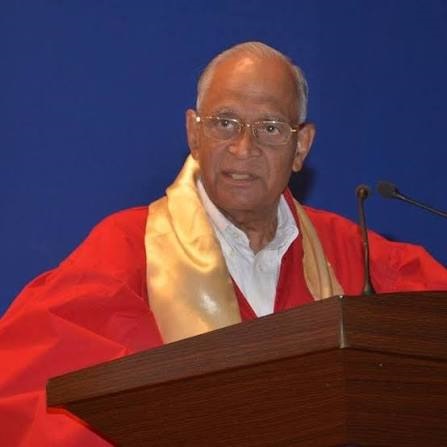
Prof. Man Mohan Sharma (born 1 May 1937) is universally hailed as a living legend and one of the most distinguished chemical engineers and science leaders the world has ever produced. Rising from humble origins, Professor Sharma revolutionized chemical reaction engineering, multiphase reactions, and industrial catalysis. Appointed as a full professor at the astonishingly young age of 27, he shaped the prestigious Institute of Chemical Technology (ICT, formerly UDCT) in Mumbai into a global powerhouse for engineering research. He remains the first and only Indian engineer from the university system to be elected a Fellow of the Royal Society, London.
2. Quick facts
- Full Name: Man Mohan Sharma
- Native Name: मनमोहन शर्मा (Hindi)
- Date of Birth: May 1, 1937
- Place of Birth: Jodhpur, Rajasthan, British India
- Nationality: Indian
- Occupation/Profession: Chemical Engineer, Academician, Researcher, and Institution Builder
- Field of Achievement: Chemical Engineering, Multiphase Reactions, and Industrial Catalysis
- Years Active: 1958 – Present
3. Award Information (Focus: Padma Vibhushan)
- Award Name: Padma Vibhushan
- Award Category: India’s Second-Highest Civilian Award
- Award Year: 2001
- Presented By: The President of India
- Date of Ceremony: Republic Day Investiture, Rashtrapati Bhavan, New Delhi
- Citation/Official Reason: For exceptional and distinguished services to science, engineering, and industrial research in India.
- Previous Recipients (Examples): Eminent scientists, artists, and national leaders.
- Next Recipients: Conferred alongside other notable national leaders and intellectuals in the 2001 civilian batch.
4. Why Did He Receive the Award?
Prof. Sharma was honored with the Padma Vibhushan (and earlier the Padma Bhushan in 1987) for his titanic contributions to chemical engineering science and education. His theoretical breakthroughs transformed real-world chemical, petrochemical, and pharmaceutical industries across India. Furthermore, his unmatched global reputation as a mentor and institution builder brought immense international prestige to Indian science and technology.
5. Early Life
Born in Jodhpur, Rajasthan, in May 1937, Sharma grew up in a family of modest financial means. Despite economic challenges, his early education was anchored by a profound discipline for learning. Demonstrating exceptional intellectual prowess from his school days, he moved to Mumbai (then Bombay) to pursue higher technical studies, setting the stage for a historic academic trajectory.
6. Education
- Undergraduate: Bachelor of Chemical Engineering (1958) from the University Department of Chemical Technology (UDCT, now ICT), Mumbai.
- Postgraduate: Master of Science (Tech) in 1960 from UDCT, Mumbai.
- Doctorate (Ph.D.): Completed his Ph.D. in Chemical Engineering in 1964 from the University of Cambridge under the legendary mentorship of Prof. Peter Danckwerts.
7. Career Journey
- Rise to Professorship (1964): Returned to India immediately after his Ph.D. to join UDCT (Mumbai) as a Professor of Chemical Engineering at the remarkable age of 27.
- Faculty Pillar (1964–1997): Spent 33 active years teaching, mentoring, and driving fundamental breakthroughs in chemical engineering at ICT.
- Director of UDCT (1989–1997): Served for 8 years as the Director of the institute, successfully steering its transformation into an autonomous, globally recognized university-level center.
- Advisor to Government & Industry: Acted as a core advisor to national science bodies, major chemical corporations, and premier research councils.
8. Major Achievements
- Pioneering Chemical Reaction Engineering: Groundbreaking work on multiphase reactions, mass transfer coupled with chemical reaction, and industrial catalysis.
- Fellow of the Royal Society (1990): Made history by becoming the first Indian engineer to be elected a Fellow of the prestigious Royal Society, London.
- Global Honors: Recipient of the Leverhulme Medal of the Royal Society (1996) and the prestigious Shanti Swarup Bhatnagar Prize in Engineering Sciences (1973).
- Prolific Mentorship: Guided over 70 doctoral (Ph.D.) students, many of whom went on to become global industry leaders, academics, and heads of major enterprises.
9. Contribution to the Nation
Prof. Sharma single-handedly bridged the gap between academic theory and the practical growth of India’s chemical and process industries. By developing cleaner, more efficient reaction technologies, he helped save hundreds of crores of rupees for industrial sectors. His uncompromising standards of excellence in technical education helped position India as a global exporter of world-class chemical engineers.
10. Other Awards and Honours
- Padma Bhushan (1987)
- Padma Vibhushan (2001)
- Shanti Swarup Bhatnagar Prize (1973)
- Leverhulme Medal, Royal Society (1996)
- Foreign Associate, U.S. National Academy of Engineering & U.S. National Academy of Sciences
- Honorary Doctorates (D.Sc.) from multiple IITs (Bombay, Delhi, Kharagpur, Roorkee, BHU) and various other universities.
11. Legacy and Influence
Prof. Sharma is lovingly regarded as an “institution in himself”. The “Sharma Tree” of academic descendants spans hundreds of researchers and professors across the globe. His life proves that world-class scientific research of international standards can be generated out of Indian university systems without needing sprawling western laboratories.
12. Interesting Facts
- Professor at 27: Appointed as a full university professor at UDCT at the age of 27—a feat almost unheard of in the history of Indian higher education.
- The Billion-Dollar Gift Inspiration: In June 2025, during the launch of his biography Divine Scientist, his former student and billionaire industrialist Mukesh Ambani announced a staggering ₹151 crore unrestricted endowment gift to the Institute of Chemical Technology in honor of Prof. Sharma’s enduring legacy.
- Global Editorial Stature: He served as an independent Editor for the premier international journal Chemical Engineering Science at a remarkably young age.
13. Quotes
“Excellence is not an accident; it is the continuous result of high intentions, sincere effort, intelligent direction, and a passion for rigorous, fundamental science.”
14. Timeline
- 1937: Born on May 1 in Jodhpur, Rajasthan.
- 1958: Earns his Bachelor’s degree in Chemical Engineering from UDCT, Mumbai.
- 1964: Completes his Ph.D. at Cambridge under Prof. Danckwerts and joins UDCT as Professor.
- 1973: Awarded the Shanti Swarup Bhatnagar Prize.
- 1990: Elected a Fellow of the Royal Society (FRS), London—a first for an Indian engineer.
- 2001: Conferred the Padma Vibhushan by the President of India.
- 2025: Biography titled Divine Scientist launched in his honor at ICT, Mumbai.
15. References
- Wikipedia contributors. Man Mohan Sharma. Wikipedia, The Free Encyclopedia.
- Indian National Science Academy (INSA) Biographical Archives.
- Patil, Anita. Divine Scientist: Prof. M. M. Sharma. Sundaram Digital Publication House.
16. Related Personalities
- Mukesh Ambani: Chairman of Reliance Industries and a notable student mentored under the ecosystem of ICT during Prof. Sharma’s tenure.
- Peter Danckwerts: Legendary British chemical engineer and Cambridge professor who supervised Prof. Sharma’s doctoral research.
- Satish Dhawan & C.N.R. Rao: Contemporary scientific giants of India who shaped modern Indian research and institutional autonomy.
17. Frequently Asked Questions (FAQ)
Q: What is Prof. Man Mohan Sharma best known for?
A: He is globally celebrated for his pioneering research in chemical reaction engineering, multiphase reactions, and for being the first Indian engineer elected as a Fellow of the Royal Society (FRS).
Q: Which institute is most closely associated with his career?
A: The Institute of Chemical Technology (ICT, formerly UDCT) in Mumbai, where he served as a professor for over three decades and as its Director.
Q: What major civilian awards has he received?
A: He received the Padma Bhushan in 1987 and India’s second-highest civilian honor, the Padma Vibhushan, in 2001.
About the Author