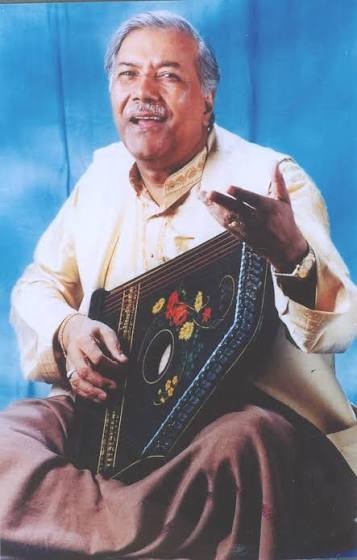
1. Introduction: Remembering a Living Legend of Indology
Standalone Title:Prof. Lokesh Chandra: The Titan of Buddhist Studies and Cultural Interflow
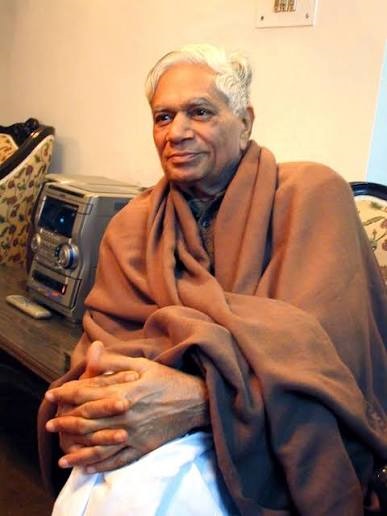
Prof. Lokesh Chandra (born 11 April 1927) is a preeminent Indian scholar, historian, and expert on the Vedic period, Buddhism, and Indian arts. Coming from an illustrious lineage of intellectuals, he has spent nearly a century mapping the deep cultural interflows between India and other Asian nations, producing hundreds of monumental books and scholarly texts.
2. Quick Facts: At a Glance
Standalone Title:Prof. Lokesh Chandra: Quick Facts and Profile Overview
Full Name: Lokesh Chandra
Date of Birth: 11 April 1927
Place of Birth: Ambala, Punjab (British India)
Nationality: Indian
Occupation/Profession: Scholar, Historian, Writer, Former Parliamentarian
Field of Achievement: Indology, Buddhist Iconography, Vedic Studies, Cultural Diplomacy
Years Active: 1940s – Present
3. Award Information: The Padma Bhushan Honor
Standalone Title:Recognizing Academic Excellence: Prof. Lokesh Chandra’s Padma Bhushan
Award Name: Padma Bhushan
Award Category: Civilian Award (Third Highest Civilian Honor in India)
Award Year: 2006
Presented By: Dr. A.P.J. Abdul Kalam (then President of India)
Date of Ceremony: March 2006 (Republic Day Announcement)
Citation/Official Reason: For distinguished contributions and lifelong service to academic life, public discourse, and the preservation of cultural heritage.
Other Notable Accolades: International recognitions for Asian culture preservation and honorary doctorates.
4. Why Did He Receive the Award?
Standalone Title:A Lifetime of Scholarly Devotion: Why Prof. Lokesh Chandra Was Awarded the Padma Bhushan
Prof. Lokesh Chandra received the Padma Bhushan in recognition of his monumental contributions to Indology, his encyclopedic mapping of Buddhist art across Asia, and his lifelong commitment to highlighting India’s deep civilizational and cultural ties with countries like Tibet, China, Japan, Mongolia, and Southeast Asia.
5. Early Life: Formative Years in a Scholarly Household
Standalone Title:The Roots of a Scholar: Prof. Lokesh Chandra’s Formative Years
Born in April 1927 in Ambala, Lokesh Chandra grew up immersed in an environment of intense intellectual rigor. He was the son of Prof. Dr. Raghu Vira, a world-renowned scholar, linguist, and freedom fighter who left a profound imprint on India’s linguistic and cultural development. This unique upbringing shaped Chandra’s early fascination with ancient scripts, languages, and philosophies.
6. Education: Grounded in Linguistics and Antiquities
Standalone Title:Academic Rigor: From Lahore and Utrecht to Indological Mastery
Master’s Degree: Completed his M.A. in 1947 from Punjab University, Lahore.
Doctorate (Ph.D.): Earned his Ph.D. in March 1950 from the University of Utrecht (Netherlands), presenting a landmark doctoral dissertation on the Jaiminiya Brahmana of the Samaveda.
Multilingual Fluency: Acquired command over Sanskrit, Pali, Tibetan, Chinese, Japanese, Persian, Greek, and Latin, enabling him to read foundational texts in their original native scripts.
7. Career Journey: Academia, Research, and Public Service
Standalone Title:A Storied Career: Bridging Academic Research and National Institutions
International Academy of Indian Culture: Served for decades as the driving force and Director of this premier research institution founded by his father, publishing vital texts on Asian heritage.
Parliamentary Service: Served as a Member of Parliament in the Rajya Sabha, bringing intellectual depth to national legislative deliberations.
Institutional Leadership: Held major national posts, including Chairman of the Indian Council of Historical Research (ICHR) and President of the Indian Council for Cultural Relations (ICCR) from 2014 to 2017.
8. Major Achievements: Prolific Publishing and Lexicons
Standalone Title:Milestones in Scholarship: Dictionaries and Cultural Compendiums
Staggering Output: Between 1942 and 2004 alone, he published over 576 books and 286 articles—an unmatched feat in modern academic history.
Monumental Lexicons: Compiled pathbreaking works such as the Tibetan-Sanskrit Dictionary, Buddhist Iconography of Tibet, and the massive 15-to-20-volume Dictionary of Buddhist Art.
Preserving Lost Texts: Recovered, edited, and published numerous rare manuscripts from Central Asia, Mongolia, and Indonesia that were on the verge of extinction.
9. Contribution to the Nation: Strengthening Cultural Diplomacy
Standalone Title:Nation Building Through Culture: Fostering International Ties
Prof. Chandra used his scholarship as a tool of soft power and cultural diplomacy. By demonstrating how Indian thought, art, and philosophy permeated across borders into Central and East Asia, he built enduring intellectual bridges between India and global academic communities. His leadership at the ICCR helped project India’s civilizational footprint outward with dignity and historical accuracy.
10. Other Awards and Honours
Standalone Title:Beyond the Padma Bhushan: Global Recognition of an Intellectual Titan
International Fellowships: Honored by prominent academic academies across Europe, Japan, and Mongolia.
Lifetime Achievement Honors: Felicitated by multiple global Buddhist associations and literary societies for preserving the shared heritage of Asia.
State Recognition: Frequently consulted by national leaders and international missions for his deep insights into Asian geopolitics and cultural history.
11. Legacy and Influence: The Living Encyclopedia of Asia
Standalone Title:An Enduring Legacy: Safeguarding the Manuscript Heritage of India
Prof. Lokesh Chandra’s legacy is defined by his relentless crusade against historical amnesia. Long after standard retirement ages, he continued writing, researching, and mentoring young historians. He stands as a rare polymath who single-handedly preserved textual traditions that bridge ancient wisdom with modern academic inquiry.
12. Interesting Facts: Surprising Insights
Standalone Title:Did You Know? Fascinating Facts About Prof. Lokesh Chandra
A Century of Scholarship: Remarkably active well into his 90s, he maintained a daily writing and research routine that spanned over eight decades.
A Father-Son Dynasty of Letters: Together with his father, Prof. Raghu Vira, they built one of the world’s most extensive private archives of rare Asian manuscripts and rubbings.
Living Link to History: Having witnessed the twilight of the British Raj, Partition, and the evolution of independent India, he represents a direct bridge to the generation that built modern Indian academia.
13. Quotes: Words of Wisdom
Standalone Title:In His Words: Insights on Culture and Civilization
“Culture is not merely a relic of the past; it is the living current of human values that connects our yesterdays to our tomorrows.” — Prof. Lokesh Chandra
“A scholar of rare brilliance who mapped the footprints of Indian thought across the mountains and seas of Asia.” — Academic Tribute
14. Timeline: Key Milestones in His Life
1927: Born on April 11 in Ambala, British India.
1947: Completes his M.A. from Punjab University, Lahore.
1950: Earns his Ph.D. from the University of Utrecht, Netherlands.
1970s–1980s: Publishes foundational multi-volume dictionaries on Tibetan and Buddhist art.
2006: Conferred the Padma Bhushan by President Dr. A.P.J. Abdul Kalam.
2014–2017: Serves as the President of the Indian Council for Cultural Relations (ICCR).
15. References: Sources and Further Reading
Standalone Title:Sources and Archives: Further Reading on Prof. Lokesh Chandra
Wikipedia & Open Academic Archives: Lokesh Chandra Profile
Ministry of External Affairs (Govt. of India): ICCR Appointment Archives
Tsadra Foundation & Oral History of Tibetan Studies Portals
Selected Works: Dictionary of Buddhist Art (Shata-Pitaka Series)
16. Related Personalities: Mentors and Peers
Standalone Title:In Good Company: Mentors and Contemporaries
Prof. Dr. Raghu Vira: His father, eminent linguist, and lifelong mentor in the study of Asian cultures.
Dr. Karan Singh: Noted statesman and scholar whom Prof. Chandra succeeded in institutional cultural roles.
Dr. A.P.J. Abdul Kalam: President of India who honored him with the Padma Bhushan.
17. Frequently Asked Questions (FAQ)
Standalone Title:All Your Questions Answered: FAQs About Prof. Lokesh Chandra
Q: Who is Prof. Lokesh Chandra?
A: He is a renowned Indian scholar of Buddhism, Vedic studies, and Asian art who has authored hundreds of books on cultural interflows.
Q: What are his most famous literary works?
A: He is best known for compiling the Tibetan-Sanskrit Dictionary, Buddhist Iconography of Tibet, and the multi-volume Dictionary of Buddhist Art.
Q: What major national honors has he received?
A: He was awarded the Padma Bhushan in 2006 and has served as the President of the Indian Council for Cultural Relations (ICCR).