

1. Introduction
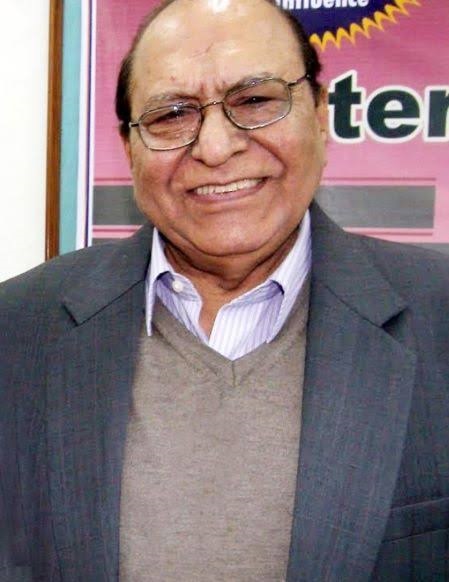
Professor Gopi Chand Narang was one of the most prominent, prolific, and globally respected Urdu scholars, literary theorists, and critics of modern times. Widely celebrated as a high priest of Urdu letters, he single-handedly bridged traditional eastern poetics with modern Western critical frameworks, including structuralism and post-structuralism. His monumental academic career spanned several decades, leaving an indelible imprint on linguistics, literary criticism, and the global propagation of Urdu language and culture.
2. Quick facts
- Full Name: Gopi Chand Narang
- Native Name: गोपी चन्द नारंग (Hindi) / گوپی چند نارنگ (Urdu)
- Date of birth: February 11, 1931
- Place Of birth: Dukki, Balochistan, British India (present-day Pakistan)
- Nationality: Indian
- Occupation/ Profession: Literary Critic, Theorist, Academic, Linguist, Author
- Field of Achievement: Urdu Literature, Literary Theory, Linguistics, and Cultural Criticism
- Years Active: 1950s–2022
3. Award Information
- Award Name: Padma Bhushan / Sahitya Akademi Fellowship / Sitara-e-Imtiaz
- Award Category: National Civilian Honours, Supreme Literary Fellowship, and International Recognition
- Award Year: Padma Shri (1990), Padma Bhushan (2004), Sahitya Akademi Fellowship (2009), Sitara-e-Imtiaz (Pakistan, 2012)
- Presented By: Government of India / Government of Pakistan / Sahitya Akademi
- Date of Ceremony: Conferred during respective national and international state ceremonies.
- Citation/Official Reason: Recognized for his exceptional contributions to Urdu literature, pioneering structuralist and post-structuralist critique in South Asian letters, and fostering cross-cultural understanding.
- Previous Recipients (optional): Eminent Indian and international literary scholars.
- Next Recipients: Conferred among notable national and global intellectuals.
4. Why they Receive the award?
Prof. Narang received India’s highest civilian and literary decorations because of his transformative scholarship in Urdu criticism. By authoring over 60 books in Urdu, Hindi, and English, he introduced modern critical theories—such as structuralism, post-structuralism, and deconstruction—to Urdu literary analysis, radically shifting how classical and contemporary texts were read globally.
5. Early Life
Born in the small town of Dukki in Balochistan (now in Pakistan), Narang grew up in an intellectually nurturing environment. His father, Dharam Chand Narang, was a distinguished scholar of Sanskrit and Persian. Growing up conversant in Saraiki, Persian, and Hindi, young Gopi Chand developed an early, deep affinity for Urdu poetry and literature, which he pursued with unmatched fervor despite the geographic and demographic upheavals of the subcontinent.
6. Education
- Academic Background: Earned his Master’s degree and subsequently his Doctor of Philosophy (Ph.D.) in Urdu from the University of Delhi.
- Advanced Post-Doctoral Research: Pursued higher research and taught at premier international institutions, immersing himself in modern linguistics, stylistics, and Western critical philosophy.
7. Carrier Journey
- Academic Posts: Served as a professor of Urdu at the University of Delhi for decades, eventually being named Professor Emeritus. He also taught and lectured globally at universities in the United States, Europe, and Asia.
- Institutional Leadership: Held major administrative and advisory roles, including serving as the President of the Sahitya Akademi (India’s National Academy of Letters) from 2003 to 2007.
- Global Statesmanship of Letters: Acted as a premier cultural ambassador for Urdu literature, bridging literary communities across India, Pakistan, and the wider South Asian diaspora.
8. Major Achievements
- Authored more than 60 seminal books on literary theory, linguistics, and classical poets (including Ghalib, Mir, and Amir Khusro).
- Landmark critical texts include Sakhtiyat, Pas-Sakhtiyat aur Mashriqui Sheriyat (Structuralism, Post-Structuralism and Eastern Poetics) and Urdu Zaban aur Lisaniyat.
- Conferred the Padma Bhushan (2004) and Padma Shri (1990) by the Government of India.
- Awarded Pakistan’s prestigious civilian honor, the Sitara-e-Imtiaz (2012), alongside the President’s Gold Medal (1977), making him a rare bridge-builder between the two nations.
9. Contribution to the nation
Prof. Narang modernized the vocabulary of Indian literary criticism. He proved that traditional Eastern poetics (Mashriqui Sheriyat) shares deep structural parallels with modern Western critical paradigms. By championing Urdu as a shared civilizational heritage of India—unbound by regional or religious lines—he fought tirelessly to keep its composite culture (Ganga-Jamuni tehzeeb) vibrant and universally respected.
10. Other Awards and Honours
- Sahitya Akademi Award (1995)
- Sahitya Akademi Fellowship (Highest Honour, 2009)
- Ghalib Award (1985)
- Madhya Pradesh Iqbal Samman (2011)
- Bharatiya Jnanpith Moorti Devi Award (2012)
- Sitara-e-Imtiaz (Pakistan, 2012)
- Multiple honorary D.Litt. degrees from Aligarh Muslim University, University of Hyderabad, and MANUU.
11. Legacy and influence
Prof. Gopi Chand Narang is remembered as an intellectual titan who redefined the contours of modern Urdu scholarship. His books remain standard university texts across South Asia, guiding generations of students, poets, and critics. He passed away on June 15, 2022, in the United States, leaving behind a monumental legacy as one of the greatest literary minds produced by modern India.
12. Interesting Facts
- Cross-Border Cultural Bridge: He remains one of the very few intellectuals to be honored at the highest levels by both the governments of India (Padma Bhushan) and Pakistan (Sitara-e-Imtiaz and the President’s Gold Medal).
- Polyglot Scholar: Though globally renowned for his Urdu scholarship, he wrote masterfully and published critical works in Hindi, Urdu, and English with equal facility.
- A Life Dedicated to Text: Even into his nineties, he maintained a rigorous daily writing and research routine, frequently releasing new critical volumes analyzing classical and modern verse.
13. Quotes
“Urdu is not just a language; it is an attitude of the heart, a composite civilizational ethos that celebrates humanism, pluralism, and aesthetic grace.” — Prof. Gopi Chand Narang
14. Timeline
- 1931: Born on February 11 in Dukki, Balochistan.
- 1990: Conferred the Padma Shri by the Government of India.
- 1993: Published his path-breaking theoretical work Sakhtiyat, Pas-Sakhtiyat aur Mashriqui Sheriyat.
- 2003–2007: Served as President of the Sahitya Akademi.
- 2004: Awarded the Padma Bhushan by the Government of India.
- 2009: Appointed as a Sahitya Akademi Fellow.
- 2012: Honored with Pakistan’s Sitara-e-Imtiaz and India’s Moorti Devi Award.
- 2022: Passed away on June 15 in the United States at the age of 91.
15. References
- Wikipedia: Gopi Chand Narang Profile & Bibliography
- Rekhta Foundation: Gopi Chand Narang Poet & Scholar Profile
- The Hindu: Eminent Urdu scholar Gopi Chand Narang passes away
16. Related Personalities
- Mirza Ghalib (Legendary poet and subject of extensive critical analysis by Narang)
- Mir Taqi Mir (Classic Urdu master examined through his stylistic works)
- Shamshur Rahman Faruqi (Contemporary Urdu critic and literary theorist)
- Ali Sardar Jafri (Prominent progressive Urdu poet and intellectual)
17. Frequency Asked Questions (FAQ)
- Q: Who was Prof. Gopi Chand Narang?
- A: He was a world-renowned Urdu scholar, literary critic, linguist, and former President of the Sahitya Akademi.
- Q: What were his primary contributions to literature?
- A: He pioneered the application of modern critical theories—such as structuralism and post-structuralism—to Urdu literature, bridging Eastern poetics with Western frameworks.
- Q: What major international and national awards did he receive?
- A: He received India’s Padma Shri (1990) and Padma Bhushan (2004), alongside Pakistan’s Sitara-e-Imtiaz (2012).
About the Author




