

1. Introduction
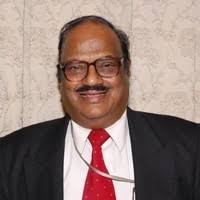
Dr. Pakkiriswamy Chandra Sekharan was an internationally acclaimed Indian forensic scientist, writer, and former Director of the Department of Forensic Sciences for the Government of Tamil Nadu. Widely regarded as a doyen of modern Indian forensics, he is best remembered for his stellar scientific sleuthing and meticulous handling of physical evidence that helped crack the high-profile assassination case of former Indian Prime Minister Rajiv Gandhi. His life’s work modernized criminal investigations and brought scientific rigor into the Indian justice system.
2. Quick Facts
- Full Name: Pakkiriswamy Chandra Sekharan
- Native Name: பக்கிரிசாமி சந்திரசேகரன் (Tamil)
- Date of Birth: April 15, 1934
- Place of Birth: Nagapattinam, Tamil Nadu, India
- Nationality: Indian
- Occupation / Profession: Forensic Expert, Scientist, Author
- Field of Achievement: Forensic Science and Criminal Investigation
- Years Active: 1950s – 2017
3. Award Information (Focus: Padma Bhushan)
- Award Name: Padma Bhushan
- Award Category: Science and Engineering / Social Contributions
- Award Year: 2000
- Presented By: Government of India (President of India)
- Date of Ceremony: March/April 2000 (Rashtrapati Bhavan, New Delhi)
- Citation / Official Reason: For his distinguished service of a high order, pioneering research, and monumental contributions to the advancement of forensic science and public service in India.
- Previous Recipients (Examples): Eminent scientists, technocrats, and national figures.
- Next Recipients: Succeeding batches of science and civil service icons in subsequent national civilian announcements.
4. Why He Received the Award
Dr. P. Chandra Sekharan was awarded the Padma Bhushan for his revolutionary role in changing the landscape of criminal investigations in India. By applying advanced forensic techniques—most notably in piecing together forensic fragments from the tragic assassination of Rajiv Gandhi—he ensured that science spoke truth to power. His lifelong dedication to crime scene preservation, development of indigenous testing methods, and mentorship of generations of forensic professionals earned him this high national recognition.
5. Early Life
Born on April 15, 1934, in Nagapattinam, Tamil Nadu, Chandra Sekharan grew up with an analytical and deeply inquisitive mind. From a young age, he was fascinated by how physical elements left behind in nature and human settings could narrate hidden stories. This curiosity pushed him toward the nascent and demanding field of scientific investigation during post-independence India.
6. Education
- Pursued higher education at Annamalai University and institutions affiliated with the University of Madras.
- Specialized in physical and chemical sciences, laying a robust academic foundation before diving deep into specialized forensic applications, toxicological analysis, and ballistic research.
7. Career Journey
- Rise in Forensics: Rose through the ranks within the Tamil Nadu state government’s forensic apparatus, eventually serving as the Director of the Department of Forensic Sciences.
- The Rajiv Gandhi Assassination Investigation (1991): His career defining moment arrived when a human bomb struck Sriperumbudur. Dr. Chandra Sekharan personally rushed to the grim crime scene, systematically collecting minute physical evidence—including remnants of the belt bomb, shrapnel, and clothing fibers—that proved vital in legally identifying the culprits and establishing the sequence of events.
- Author and Academic: Post-retirement, he remained intensely active, authoring authoritative textbooks and sharing his wealth of experience with younger law enforcement officers.
8. Major Achievements
- Cracking the ‘Human Bomb’ Evidence: Successfully reconstructed the mechanics of the first-ever suicide bombing assassination of a global leader using meticulous forensic traces.
- Pioneering Lip Forensics (Cheiloscopy): Authored seminal literature on Lip Forensics, establishing scientific parameters for using labial structures and lip prints for personal identification in crime investigations.
- Institutional Development: Played a foundational role in upgrading the infrastructure, technological capacity, and operational independence of forensic labs across South India.
9. Contribution to the Nation
Dr. Chandra Sekharan transformed Indian criminal jurisprudence by moving it away from a heavy reliance on custodial confessions to a foundation driven by hard, irrefutable material evidence. His work directly assisted courts in delivering justice in terror-related and complex criminal cases, bolstering national security, and upholding the integrity of the Indian legal framework.
10. Other Awards and Honours
- Padma Bhushan (2000) by the Government of India.
- Numerous state-level commendations, police medals, and recognitions from international forensic societies for lifetime contributions to legal medicine.
11. Legacy and Influence
Dr. Chandra Sekharan is remembered as the father figure of practical crime-scene investigation in India. His meticulous approach—emphasizing that “every contact leaves a trace”—inspired a shift in police training protocols. His books, including The First Human Bomb and Lip Forensics, remain essential reference guides for criminologists, forensic scientists, and law students.
12. Interesting Facts
- On-Ground Dedication: Even as the head of the department, he was known to personally visit critical crime scenes rather than merely reviewing reports from an office desk.
- Prolific Author: Aside from scientific journals, he penned gripping accounts translating complex forensic science into understandable literature for the public and budding investigators.
- Passing: He passed away on July 11, 2017, at the age of 83, leaving behind an unmatched legacy in Indian forensic history.
13. Quotes
“In a crime scene, the mute witnesses—the physical evidence—never lie, panic, or forget. It is up to the forensic scientist to give them a voice.” — Dr. P. Chandra Sekharan (Reflecting philosophy on evidence)
14. Timeline
- 1934: Born on April 15 in Nagapattinam, Tamil Nadu.
- 1950s–60s: Completed education and began his journey into scientific investigation and government service.
- 1991: Played a central role in decoding the forensic evidence following the assassination of Rajiv Gandhi.
- 2000: Conferred India’s third-highest civilian honor, the Padma Bhushan.
- 2011: Released his comprehensive book on Lip Forensics at the New York Book Fair.
- 2017: Passed away on July 11 at the age of 83 in Chennai.
15. References
- Wikipedia Contributors. “Pakkiriswamy Chandra Sekharan.” Wikipedia, The Free Encyclopedia.
- The Times of India Archives. “Forensics doyen helped piece together Rajiv Gandhi bombing case.”
- Business Standard / Press Trust of India. “Forensic expert Prof P Chandra Sekharan passes away.”
- P. Chandra Sekharan. Lip Forensics: Forensic Cheiloscopy for Crime Investigation. Anand Publications.
16. Related Personalities
- Rajiv Gandhi (Former Prime Minister of India)
- Dr. C. Damodaran (Notable Indian forensic scientist and collaborator)
- D. R. Karthikeyan (Former CBI Director and head of the SIT for the Rajiv Gandhi assassination case)
17. Frequently Asked Questions (FAQ)
Q1: Who was Pakkiriswamy Chandra Sekharan?
A: He was a renowned Indian forensic expert, author, and former Director of the Department of Forensic Sciences, Tamil Nadu, best known for his role in investigating the Rajiv Gandhi assassination.
Q2: What is Dr. Chandra Sekharan most famous for?
A: He is widely famous for reconstructing the sequence of events and analyzing the physical evidence of the suicide bomb blast that took the life of Rajiv Gandhi in 1991.
Q3: When did he receive the Padma Bhushan?
A: He was awarded the Padma Bhushan in the year 2000 for his exceptional contributions to society and science.
Q4: What unique branch of forensics did he write about?
A: He authored specialized literature on Lip Forensics (Cheiloscopy), detailing how lip print structures can be utilized for personal identification in criminal cases.
About the Author




