

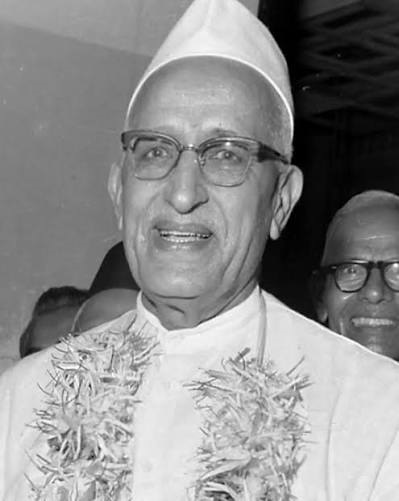
Karamshi Jethabhai Somaiya: The Visionary Industrialist and Nation Builder
1. Introduction
Shree Karamshi Jethabhai Somaiya was a legendary Indian industrialist, educationist, and philanthropist widely celebrated as the “Sugar King of India.” Starting from humble beginnings in a remote village, he rose to pioneer the sugar industry in Western India and later dedicated his life and wealth to social service, establishing world-class educational institutions under the banner of Somaiya Vidyavihar. His life remains a shining testament to the philosophy that “there is no religion greater than humanity.”
2. Quick Facts
- Full Name: Karamshi Jethabhai Somaiya (Pujya Shriman Karamshibhai Jethabhai Somaiya)
- Native Name: ಕರಮ್ಶಿ ಜೆಥಾಭಾಯ್ ಸೋಮಯ್ಯ / करमशी जेठाभाई सोमैया
- Date of Birth: May 16, 1902
- Place of Birth: Malunja village, Shrirampur taluka, Ahmednagar district, Maharashtra (then Bombay Presidency, British India)
- Nationality: Indian
- Occupation / Profession: Industrialist, Sugar Magnate, Educationist, Philanthropist
- Field of Achievement: Industry (Sugar) and Social Service / Education
- Years Active: 1920s to 1999 (Over seven decades)
3. Award Information (Focus: Padma Bhushan)
- Award Name: Padma Bhushan
- Award Category: Social Work / Public Service
- Award Year: 2000 (Conferred posthumously / recognition of lifetime work)
- Presented By: Government of India (President of India)
- Date of Ceremony: March/April 2000 (Rashtrapati Bhavan, New Delhi)
- Citation / Official Reason: For his distinguished service of a high order, pioneering industrial development, and profound contributions to education and social welfare in India.
- Previous Recipients (Examples): Noted educationists, industrialists, and nation-builders.
- Next Recipients: Succeeding batches of national icons in subsequent civilian award lists.
4. Why He Received the Award
Karamshi Jethabhai Somaiya received the Padma Bhushan in recognition of his multi-faceted contributions to the nation. Beyond building a massive industrial empire, he chose to return his wealth to society. By establishing premier educational institutions, spearheading rural development, building hospitals, and uplifting tribal communities, he transformed thousands of lives and laid down robust frameworks for social equity and national education.
5. Early Life
Born on May 16, 1902, in Malunja village, Karamshi grew up in modest circumstances. His early worldview was deeply shaped by the values of hard work, honesty, and the growing national wave of Mahatma Gandhi’s Swadeshi and Satyagraha movements. Starting off by helping his father manage a small village grocery business—traveling from door to door and village to village to sell goods—he cultivated a deep understanding of grassroots commerce and rural realities.
6. Education
- Completed his primary and secondary schooling at the New High School in Mumbai (now known as the Bharda New High School).
- While formal college education was limited, his real training came from practical business acumen, deep self-study, immersion in traditional Indian philosophy, and the mentorship of contemporary national leaders.
7. Career Journey
- The Rise of a Sugar Tycoon: In 1939, leveraging his business insights and partnership networks, Karamshi launched two major sugar factories in Sakarwadi and Lakshmiwadi in Maharashtra.
- The Sugar King of India: Through unmatched grit, innovation, and ethical business management, he revolutionized the agro-industrial sector in Western India, earning the moniker “Sugar King of India”. He also served as President of the Deccan Sugar Factories Association and the Deccan Sugar Technologists Association.
- Transition to Philanthropy: At the age of 60, he voluntarily stepped down from the day-to-day leadership of his corporate enterprises, handing over the mantle to his son, Dr. Shantilal Somaiya, to dedicate the rest of his life completely to societal upliftment.
8. Major Achievements
- Founding Somaiya Vidyavihar (1959): He acquired land in Ghatkopar, Mumbai, and laid the foundation for an educational institution that evolved into a massive multi-disciplinary campus hosting dozens of institutions ranging from engineering and medicine to management and humanities.
- Upliftment of Tribal Communities: Established the Girivanavasi Pragati Mandal in 1974 in the tribal areas of Dahanu (Thane district), setting up residential schools for migrant tribal children, a 40-bed hospital, and agricultural extension training programs.
- Industrial Pioneer: Successfully integrated rural farming economics with large-scale industrial manufacturing, creating thousands of jobs and ensuring rural economic prosperity.
9. Contribution to the Nation
Karamshi Jethabhai Somaiya bridged the gap between commercial enterprise and public welfare. He proved that corporate success could be leveraged directly for nation-building. His schools and colleges have educated hundreds of thousands of students who serve globally, while his medical and tribal outreach programs brought dignity, health, and education to marginalized populations who previously lacked basic infrastructure.
10. Other Awards and Honours
- Padma Bhushan (2000) by the Government of India.
- Felicitated by various state bodies, agricultural associations, and cultural forums for his lifelong commitment to rural education and cooperative industries.
11. Legacy and Influence
Somaiya Vidyavihar stands today as a living monument to his foresight, endurance, and love for humanity. His belief that what you receive from society must be given back a hundredfold guides the ethos of all institutions bearing his name. He institutionalized a culture of combining modern scientific education with deep-rooted moral and spiritual values.
12. Interesting Facts
- Age of Transition: In an era when most business leaders hold tight to power, he voluntarily stepped away at age 60 to embrace full-time philanthropy.
- Century Milestone: He lived a long, purposeful life, passing away on May 9, 1999—just one week shy of his 97th birthday.
- Grassroots Beginnings: Despite ending up as one of India’s richest and most respected industrialists, he never forgot his days of walking village paths to sell grocery items.
13. Quotes
“There is no religion greater than humanity, and there is no life higher than one lived in service to the community.” — Karamshi Jethabhai Somaiya ( reflecting his core life principle)
14. Timeline
- 1902: Born on May 16 in Malunja village, Ahmednagar district.
- 1939: Established milestone sugar factories in Sakarwadi and Lakshmiwadi, marking his entry as a major industrialist.
- 1959: Founded Somaiya Vidyavihar in Ghatkopar, Mumbai.
- 1962: Relinquished corporate leadership at age 60 to focus entirely on social and educational service.
- 1974: Established the Girivanavasi Pragati Mandal for tribal welfare in Dahanu.
- 1999: Passed away on May 9 at the age of 96.
- 2000: Conferred the Padma Bhushan posthumously by the Government of India.
15. References
- Wikipedia Contributors. “Karamshi Jethabhai Somaiya.” Wikipedia, The Free Encyclopedia.
- Somaiya Vidyavihar Official Archives & History Portal.
- KIAAR (K. J. Somaiya Institute of Applied Agricultural Research) Founder Documentation.
- Ministry of Home Affairs, Government of India – Padma Awards Directory.
16. Related Personalities
- Dr. Shantilal K. Somaiya (Son, industrialist, and institutional successor)
- Mahatma Gandhi (Philosophical and ideological influence on his approach to Swadeshi and service)
17. Frequently Asked Questions (FAQ)
Q1: Who was Karamshi Jethabhai Somaiya?
A: He was a pioneering Indian industrialist known as the “Sugar King of India” and a visionary educationist who founded Somaiya Vidyavihar.
Q2: What is Somaiya Vidyavihar?
A: Founded in 1959 by K.J. Somaiya in Ghatkopar, Mumbai, it is a prominent educational complex comprising dozens of institutions providing higher and professional education.
Q3: When was he awarded the Padma Bhushan?
A: He was awarded the Padma Bhushan in 2000 for his exceptional service to society and education.
Q4: What social welfare work did he do for tribal communities?
A: In 1974, he established the Girivanavasi Pragati Mandal in Dahanu, building residential schools for tribal children, healthcare camps, and agricultural experimental farms.
About the Author




