
1. Introduction
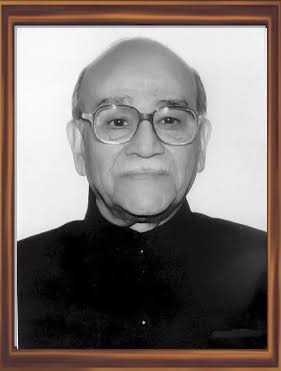
Mohanlal Lallubhai Dantwala was one of India’s important economists of the 20th century. His work focused particularly on agriculture, rural development, land reforms and poverty.
He was not only an economist and professor but also a Gandhian and freedom fighter. During India’s freedom struggle, he spent more than six years in prison. Remarkably, he continued his academic work even while imprisoned and completed his master’s thesis while serving a jail sentence.
After independence, Dantwala became an influential academic and policy thinker. His work contributed to discussions on agricultural development, voluntary action, land reform and grassroots planning.
He also served as a professor and director in economics at the University of Bombay and was later recognised as a National Professor of the Government of India.
2. Quick Facts
| Particular | Details |
|---|---|
| Full Name | Mohanlal Lallubhai Dantwala |
| Date of Birth | 18 September 1909 |
| Place of Birth | Surat, Gujarat |
| Nationality | Indian |
| Profession | Agricultural Economist, Academic and Writer |
| Field of Achievement | Agricultural Economics, Rural Development and Economic Policy |
| Known For | Pioneering Indian agricultural economics |
| Years Active | 1930s–1998 |
| Major Award | Padma Bhushan |
| Award Year | 1969 |
| Award Category | Science and Engineering |
| Institutional Association | University of Bombay / Mumbai |
| Political Orientation | Gandhian |
| Date of Death | 8 October 1998 |
| Age at Death | 89 |
The Government of India’s Padma Awards database records his name as “Prof. Mohanlal Lalloobhai Dantwala” and lists him as a 1969 Padma Bhushan recipient in Science and Engineering, from Maharashtra.
3. Award Information
Padma Bhushan
| Award Detail | Information |
|---|---|
| Award Name | Padma Bhushan |
| Award Category | Science and Engineering |
| Award Year | 1969 |
| Recipient | Prof. Mohanlal Lallubhai Dantwala |
| Presented By | Government of India / President of India |
| State Listed | Maharashtra |
| Significance | Recognition of his contribution to economics and agricultural development |
The official Government of India Padma Awards database confirms that Prof. Mohanlal Lalloobhai Dantwala received the Padma Bhushan in 1969 in Science and Engineering.
The historical Ministry of Home Affairs list likewise records him as:
Prof. Mohanlal Dantwala Lallubhai — Padma Bhushan — Maharashtra — Science & Engineering — 1969.
Why was he given the award?
The honour recognised his distinguished contribution to economic research and agricultural development, particularly his work relating to India’s rural economy and agricultural policy.
4. Why Did Mohanlal Lallubhai Dantwala Receive the Award?
Dantwala’s importance came from his pioneering work in understanding the economic problems of India’s agricultural and rural sectors.
His major areas of contribution included:
- Agricultural economics
- Land reforms
- Rural development
- Poverty studies
- Agricultural marketing
- Cotton economics
- Gandhian economic thought
- Decentralised planning
- Voluntary action
- Rural employment and development policy
He helped establish agricultural economics as an important field of study in post-independence India.
His writings examined the practical economic problems faced by Indian farmers and rural communities rather than treating economics solely as an abstract academic discipline.
5. Early Life
Mohanlal Lallubhai Dantwala was born on 18 September 1909 in Surat, Gujarat.
He grew up during India’s nationalist movement and became influenced by Mahatma Gandhi and Gandhian ideas.
His early intellectual interests developed around economics and social questions. His academic career eventually brought him into contact with questions concerning agriculture, rural society and India’s economic development.
While studying economics, he became involved in the Indian freedom movement.
At the age of approximately 23, he participated in the civil disobedience movement and was arrested. His imprisonment interrupted his academic work, but he continued studying while in prison.
6. Education
Dantwala received his early education in Gujarat and later studied at institutions in Surat and Mumbai.
He studied at M.T.B. Arts College, Surat, and subsequently attended Wilson College, Mumbai. He won the James Taylor Prize for academic excellence.
He later joined the Bombay School of Economics and Sociology as a Dakshina Fellow for an M.A. by thesis.
His unusual academic achievement
While participating in the freedom movement, Dantwala was arrested and imprisoned.
He continued working on his master’s thesis in prison and reportedly wrote the final chapter of his thesis while incarcerated at Arthur Road Jail in Mumbai.
He was awarded his M.A. from the University of Bombay in 1933 with First Class.
This episode is one of the most remarkable aspects of his educational journey.
7. Career Journey
Early Academic Career
After completing his studies, Dantwala entered academic and economic research.
In 1936, he joined H.L. College of Commerce in Ahmedabad as Professor of Cotton Trade and Industry.
His work on cotton was particularly significant because cotton was an important agricultural commodity in India’s economy.
Agricultural Economics
Dantwala gradually developed into one of India’s leading agricultural economists.
His research covered:
- Agricultural production
- Agricultural marketing
- Land ownership
- Land reforms
- Rural poverty
- Agricultural development
- Rural employment
- Economic planning
University of Bombay
He later became associated with the University of Bombay, where he served as a professor and eventually became Director of the Department of Economics.
Gandhian Economics
Dantwala maintained a strong interest in Gandhi’s economic ideas.
He was associated with the development of the Gandhian idea of Practical Trusteeship and worked on economic approaches that attempted to reconcile social justice with economic development.
Work with Political Leaders
After independence, he interacted with and worked alongside several important political figures, including Jayaprakash Narayan and Ram Manohar Lohia.
He also served for a period as private secretary to Morarji Desai.
National Professor
The Government of India later recognised Dantwala as a National Professor, reflecting his importance as an economist and academic.
8. Major Achievements
1. Pioneer of Indian Agricultural Economics
Dantwala is widely remembered as one of the pioneers—or, in some accounts, the father—of Indian agricultural economics.
2. Padma Bhushan
He received the Padma Bhushan in 1969 under Science and Engineering.
3. Agricultural Policy Research
His research contributed to the understanding of India’s agricultural economy and the problems of rural development.
4. Land Reform Studies
He conducted important work on land reforms, an issue central to India’s post-independence economic policy.
5. Poverty Studies
His book Poverty in India, Then and Now, 1870–1970 examined the historical development of poverty in India.
6. Cotton Economics
He wrote extensively about India’s cotton economy, including Marketing of Raw Cotton in India.
7. Block-Level Planning
He chaired a Planning Commission working group on block-level planning in 1977. This work later became associated with the Dantwala Committee.
8. Development Studies
In 1998, he became the founding chairperson of the Centre for Development Alternatives (CFDA), a research organisation concerned with development studies. He remained in that position until his death.
9. Contribution to the Nation
Dantwala’s contribution to India went beyond university teaching.
Agricultural Development
He helped develop economic thinking around Indian agriculture at a time when the country was attempting to increase agricultural production and improve rural livelihoods.
Rural Poverty
His research helped bring poverty and rural inequality into discussions of economic policy.
Land Reforms
He studied the economic consequences of land ownership and reform and contributed to the intellectual debate surrounding India’s land-reform programmes.
Decentralised Planning
His work on block-level planning promoted the idea that development planning should not remain concentrated at the national and state levels.
Gandhian Thought
Dantwala attempted to connect economics with Gandhian principles of social responsibility and trusteeship.
Freedom Struggle
Before independence, he participated in the nationalist movement and spent more than six years in prison.
10. Other Awards and Honours
Honorary Doctorate – Wageningen University
In 1968, Dantwala received an honorary doctorate from the Wageningen University and Research Centre in the Netherlands.
Padma Bhushan – 1969
The Government of India awarded him the Padma Bhushan in 1969 in Science and Engineering.
National Professor
He was also appointed a National Professor by the Government of India, an honour reflecting his stature as an academic and economist.
11. Legacy and Influence
Mohanlal Dantwala’s greatest legacy lies in his contribution to the development of agricultural economics and rural development thinking in India.
He helped establish the study of agriculture as more than a technical subject. His work considered agriculture within the wider context of:
- Rural employment
- Poverty
- Land ownership
- Social inequality
- Markets
- Economic planning
- Development policy
His ideas influenced economists, policymakers and researchers working on India’s rural economy.
The Dantwala Committee name is particularly associated with his contribution to thinking about development planning at the block level.
His writings continue to be useful to researchers studying India’s agricultural and economic history.
12. Interesting Facts
- Mohanlal Dantwala was born in Surat on 18 September 1909.
- He studied at Wilson College, Mumbai.
- He won the James Taylor Prize for academic excellence.
- He participated in India’s freedom movement.
- He was imprisoned for a total of more than six years during the freedom struggle.
- He completed part of his master’s thesis while in prison.
- He obtained his M.A. in 1933 with First Class.
- He became Professor of Cotton Trade and Industry at H.L. College of Commerce in Ahmedabad in 1936.
- He was a close associate of Gandhian economic thought.
- He worked with political figures including Jayaprakash Narayan and Ram Manohar Lohia.
- He served as private secretary to Morarji Desai for a period.
- He became Director of Economics at the University of Bombay.
- He was recognised as a National Professor.
- He received an honorary doctorate from Wageningen University in 1968.
- He received the Padma Bhushan in 1969.
- His important works include Indian Agricultural Development Since Independence and Poverty in India, Then and Now, 1870–1970.
- He chaired a Planning Commission working group on block-level planning.
- He became founding chairperson of the Centre for Development Alternatives in 1998.
- He died on 8 October 1998, aged 89.
13. Quotes
There are not enough reliably authenticated online sources for a direct quotation by Dantwala that I would recommend publishing as a verbatim quote.
For your blog, you can instead use this original editorial statement:
Mohanlal Dantwala believed that the study of economics had to remain connected with the realities of rural India and the lives of ordinary people.
Note: This is an original summary, not a direct quotation by Dantwala.
14. Timeline
| Year | Event |
|---|---|
| 1909 | Born on 18 September in Surat |
| Early 1920s | Studied in Gujarat and Mumbai |
| 1920s | Studied at Wilson College |
| Early 1930s | Joined the freedom movement |
| 1932 | Arrested during the civil disobedience movement |
| 1933 | Received M.A. from University of Bombay with First Class |
| 1936 | Joined H.L. College of Commerce, Ahmedabad |
| 1930s–1940s | Continued academic and economic research while participating in public affairs |
| 1940s | Became increasingly involved in agricultural economics and economic policy |
| Post-1947 | Worked on economic development and rural issues in independent India |
| 1950s | Continued research and teaching in economics |
| 1960s | Became a prominent national authority on agricultural economics |
| 1968 | Received honorary doctorate from Wageningen University |
| 1969 | Received Padma Bhushan in Science and Engineering |
| 1977 | Chaired Planning Commission working group on block-level planning |
| 1998 | Became founding chairperson of Centre for Development Alternatives |
| 1998 | Died on 8 October |
15. References
For your blog, I recommend using these sources:
- Government of India – Padma Awards Database
Official record of Dantwala’s 1969 Padma Bhushan in Science and Engineering. - Azim Premji University – Indian Economists: M. L. Dantwala
Useful information on his education, imprisonment, academic career and early professional life. - Wilson College – Distinguished Alumni
Provides biographical information about Dantwala and confirms his association with Wilson College. - Ministry of Home Affairs – Historical Padma Awards List
Historical government record of his 1969 Padma Bhushan.
16. Related Personalities
Mahatma Gandhi
Gandhi’s economic philosophy had a major influence on Dantwala, particularly ideas concerning trusteeship, rural development and social responsibility.
Jayaprakash Narayan
Dantwala was associated with Jayaprakash Narayan and broader discussions surrounding social and economic reform.
Ram Manohar Lohia
Dantwala worked in intellectual and political circles associated with Lohia and the Congress Socialist tradition.
Morarji Desai
Dantwala served as Desai’s private secretary for a period.
C. N. Vakil
An important Indian economist who influenced the development of economic education and research in India.
V. K. R. V. Rao
Another prominent Indian economist who worked extensively on economic development, education and national planning.
D. R. Gadgil
An influential Indian economist whose work also addressed rural development, planning and regional economic issues.
17. Frequently Asked Questions (FAQ)
Who was Mohanlal Lallubhai Dantwala?
Mohanlal Lallubhai Dantwala was an Indian agricultural economist, academic, writer and Gandhian thinker who made major contributions to agricultural economics and rural development.
When was Mohanlal Dantwala born?
He was born on 18 September 1909 in Surat, Gujarat.
When did Mohanlal Dantwala die?
He died on 8 October 1998, aged 89.
What was Mohanlal Dantwala famous for?
He was famous for his pioneering work in Indian agricultural economics, land reforms, rural development, poverty studies and economic planning.
Which award did Mohanlal Dantwala receive?
He received the Padma Bhushan in 1969.
In which category did he receive the Padma Bhushan?
The Government of India’s official database lists him under Science and Engineering.
Where did Mohanlal Dantwala study?
He studied at M.T.B. Arts College in Surat and Wilson College in Mumbai, and later pursued an M.A. through the Bombay School of Economics and Sociology.
Did Dantwala participate in India’s freedom struggle?
Yes. He participated in the nationalist movement and was imprisoned for more than six years in total.
What is the Dantwala Committee?
The name Dantwala Committee is associated with the Planning Commission working group on block-level planning that he chaired in 1977.
What books did Mohanlal Dantwala write?
Some notable works include:
- Indian Agricultural Development Since Independence
- Evaluation of Land Reforms
- Poverty in India, Then and Now, 1870–1970
- Gandhism Reconsidered
- Marketing of Raw Cotton in India
- A Hundred Years of Indian Cotton
Why is Mohanlal Dantwala important in Indian history?
He helped establish agricultural economics as an important field of Indian economic study and connected economic research with practical problems of agriculture, poverty and rural development.
About the Author