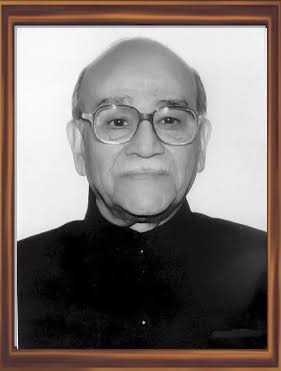

Dr. Keshavrao Krishnarao Datey was among the early generation of Indian physicians who helped establish cardiology as a specialised medical discipline in India.
He was known as an excellent clinician and teacher and trained several generations of young cardiologists. His career was closely associated with K.E.M. Hospital and Seth G.S. Medical College in Mumbai.
Datey also worked to make knowledge about heart disease accessible to ordinary people. He wrote books for the general public on subjects such as heart health and yoga.
His contributions were recognised nationally when he received the Padma Bhushan in 1969. The official Padma Awards database lists his field as Medicine and his state as Maharashtra.
2. Quick Facts
| Particular | Details |
|---|---|
| Full Name | Keshavrao Krishnarao Datey |
| Also Known As | Dr. Keshavrao Krishnarao Datey |
| Date of Birth | 7 August 1912 |
| Place of Birth | Jabalpur, India |
| Date of Death | 22 April 1983 |
| Nationality | Indian |
| Profession | Physician, Cardiologist, Medical Teacher and Author |
| Field of Achievement | Cardiology and Medicine |
| Known For | Pioneering Indian cardiologist |
| Major Institution | K.E.M. Hospital, Bombay |
| Medical College | Seth G.S. Medical College |
| Major Award | Padma Bhushan |
| Award Year | 1969 |
| Award Category | Medicine |
| FRCP | Fellow of the Royal College of Physicians |
| Years Active | 1930s–1983 |
The Royal College of Physicians records his birth as 7 August 1912 and death as 22 April 1983, and lists his qualifications as BA, MD Bombay, MRCP (1949) and FRCP (1967).
3. Award Information
Padma Bhushan
| Award Detail | Information |
|---|---|
| Award Name | Padma Bhushan |
| Award Category | Medicine |
| Award Year | 1969 |
| Recipient | Dr. Keshavrao Krishnarao Datey |
| Presented By | Government of India / President of India |
| State Listed | Maharashtra |
| Field | Medicine |
| Citation / Official Reason | The historical Padma record identifies him as a Medicine awardee; a detailed public citation explaining the award is not readily available in the current official database. |
The Government of India’s Padma Awards database explicitly lists “Dr. Keshavrao Krishnarao Datey — Padma Bhushan (1969) — Medicine — Maharashtra.”
Date of Ceremony
The Padma Awards database confirms the 1969 award year, but the publicly accessible record does not provide a ceremony date for Datey’s individual presentation. Therefore, it is safer for a blog to write “Padma Bhushan, 1969” rather than inventing a specific ceremony date.
Previous and Next Recipients
The Padma Bhushan is awarded annually to multiple people in different fields, so there is no single previous or next recipient.
For a chronological article, you can mention other 1969 recipients such as Dr. Adinath Lahiri, Dr. Prafulla Kumar Sen, Dr. Vallabhadas Vithaldas Shah, Dr. Tarasankar Bandyopadhyay and others.
4. Why Did Keshavrao Datey Receive the Award?
Datey’s Padma Bhushan recognised his major contribution to Medicine, particularly the development of cardiology in India.
His importance came from several areas:
- Pioneering work in Indian cardiology
- Leadership in cardiac medicine at K.E.M. Hospital
- Training of generations of cardiologists
- Research and writing on cardiovascular disease
- Public education about heart health
- Work on non-drug approaches to controlling hypertension
- Leadership in national and international cardiology organisations
The Royal College of Physicians describes him as a pioneer in Indian cardiology, an excellent clinician and teacher who trained many generations of young cardiologists.
5. Early Life
Keshavrao Krishnarao Datey was born on 7 August 1912 in Jabalpur.
His father, Krishnaji Hari Datey, was an engineer, while his mother was Anna Purnabai/Annapurna bai.
He received his early education at Model High School, Jabalpur, before studying at Ewing Christian College, Allahabad.
His interest in medicine eventually led him to Mumbai, where he studied at Seth G.S. Medical College, then affiliated with the University of Bombay.
6. Education
Datey had a strong medical education in India and Britain.
Early education
- Model High School, Jabalpur
- Ewing Christian College, Allahabad
Medical education
He studied medicine at G.S. Medical College, Bombay, receiving his medical degree in 1936.
Postgraduate qualifications
He subsequently obtained:
- MRCP from the University of Edinburgh – 1947
- MRCP from the University of London – 1949
- MD – 1950
- FRCP – 1967
The Royal College of Physicians records his MRCP (1949) and FRCP (1967), while biographical sources give the additional qualification details.
7. Career Journey
Early Medical Career
After completing his medical education, Datey developed a career in internal medicine before specialising increasingly in cardiology.
At a time when cardiology was still developing as an independent speciality in India, he became one of its prominent practitioners.
K.E.M. Hospital
A major milestone came in 1966, when he became Director of the Department of Cardiology at K.E.M. Hospital, Bombay.
The same year he became Honorary Professor of Medicine at G.S. Medical College.
Teacher and Mentor
Datey was highly regarded as a medical teacher.
He trained many young doctors who went on to contribute to the development of cardiology in India.
Indian Navy
In 1966, he was appointed Honorary Surgeon-Captain to the Indian Navy.
International Cardiology
Datey also had an important international profile.
He served as President of the 5th World Congress of Cardiology, held in New Delhi in 1966.
He was also:
- Member of the WHO expert advisory panel on cardiovascular diseases
- Honorary member of the British Cardiac Society
- Member of honour of the Cardiological Society of Belgium
8. Major Achievements
1. Pioneer of Indian Cardiology
Datey was one of the pioneers who helped develop cardiology as a specialised field in India.
2. Director of Cardiology at K.E.M. Hospital
He became Director of the Department of Cardiology at K.E.M. Hospital in 1966.
3. Medical Education
He trained several generations of young cardiologists and was recognised as an excellent teacher.
4. Padma Bhushan
The Government of India awarded him the Padma Bhushan in 1969 for Medicine.
5. Fellow of the Royal College of Physicians
He became a Fellow of the Royal College of Physicians in 1967.
6. World Congress of Cardiology
He served as President of the 5th World Congress of Cardiology in New Delhi in 1966.
7. Public Health Education
He wrote books aimed at helping ordinary people understand cardiovascular health.
8. Yoga and Hypertension
Datey was particularly associated with the use of Yoga and Shavasan (Shavasana) as an adjunctive approach to controlling hypertension. The Royal College of Physicians notes that he was instrumental in popularising this approach.
9. Contribution to the Nation
Dr. Datey’s contribution to India can be understood in four major areas.
Development of Cardiology
He worked during a period when modern cardiology was becoming established in India. His clinical practice and institutional leadership helped strengthen the specialty.
Training Doctors
Perhaps one of his most lasting contributions was medical education. He trained generations of cardiologists, helping create a larger professional base for cardiac medicine in India.
Public Awareness
Through books and public education, he attempted to make information about heart disease understandable to non-specialists.
International Recognition for Indian Medicine
His role in international cardiology organisations and the World Congress of Cardiology helped place Indian cardiology on a broader international platform.
10. Other Awards and Honours
Fellow of the Royal College of Physicians
Datey became a Fellow of the Royal College of Physicians (FRCP) in 1967.
Padma Bhushan
He received the Padma Bhushan in 1969, with the official category recorded as Medicine.
Other professional distinctions
The National Academy of Medical Sciences obituary record lists numerous professional fellowships and memberships associated with him, reflecting his standing in Indian and international medicine.
11. Legacy and Influence
Keshavrao Datey’s legacy is closely connected with the development of cardiology in India.
He belonged to the generation that helped transform cardiology from a relatively emerging specialty into an established branch of medicine.
His influence was not limited to treating patients. He also:
- Trained future cardiologists
- Strengthened academic medicine
- Promoted awareness of cardiovascular disease
- Participated in international medical organisations
- Encouraged discussion of lifestyle approaches to cardiovascular health
- Wrote medical literature for both professionals and the general public
The Royal College of Physicians specifically remembers him as a pioneer, clinician and teacher whose influence extended to generations of young cardiologists.
12. Interesting Facts
- Keshavrao Datey was born in Jabalpur in 1912.
- His father, Krishnaji Hari Datey, was an engineer.
- He studied at Ewing Christian College, Allahabad.
- He completed his medical education at G.S. Medical College, Bombay.
- He obtained an MRCP from Edinburgh and another from London.
- He became FRCP in 1967.
- He became Director of Cardiology at K.E.M. Hospital in 1966.
- He was Honorary Professor of Medicine at G.S. Medical College.
- He was appointed Honorary Surgeon-Captain of the Indian Navy.
- He was President of the 5th World Congress of Cardiology in 1966.
- He was a founding director of the All India Heart Foundation.
- He served as physician to the President of India.
- He was honorary physician to the Governor of Maharashtra.
- He was associated with the WHO expert advisory panel on cardiovascular diseases.
- He was known for promoting Yoga and Shavasan in relation to hypertension.
- He edited the well-known Textbook of Medicine by Indian Authors.
- He wrote books for ordinary readers about heart health.
- Outside medicine, he enjoyed cricket, tennis, hockey and athletics and won several sporting trophies.
- He received the Padma Bhushan in 1969.
- He died on 22 April 1983.
13. Quotes
Reliable, authenticated quotations directly attributed to Dr. Keshavrao Datey are difficult to establish from accessible primary sources.
For that reason, avoid putting invented quotations in quotation marks.
For your blog, you can use this as an original editorial summary:
“Keshavrao Datey helped build the foundations of modern cardiology in India through clinical medicine, teaching and public health education.”
Important: This is an editorial statement written for this article, not a quotation by Dr. Datey.
14. Timeline
| Year | Event |
|---|---|
| 1912 | Born on 7 August in Jabalpur |
| School years | Studied at Model High School, Jabalpur |
| College years | Studied at Ewing Christian College, Allahabad |
| 1936 | Completed medical education at G.S. Medical College, Bombay |
| 1947 | Received MRCP from the University of Edinburgh |
| 1949 | Received MRCP from the University of London |
| 1950 | Received MD |
| 1966 | Became Director of Cardiology at K.E.M. Hospital |
| 1966 | Became Honorary Professor of Medicine at G.S. Medical College |
| 1966 | Appointed Honorary Surgeon-Captain to the Indian Navy |
| 1966 | President of the 5th World Congress of Cardiology, New Delhi |
| 1967 | Became Fellow of the Royal College of Physicians |
| 1969 | Received Padma Bhushan in Medicine |
| 1970s | Continued medical practice, teaching and writing |
| 1983 | Died on 22 April |
The dates for his medical qualifications and major appointments are supported particularly well by the Royal College of Physicians biography.
15. References
For a reliable blog article, these are the strongest sources to cite:
1. Government of India – Padma Awards Database
The official Padma Awards database confirms:
Dr. Keshavrao Krishnarao Datey — Padma Bhushan — 1969 — Medicine — Maharashtra.
Government of India – Padma Awards Database
2. Royal College of Physicians – Lives of Fellows
The RCP biography is particularly valuable for his education, medical career, K.E.M. Hospital position, international work, publications, interests and family information.
Royal College of Physicians – Keshavrao Krishnarao Datey
3. National Academy of Medical Sciences
Its obituary records Datey’s medical qualifications and numerous professional distinctions.
16. Related Personalities
Dr. S. Padmavati
A pioneering Indian cardiologist and contemporary of Datey who also played a major role in establishing cardiology in India.
Dr. J. C. Patel
An important Indian physician associated with the development of cardiovascular medicine and medical education.
Dr. P. K. Sen
An Indian surgeon and 1969 Padma Bhushan recipient in Medicine, who was also based in Maharashtra.
Dr. Vallabhadas Vithaldas Shah
Another prominent Indian physician who received the Padma Bhushan in Medicine in 1969.
Dr. Adinath Lahiri
A fellow 1969 Padma Bhushan recipient, though in the field of Science and Engineering.
17. Frequently Asked Questions (FAQ)
Who was Keshavrao Krishnarao Datey?
Dr. Keshavrao Krishnarao Datey was a pioneering Indian cardiologist, physician, teacher and medical author.
When was Keshavrao Datey born?
He was born on 7 August 1912 in Jabalpur.
When did Keshavrao Datey die?
He died on 22 April 1983.
What was Keshavrao Datey famous for?
He was famous for his pioneering contribution to cardiology in India, his clinical work, medical teaching and public education about heart disease.
Which award did Keshavrao Datey receive?
He received the Padma Bhushan in 1969.
In which category did he receive the Padma Bhushan?
The Government of India’s official record lists him under Medicine.
Where did Keshavrao Datey work?
One of his most important positions was Director of the Department of Cardiology at K.E.M. Hospital, Bombay.
What was Keshavrao Datey’s contribution to cardiology?
He helped establish cardiology as an important medical specialty in India, trained generations of cardiologists and contributed to clinical and public understanding of cardiovascular disease.
Did Keshavrao Datey work internationally?
Yes. He was involved with international medical organisations, served on the WHO expert advisory panel on cardiovascular diseases, and was President of the 5th World Congress of Cardiology in 1966.
What qualifications did Keshavrao Datey have?
His qualifications included MD, MRCP and FRCP. The Royal College of Physicians records MRCP (1949) and FRCP (1967).
Did he write books?
Yes. His books for general readers included Yoga and Heart, How to Keep Your Heart Young and Healthy, and All You Want to Know About Your Heart.
Was he associated with yoga?
Yes. He was particularly associated with promoting Yoga and Shavasan as an approach to controlling hypertension.
About the Author