Introduction
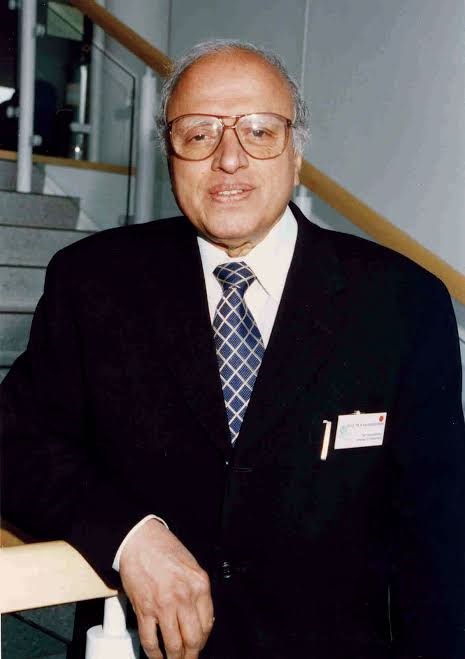
Dr. M. S. Swaminathan was one of India’s most respected agricultural scientists and is widely known as the “Father of the Green Revolution in India.” His research and leadership helped transform Indian agriculture by increasing food production and improving food security. Through his work in agricultural science, he played a major role in helping India become self-sufficient in food grains.
Why Did M. S. Swaminathan Receive the Padma Vibhushan Award?
M. S. Swaminathan received the Padma Vibhushan in 1989, India’s second-highest civilian award, for his exceptional contribution to agriculture and science.
He was honoured for his pioneering work in developing and promoting high-yielding crop varieties, modern farming methods, and policies that improved the lives of millions of farmers. His efforts were a key part of India’s Green Revolution, which helped overcome food shortages and increased agricultural productivity.
Early Life
Mankombu Sambasivan Swaminathan was born on 7 August 1925 in Kumbakonam, Tamil Nadu. He grew up in a family that valued education and public service. His father, Dr. M. K. Sambasivan, was a doctor and social reformer.
The devastating Bengal famine of 1943 influenced him deeply and inspired him to work towards improving food production and preventing hunger.
Birth Date and Death
- Full Name: Mankombu Sambasivan Swaminathan
- Birth Date: 7 August 1925
- Birth Place: Kumbakonam, Tamil Nadu, India
- Death Date: 28 September 2023
- Place of Death: Chennai, Tamil Nadu, India
He lived a long life dedicated to agricultural research, science, and social development.
Education and Career
Dr. Swaminathan completed his early education in Tamil Nadu and later studied agricultural science. He earned a degree in agricultural science from the University of Madras and pursued advanced studies in genetics and plant breeding.
He also studied at the University of Cambridge, where he completed his Ph.D. in genetics. Later, he worked with several national and international agricultural research organizations.
Important positions held by him include:
- Director General of the Indian Council of Agricultural Research (ICAR)
- Secretary of the Department of Agricultural Research and Education
- Founder of the M. S. Swaminathan Research Foundation (MSSRF)
Career and Achievements
M. S. Swaminathan made remarkable contributions to Indian agriculture. His major achievements include:
- Playing a leading role in India’s Green Revolution during the 1960s and 1970s.
- Promoting high-yielding varieties of wheat and rice.
- Helping India move from food shortages to greater food security.
- Supporting sustainable agriculture and farmer welfare.
- Encouraging the use of science and technology to improve farming.
His partnership with agricultural scientist Norman Borlaug helped introduce improved farming practices in India.
Field of Achievements
The main fields of Dr. M. S. Swaminathan’s achievements were:
- Agricultural science
- Plant genetics and breeding
- Food security
- Sustainable farming
- Rural development
- Farmer welfare
His research focused on improving crop productivity while protecting natural resources.
Awards and Honours
Dr. M. S. Swaminathan received many national and international honours, including:
- Padma Shri (1967)
- Padma Bhushan (1972)
- Padma Vibhushan (1989)
- Ramon Magsaysay Award (1971)
- World Food Prize (1987)
- Indira Gandhi Prize for Peace, Disarmament and Development (2000)
- Numerous honorary degrees from universities around the world
In 2024, he was awarded the Bharat Ratna, India’s highest civilian award, posthumously.
Interesting Facts
- M. S. Swaminathan is known as the “Father of the Green Revolution in India.”
- He originally wanted to become a medical doctor but chose agriculture after witnessing the impact of famine.
- He worked to combine modern agricultural science with traditional farming knowledge.
- He believed that farmers should be at the centre of agricultural development.
- He founded the M. S. Swaminathan Research Foundation to promote sustainable development and rural progress.
Legacy and Inspiration
Dr. Swaminathan’s work continues to influence agricultural policies and farming practices in India and around the world. His vision focused not only on increasing food production but also on protecting the environment and improving farmers’ lives.
He inspired generations of scientists, researchers, and farmers to use knowledge and innovation to solve major challenges.
Contribution to the Nation
M. S. Swaminathan made an extraordinary contribution to India by helping the country achieve food self-sufficiency. His scientific efforts reduced dependence on food imports and improved agricultural productivity.
He also worked for the rights and welfare of farmers, promoting fair opportunities, sustainable farming, and rural development. His contributions strengthened India’s economy and food security.
Conclusion
Dr. M. S. Swaminathan was a visionary scientist whose work changed the future of Indian agriculture. His role in the Green Revolution helped millions of people by improving food availability and supporting farmers. His dedication to science, sustainability, and social welfare continues to inspire future generations. His legacy remains a symbol of how knowledge and innovation can help build a stronger nation.
About the Author