

1. Introduction
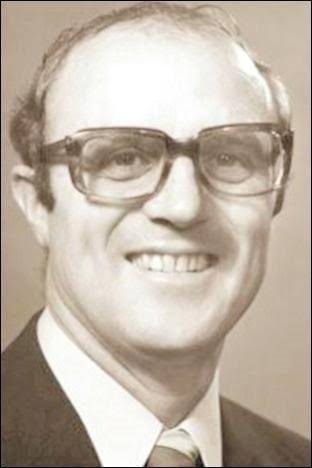
Leslie Denis Swindale (1928–2002) was a globally renowned New Zealand-born soil scientist, agriculturist, and academic whose pioneering work in soil mineralogy and tropical agriculture transformed food security frameworks across the developing world. Serving as a key leader at the international level—most notably as the Director General of the International Crops Research Institute for the Semi-Arid Tropics (ICRISAT)—Swindale dedicated his life to bridging scientific research and sustainable farming in arid and semi-arid regions.
2. Quick Facts
- Full Name: Leslie Denis Swindale
- Native Name: Leslie Denis Swindale (English)
- Date of Birth: March 16, 1928
- Place of Birth: Wellington, New Zealand
- Date of Death: September 25, 2022 (aged 94) in Honolulu, Hawaii, USA
- Nationality: New Zealand / American
- Occupation / Profession: Soil Scientist, Agronomist, Researcher, Academic Administrator
- Field of Achievement: Soil Mineralogy, Tropical Agricultural Research, and Global Food Security
- Years Active: c. 1950s – 2000s
3. Award Information (Focus: Padma Bhushan)
- Award Name: Padma Bhushan
- Award Category: Civil Honour (India’s third-highest civilian award)
- Award Year: 1991
- Presented By: The President of India
- Date of Ceremony: 1991 / 1992 (Gazetted in 1991)
- Citation / Official Reason: For exceptional and distinguished service and contributions to science and agricultural development in India.
- Previous Recipients: Eminent global leaders, scientists, and national icons.
- Next Recipients: Succeeding groups of national and international civilian honorees.
4. Why They Received the Award
Leslie Denis Swindale received the Padma Bhushan in 1991 in recognition of his extraordinary contributions to Indian agriculture. As the head of ICRISAT, he played a monumental role in advancing agricultural research for dryland farming regions, boosting crop yields for staple semi-arid crops like sorghum, pearl millet, chickpea, and pigeonpea, and deeply collaborating with Indian scientific institutions to uplift rural farming communities.
5. Early Life
Born in Wellington, New Zealand, on March 16, 1928, Swindale grew up with a deep-seated curiosity about the natural world. Raised during an era of significant shifts in agricultural science following the World Wars, he developed an early affinity for earth sciences, chemistry, and how physical terrain dictates human livelihood and sustenance.
6. Education
- Early Studies: Completed his foundational schooling in New Zealand.
- University Education: Studied at Victoria University of Wellington in New Zealand, earning initial degrees in science.
- Doctorate (Ph.D.): Travelled to the United States to attend the University of Wisconsin–Madison, where he specialized in soil science and mineralogy, completing his doctoral research examining the genesis and mineral composition of soils.
7. Career Journey
- Early Research & Academia: Worked extensively on soil surveys and mineralogical studies in New Zealand (including collaboration with the Department of Scientific and Industrial Research).
- University of Hawaii: Served as a professor and chairman of the Department of Agronomy and Soil Science at the University of Hawaii, shaping international soil classification frameworks and mentoring young agronomists.
- ICRISAT Leadership: Served as the long-standing Director General of the International Crops Research Institute for the Semi-Arid Tropics (ICRISAT) based in Patancheru, India, where he directed massive international efforts to combat hunger in dry tropical regions.
8. Major Achievements
- Global Soil Classification & Management: Advanced the understanding of tropical soils, iron-bound phosphorus dynamics, and moisture retention in dry regions.
- Scientific Publications: Authored and co-authored numerous foundational texts and monographs on soil mineralogy, bauxite deposits, and salinity tolerances of tropical soils.
- Institutional Building: Transformed ICRISAT into a premier global research hub during his tenure, facilitating cross-continental cooperation between scientists from the Global South and North.
9. Contribution to the Nation (India & Global South)
Swindale’s work directly impacted millions of smallholder farmers across the semi-arid tropics of India and Africa. By focusing research on drought-resistant crops and efficient watershed and soil management techniques, he helped turn marginal, drought-prone lands into productive agricultural zones, boosting economic stability and food security for rural populations.
10. Other Awards and Honours
- Fellow of the American Society of Agronomy (ASA)
- Fellow of the Soil Science Society of America (SSSA)
- Fellow of the New Zealand Institute of Chemistry
- Outstanding Educator of America Award (1971)
- Foreign Fellow of the National Academy of Agricultural Sciences (NAAS), India
11. Legacy and Influence
Dr. Swindale is remembered as a gentle giant of agricultural science who understood that managing soil meant managing the future of human survival. His leadership philosophy combined rigorous empirical research with deep empathy for farmers working under harsh climatic constraints. His legacy persists through the ongoing agricultural frameworks of CGIAR centers and the generations of scientists he trained worldwide.
12. Interesting Facts
- Rare Non-Indian Honour: His Padma Bhushan award in 1991 made him one of the select few foreign nationals to receive India’s third-highest civilian distinction.
- Lifelong Commitment: Even into his later retirement years in Manoa, Honolulu, he remained deeply active in professional soil science societies, maintaining memberships that spanned over half a century.
- Bridge Builder: He was famously quoted reflecting on his deep ties to India, stating how his work integrated him permanently into the broader cultural and scientific family of the subcontinent.
13. Quotes
“A soil, unlike a seed, is part of the landscape and cannot be moved physically from place to place. Its spatial variability requires localized, intelligent management to truly support humanity.” — Leslie D. Swindale
14. Timeline
- 1928: Born on March 16 in Wellington, New Zealand.
- 1955: Completed foundational doctoral work on soil mineralogy at the University of Wisconsin–Madison.
- 1970s: Appointed to leadership roles at the University of Hawaii and subsequently took the helm at ICRISAT.
- 1991: Awarded the Padma Bhushan by the Government of India for his immense contributions to agricultural science.
- 2002: Passed away peacefully on September 25 at his home in Honolulu, Hawaii, at the age of 94.
15. References
- Wikipedia contributors. “Leslie Swindale.” Wikipedia, The Free Encyclopedia.
- American Society of Agronomy / Soil Science Societies. “In Memoriam: Leslie Denis Swindale”.
- International Crops Research Institute for the Semi-Arid Tropics (ICRISAT) archival bulletins and research proceedings.
- Ministry of Home Affairs, Government of India. “Padma Awards Directory”.
16. Related Personalities
- Norman Borlaug: Nobel Laureate and pioneer of the Green Revolution whose work intersected closely with global agricultural research initiatives.
- M. S. Swaminathan: Legendary Indian agricultural scientist who collaborated heavily with international research bodies during India’s agricultural transformations.
- Goro Uehara: Renowned soil scientist and colleague at the University of Hawaii with whom Swindale collaborated on tropical soil research.
17. Frequently Asked Questions (FAQ)
Q1: What was Leslie Denis Swindale best known for?
A: He was best known for his ground-breaking research in soil mineralogy and tropical agriculture, and for his leadership as the Director General of ICRISAT, where he helped improve farming in dryland, semi-arid regions.
Q2: Why did a New Zealand scientist receive an Indian national award?
A: He received the prestigious Padma Bhushan in 1991 because of his monumental contributions to Indian agricultural research, crop science, and his commitment to boosting food security for Indian farmers through ICRISAT.
Q3: Where did he spend his final years?
A: He spent his retirement years in Manoa, Honolulu, Hawaii, where he passed away on September 25, 2022, at the age of 94.
About the Author




