

1. Introduction
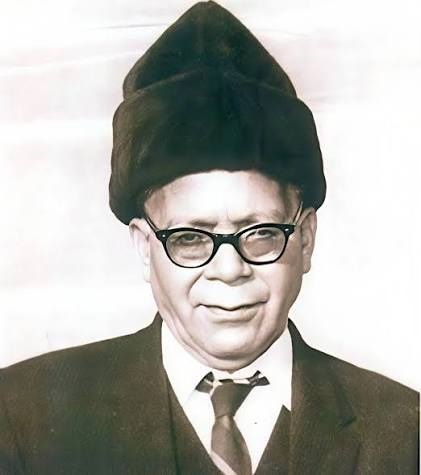
Ale Ahmad Suroor (1911–2002) was a towering figure in 20th-century Urdu literature. Celebrated primarily as a profound literary critic, poet, and academic, Suroor bridged the gap between traditional Urdu sensibilities and modern critical theory. Over a prolific career spanning decades, he shaped how generations analyzed Urdu poetry, championed the legacy of Allama Iqbal, and left behind a rich body of work that continues to guide scholars of South Asian literature.
2. Quick Facts
- Full Name: Ale Ahmad Suroor
- Native Name: آل احمد سرور (Urdu)
- Date of Birth: September 9, 1911
- Place of Birth: Badaun district, United Provinces of Agra and Oudh, British India (now Uttar Pradesh, India)
- Date of Death: February 9, 2002 (aged 90) in New Delhi, India
- Nationality: Indian
- Occupation / Profession: Professor, Poet, Literary Critic
- Field of Achievement: Urdu Literature, Literary Criticism, and Poetry
- Years Active: c. 1930s – 2000s
3. Award Information (Focus: Padma Bhushan)
- Award Name: Padma Bhushan
- Award Category: Civil Honour (India’s third-highest civilian award)
- Award Year: 1991
- Presented By: The President of India
- Date of Ceremony: 1991 / 1992 (Gazetted in 1991)
- Citation / Official Reason: For exceptional and distinguished service in the field of literature and education.
- Previous Recipients: Eminent artists, scientists, public servants, and literary icons of India.
- Next Recipients: Succeeding batches of national civilian honorees.
4. Why They Received the Award
Ale Ahmad Suroor received the Padma Bhushan in 1991 in recognition of his lifelong dedication to enriching Urdu prose and criticism. His critical works—such as Nazar aur Nazariya—transformed the landscape of Urdu literary discourse by injecting rigorous balance, accessibility, and modern psychological depth into criticism. Furthermore, his service as an academic head and mentor at institutions like Aligarh Muslim University and Kashmir University cemented his status as a pillar of Indian letters.
5. Early Life
Born on September 9, 1911, in Badaun, Uttar Pradesh, Suroor grew up during a transformative era in Indian history. His formative years were deeply influenced by the socio-political awakening of the subcontinent, the freedom struggle, and the rich cultural fabric of northern India. Even in his youth, he showed an immense inclination toward verse and language, setting the stage for his deep-rooted bond with Urdu poetry.
6. Education
- Schooling & Early Studies: Received his foundational education locally in Badaun.
- Graduation: Initially pursued sciences, graduating from St. John’s College, Agra.
- Post-Graduation: Transitioned fully to his literary passion, completing his Master’s degree in English Literature in 1934. This deep grounding in Western and English literary critical theory heavily influenced his future perspective on Urdu criticism.
7. Career Journey
- Early Academic Roles: Began teaching and writing, establishing himself as a distinct voice among progressive and traditional literary circles.
- Aligarh Muslim University (AMU): Served notably from 1958 to 1974 as a Professor and Head of the Department of Urdu at AMU, mentoring countless students.
- Kashmir University & Iqbal Institute: Later moved to Kashmir University, where he became the founder-director of the Iqbal Institute (now the Iqbal Institute of Culture and Philosophy) and served as the premier Iqbal Professor.
8. Major Achievements
- Sahitya Akademi Award (1974): Won for his monumental critical work Nazar aur Nazariya (Sight and Perspective).
- Literary Corpus: Authored foundational texts on criticism, including Tanqidi Ishare (1942), Naye aur Purane Chirag (1946), Tanqid Kya Hai? (1947), and Adab aur Nazariya (1954).
- Autobiography: Published Khwab Baaki Hai (Dreams Still Remain) in 1991, offering a rare glimpse into the literary and cultural history of 20th-century India.
9. Contribution to the Nation
Suroor played a vital role in preserving and propagating Urdu and Hindustani Tehzeeb (culture). Through books like Urdu aur Hindustani Tehjib, he emphasized that Urdu is an integral part of India’s composite cultural heritage. As an educator, he defended the dignity of the language across shifting political landscapes, maintaining that poetry and criticism must serve human values and cultural synthesis.
10. Other Awards and Honours
- Uttar Pradesh Urdu Akademi Award (1954)
- Delhi Urdu Akademi Award (1973)
- Pakistan President’s Iqbal Centenary Gold Medal (1978) – Awarded for exceptional contributions to Muhammad Iqbal’s philosophy and literature.
- Ghalib Modi Award (1982)
- Majlis-e-Farogh-e-Urdu Award (1996) – Often regarded as one of the highest global recognitions for Urdu service.
- Iqbal Samman by the Government of Madhya Pradesh (2001)
11. Legacy and Influence
Suroor’s legacy lies in freeing Urdu criticism from narrow dogmatism. He famously viewed poetry not as a physical sword to spark sudden political revolutions, but as a “lancet” meant to cleanly diagnose and refine the human mind. His work on Allama Iqbal (Iqbal aur unka Falsafa, Iqbal: Nazar aur Shairi) remains a cornerstone for anyone studying Iqbalian philosophy. He is remembered as an intellectual gentleman who balanced reason with deep emotional insight.
12. Interesting Facts
- Science to Literature Pivot: Although he graduated with a degree in science from St. John’s College, Agra, his lifelong vocation turned out to be English literature and Urdu poetry.
- Global Recognition: He was honored by both Indian and Pakistani institutions (such as receiving the Iqbal Centenary Gold Medal from the President of Pakistan), symbolizing how art transcends national boundaries.
- Master of the Ghazal and Prose: While widely famous for his critical essays, his personal reflections and occasional poetic verses showcased a deeply sensitive soul.
13. Quotes
“Poetry does not bring revolutions, but it creates the right environment to make sudden changes in the mind; it is not a ‘sword’ but a ‘lancet’.” — Ale Ahmad Suroor
“Shayari mein waqia jab tak tajurba na bane uski ahmiyat nahi hai.” (An incident in poetry has no value until it transforms into a personal experience.) — Ale Ahmad Suroor
14. Timeline
- 1911: Born on September 9 in Badaun, Uttar Pradesh.
- 1934: Completed his Master’s degree in English Literature.
- 1942: Published his first major collection of critical writing, Tanqidi Ishare.
- 1958–1974: Served as Professor and Head of the Department of Urdu at Aligarh Muslim University.
- 1974: Awarded the Sahitya Akademi Award for Nazar aur Nazariya.
- 1991: Conferred India’s prestigious civilian honor, the Padma Bhushan; published his autobiography Khwab Baaki Hai.
- 2002: Passed away on February 9 in New Delhi at the age of 90.
15. References
- Wikipedia contributors. “Ale Ahmad Suroor.” Wikipedia, The Free Encyclopedia.
- Lal, Mohan (1992). Encyclopaedia of Indian Literature: Sasay to Zorgot. Sahitya Akademi.
- Suroor, Ale Ahmad. Khwab Baqi Hai (Autobiography), Educational Book House.
- DNN24. “Ale Ahmad Suroor: The Poet Who Breathed Life Into Words”.
16. Related Personalities
- Allama Iqbal: The legendary philosopher-poet on whom Suroor wrote extensive critical commentaries.
- Mirza Ghalib: A primary subject of Suroor’s literary appreciation and critical essays.
- Faiz Ahmed Faiz: Contemporary progressive icon whose work intersected with Suroor’s literary circles.
- Rasheed Ahmad Siddiqui: Renowned Urdu satirist and contemporary academic at AMU.
17. Frequently Asked Questions (FAQ)
Q1: What was Ale Ahmad Suroor most famous for?
A: He is primarily celebrated for his ground-breaking contributions to Urdu literary criticism, his academic leadership at Aligarh Muslim University, and his insightful analytical works on Allama Iqbal.
Q2: Did Ale Ahmad Suroor write poetry or only criticism?
A: While he built his legacy as a critic, he also wrote poetry, prose collections, and a widely acclaimed autobiography titled Khwab Baaki Hai.
Q3: Which major national award did he receive in India?
A: He was awarded the Padma Bhushan in 1991 by the Government of India, alongside the Sahitya Akademi Award in 1974.
About the Author




