

1. Introduction
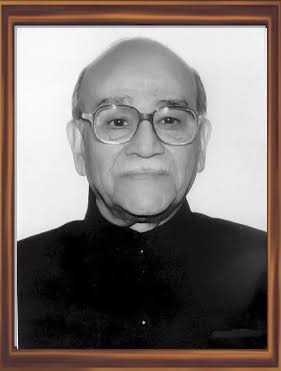
Professor Kailas Nath Kaul lived a remarkable life that merged uncompromising nationalism with world-class scientific inquiry. As the founder-director of India’s National Botanical Research Institute (NBRI), he reshaped how the country approached plant taxonomy, soil reclamation, and ecological management. Deeply connected to the upper echelons of India’s freedom movement—as the brother of Kamala Nehru and maternal uncle of Prime Minister Indira Gandhi—Kaul used his immense scientific intellect to guide early national environmental frameworks.
2. Quick facts
- Full Name: Kailas Nath Kaul
- Native Name: कैलाश नाथ कौल (Hindi)
- Date of birth: 1905
- Place Of birth: Kashmir, India
- Nationality: Indian
- Occupation/ Profession: Botanist, Agricultural Scientist, Naturalist, and Freedom Fighter
- Field of Achievement: Botany, Horticulture, Palynology, Desert Reclamation, and Environmental Science
- Years Active: 1928 – 1983
3. Award Information (Focus: Padma Bhushan)
- Award Name: Padma Bhushan
- Award Category: Civil Honour (Third Highest Civilian Award in India)
- Award Year: 1977
- Presented By: President of India
- Date of Ceremony: 1977 (Formal Investiture Ceremony)
- Citation/Official Reason: Recognized for distinguished service and exceptional contributions to literature, education, science, and agricultural research.
- Previous Recipients: Eminent scientists, scholars, and public figures from previous civilian award cycles.
- Next Recipients: Subsequent annual honorees of the Padma Bhushan.
4. Why they Receive the award?
Kaul received the Padma Bhushan in 1977 because of his monumental lifelong contributions to Indian plant sciences, his establishment of premier research infrastructure like the NBRI, and his breakthrough innovations in wasteland and desert reclamation. His ability to translate complex ecological research into practical solutions—such as turning barren alkaline soil into arable land—directly boosted India’s agricultural resilience.
5. Early Life
Born into a prominent Kashmiri Pandit family in 1905, Kaul grew up during a turbulent era of anti-colonial resistance. His family was closely woven into the core of India’s freedom struggle, particularly through his sister Kamala Nehru (who married Jawaharlal Nehru). True to his patriotic upbringing, Kaul abandoned conventional career comfort during his youth to plunge directly into the national movement, experiencing imprisonment for his political defiance before focusing on advanced sciences.
6. Education
- University of Lucknow: Earned his Master of Science (M.Sc.) in Botany in 1928.
- Royal Botanic Gardens, Kew & University of Cambridge, UK: Conducted advanced post-graduate research, becoming the first Indian scientist appointed to work directly at Kew Gardens.
- Natural History Museum, London: Specialized in paleobotany and advanced morphology.
7. Carrier Journey
- Freedom Fighter & Organizer (1930–1931): Mobilized rural communities under the guidance of the All India Congress Committee and Khan Abdul Ghaffar Khan.
- Pioneering Researcher at Kew (1930s–1940s): Worked as a senior botanical investigator in the United Kingdom.
- Founder and Director, National Botanic Gardens / NBRI (1953–1965): Established and directed what became one of the top five botanical institutions globally in Lucknow.
- Director of Gardens, Parks, and Floriculture, J&K (1969): Spearheaded the restoration of historic Mughal gardens and floral biodiversity in Jammu and Kashmir.
- First Vice Chancellor, CSA University of Agriculture and Technology (1975): Served as the founding VC of the agricultural university in Kanpur.
8. Major Achievements
- The Banthra Formula: Engineered a revolutionary biological method in 1953 to reclaim thousands of acres of barren, highly alkaline (usar) land in Uttar Pradesh, transforming it into productive agricultural and forest tracts.
- Thar Desert Water Discovery (1947): Used early aerial vegetation surveys via a small aircraft to discover hidden freshwater aquifers in Jodhpur, subsequently helping establish Rajasthan’s Underground Water Board.
- Architect of the Vigyan Mandir Scheme (1948): Conceived the rural science education framework adopted nationwide by the Government of India to popularize science among common citizens.
9. Contribution to the nation
Kaul bridged modern scientific research with grassroots national development. His policy advice and environmental insights heavily influenced his niece, Prime Minister Indira Gandhi, shaping India’s foundational environmental protection laws, wildlife preservation Acts, and conservation forestry programs in the 1970s and 1980s. His soil and water reclamation models offered scalable solutions for food security and rural uplift.
10. Other Awards and Honours
- Padma Bhushan (1977): Conferred by the Government of India.
- President, Palaeobotanical Society of India (1968).
- President, Lalit Kala Akademi, Uttar Pradesh (1965): Recognized for his deep patronage of traditional arts, sculpture, and painting.
- Eponymous Honors: A genus of ferns (Kaulinia) was named in his honor by taxonomists, alongside academic blocks and institutes bearing his name.
11. Legacy and influence
Professor Kaul is remembered as an ecological pioneer who saw nature not as a resource to be exploited, but as a living system requiring careful stewardship. His institutional footprints—spanning the NBRI, agricultural universities, and restored heritage gardens—continue to thrive. He is credited with planting the early philosophical seeds of modern environmentalism in Indian political circles long before ecology became a mainstream global agenda.
12. Interesting Facts
- Political Family Ties: He was the brother of Kamala Nehru and the maternal uncle of Indira Gandhi, placing him at the heart of India’s most prominent political family, though he preferred maintaining an independent scholarly and scientific identity.
- Jail Inmate Schoolmaster: Arrested in 1931 for planting the flag of independence, Kaul spent six months in prison where he characteristically organized an educational school for fellow inmates.
- Early Aerial Ecologist: In 1947, long before modern satellite remote sensing, he collaborated with the Maharaja of Jodhpur to fly in small aircraft, mapping desert subterranean water sources simply by observing surface vegetation patterns.
13. Quotes
“To understand a plant is to understand the pulse of the earth; if we destroy our green cover, we dismantle the very foundation of human survival.” — Prof. Kailas Nath Kaul
14. Timeline
- 1905: Born in Kashmir
- 1928: Completes his M.Sc. in Botany from the University of Lucknow
- 1931: Imprisoned during the Civil Disobedience Movement for nationalist activities
- 1939: Appointed as the first Indian scientist at the Royal Botanic Gardens, Kew
- 1947: Discovers freshwater aquifers in the Thar Desert via aerial survey
- 1953: Founds the National Botanic Gardens (now NBRI) in Lucknow and initiates the Banthra alkaline soil reclamation project
- 1969: Appointed Director of Gardens and Parks in Jammu & Kashmir
- 1975: Becomes the first Vice Chancellor of Chandra Shekhar Azad University of Agriculture and Technology
- 1977: Awarded the Padma Bhushan by the President of India
- 1983: Passes away at the age of 78
15. References
- Ramesh, Jairam. Indira Gandhi: A Life in Nature. Simon and Schuster.
- Wikipedia contributors. “Kailas Nath Kaul.” Wikipedia, The Free Encyclopedia.
- Nayar, B. K. “Kaulinia, a new genus of Polypodiaceous fern”. Taxon.
- Archives of the National Botanical Research Institute (NBRI), Lucknow.
16. Related Personalities
- Indira Gandhi: Prime Minister of India and Kaul’s niece, whose environmental protection policies were heavily influenced by him.
- Kamala Nehru: Freedom fighter, wife of Jawaharlal Nehru, and Kaul’s sister.
- Khan Abdul Ghaffar Khan: Legendary freedom leader whom Kaul assisted during early rural uplift campaigns.
- Dr. B. K. Nayar: Noted Indian pteridologist who named the fern genus Kaulinia in his honor.
17. Frequently Asked Questions (FAQ)
Q: Who was Prof. Kailas Nath Kaul?
A: He was a legendary Indian botanist, agricultural scientist, freedom fighter, and the founder of the National Botanical Research Institute (NBRI).
Q: What is the Banthra Formula?
A: It is a pioneering soil reclamation method developed by Kaul in 1953 to convert barren, highly alkaline wastelands in Uttar Pradesh into fertile agricultural and forested land.
Q: What was his relation to Indira Gandhi?
A: He was her maternal uncle (the brother of Kamala Nehru) and served as a vital intellectual guide behind her administration’s environmental and conservation policies.
About the Author