

1. Introduction
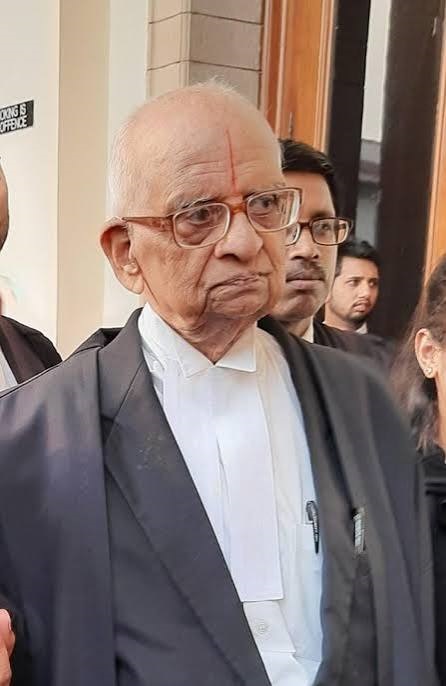
Keshava Parasaran, universally celebrated as the “Pitamah (patriarch) of the Indian Bar,” is one of the most revered and accomplished legal minds in the history of independent India. Spanning a stellar professional career of over six decades, he has shaped modern Indian constitutional jurisprudence, represented successive governments across political divides, and successfully argued some of the most culturally and legally sensitive landmark cases in the Supreme Court of India.
2. Quick facts
- Full Name: Keshava Parasaran
- Native Name: கே. பராசரன் (Tamil)
- Date of birth: October 9, 1927
- Place Of birth: Srirangam, Tamil Nadu, India
- Nationality: Indian
- Occupation/ Profession: Senior Advocate, Constitutional Jurist, and Former Parliamentarian
- Field of Achievement: Constitutional Law, Supreme Court Litigation, and Public Affairs
- Years Active: 1950 – Present
3. Award Information
- Award Name: Padma Vibhushan
- Award Category: India’s Second-Highest Civilian Award
- Award Year: 2011
- Presented By: Government of India (Conferred by President Pratibha Patil)
- Date of Ceremony: Republic Day honors cycle, 2011
- Citation/Official Reason: For exceptional and distinguished service in the field of public affairs, law, and jurisprudence.
- Previous Recipients (Examples): Luminaries across science, arts, public service, and statesmanship.
- Next Recipients: Conferred annually as part of national civilian honors.
4. Why they Receive the award?
K. Parasaran was conferred the Padma Vibhushan—following his earlier Padma Bhushan in 2003—in recognition of his monumental lifetime contributions to the Indian judicial system. His unwavering commitment to constitutional integrity, his decades of high-office service as Attorney General, and his meticulous handling of complex national litigations cemented his status as an unmatched legal statesman.
5. Early Life
Born on October 9, 1927, in the temple town of Srirangam, Tamil Nadu, Parasaran grew up in a deeply traditional and legally inclined family. He is the son of Kesava Iyengar, a respected advocate, who instilled in him a profound reverence for both statutory law and classic Sanskrit and religious texts. This unique upbringing laid the foundation for his distinct fusion of rigorous legal reasoning and deep cultural awareness.
6. Education
- Schooling: Hindu High School, Triplicane, Chennai (Passed SSLC in 1942).
- Undergraduate Degree: Earned his Bachelor of Arts (B.A.) in Economics from Presidency College, Chennai (1946).
- Law Degree: Completed his Bachelor of Laws (B.L.) from Law College, Madras (1949).
- Academic Accolades: Won prestigious honors including the Shri Justice C.V. Kumaraswami Sastri Sanskrit Medal in B.A. and the Justice Sir V. Bhashyam Iyengar Gold Medal in Hindu Law in B.L.
7. Carrier Journey
- Early Practice: Enrolled as an advocate in the Madras High Court in 1950 and began practicing before the Supreme Court of India in 1958.
- Advocate General: Appointed as the Advocate General of Tamil Nadu (1976–1977).
- Solicitor General of India: Served nationally as Solicitor General from 1980 to 1983 under Prime Minister Indira Gandhi.
- Attorney General for India: Reached the pinnacle of his administrative legal career, serving as the 12th Attorney General for India from August 1983 to November 1989 under both Indira Gandhi and Rajiv Gandhi.
- Parliamentary Tenure: Nominated as a Member of Parliament (MP) in the Rajya Sabha by the President of India from July 2012 to June 2018.
8. Major Achievements
- Ayodhya Land Dispute Case: Successfully led the legal battle representing the Hindu parties in the historic Supreme Court Ayodhya title dispute, achieving a landmark verdict.
- Sabarimala Case: Defended traditional temple customs and the Nair Service Society, presenting scriptural arguments regarding the nature of the deity.
- Landmark Constitutional Cases: Appeared in a vast array of historical Supreme Court cases, including Golaknath, Kesavananda Bharati (assisting constitutional interpretations), Indra Sawhney (Mandal case), and S.R. Bommai.
- International Representation: Led the Indian delegation to the United Nations Human Rights Commission in 1984 to present India’s report under the International Covenant on Civil and Political Rights.
9. Contribution to the nation
K. Parasaran has been an institutional anchor for Indian democracy. Whether advising the Union Government through turbulent geopolitical and domestic phases as Attorney General or defending constitutional provisions in court, his counsel prioritized systemic stability. His deep respect for judicial processes helped steer peaceful, legally sound resolutions to some of modern India’s most emotionally charged identity and property disputes.
10. Other Awards and Honours
- Padma Bhushan (2003) – Government of India
- Padma Vibhushan (2011) – Government of India
- National Law Day Award – Indian Council of Jurists
- Great Son of the Soil Award (2002) – All India Conference of Intellectuals
- Most Eminent Senior Citizen Award (2019)
- Honorary Doctor of Laws (D.Litt) from Annamalai University
11. Legacy and influence
Revered as the Pitamah of the bar, Parasaran’s legacy is defined by unmatched courtroom etiquette, deep humility, and absolute mastery over both civil and constitutional law. He set a professional benchmark where rigorous modern legal drafting harmonized seamlessly with a profound understanding of ancient Indian jurisprudence and customs.
12. Interesting Facts
- Arguing Barefoot: During the grueling final hearings of the Ayodhya land dispute case in the Supreme Court, the nonagenarian lawyer notably appeared barefoot out of intense spiritual reverence for the proceedings.
- Legal Dynasty: The legal tradition is carried forward brilliantly by his family; his son, Mohan Parasaran, served as the Solicitor General of India, continuing a legacy set by his father Kesava Iyengar.
- A Working Nonagenarian: Even well into his 90s, he remained active in high-stakes chamber conferences and courtrooms, maintaining a sharp, crystal-clear grasp of complex briefs that left younger generations of lawyers in awe.
13. Quotes
“The Constitution of India is a living document, broad enough to accommodate the changing needs of a dynamic society while preserving its core spiritual and moral fabric.”
(Reflecting his approach to advocacy): “An advocate’s primary allegiance is to the court and the truth of the Constitution, not merely to securing a victory for the client.”
14. Timeline
- 1927: Born on October 9 in Srirangam, Tamil Nadu.
- 1950: Enrolled as an advocate in the Madras High Court.
- 1958: Begins active practice before the Supreme Court of India.
- 1976–1977: Serves as Advocate General of Tamil Nadu.
- 1980–1989: Serves successively as Solicitor General and Attorney General for India.
- 2003: Conferred the Padma Bhushan by the President of India.
- 2011: Awarded India’s second-highest civilian honor, the Padma Vibhushan.
- 2012–2018: Serves as a nominated Member of Parliament in the Rajya Sabha.
- 2019: Successfully concludes arguments in the historic Ayodhya title suit.
15. References
- Supreme Court of India – Official Bar Registers and Case Law Archives.
- Ministry of Home Affairs, Government of India – Padma Awards Directories.
- Wikipedia biographical compilations and legal journal profiles (Legal Era, The Hindu).
- Sastry, Ananth. Special commemorative tributes: Law and Dharma: A Tribute to the Pitamaha of the Indian Bar.
16. Related Personalities
- Mohan Parasaran (Senior Advocate, former Solicitor General of India, and son of K. Parasaran)
- Soli Sorabjee (Renowned contemporary jurist and former Attorney General)
- Fali S. Nariman (Eminent constitutional expert and senior advocate)
- Justice Sanjay Kishan Kaul (Former Supreme Court judge who popularized the “Pitamah” moniker for Parasaran)
17. Frequently Asked Questions (FAQ)
Q1: What is K. Parasaran most famous for?
A: K. Parasaran is most famous for his monumental career as a constitutional lawyer, his tenure as India’s Attorney General, and his successful legal stewardship representing Hindu parties in the historic Ayodhya land dispute.
Q2: What are the highest civilian awards he has received?
A: He has been honored with both the Padma Bhushan (2003) and India’s second-highest civilian honor, the Padma Vibhushan (2011).
Q3: Did he serve in public office outside of legal litigation?
A: Yes, he served as a nominated Member of Parliament in the Rajya Sabha from 2012 to 2018.
For a closer look at his legal career and the immense reverence he commands in the legal
About the Author




