

1. Introduction
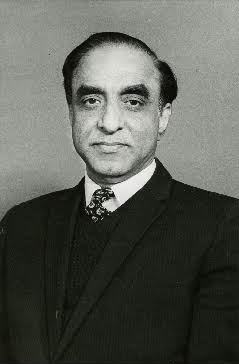
Dr. Coluthur Gopalan was a towering legend in medical research, public health, and nutritional science. Spanning a stellar career of over six decades, he fundamentally shaped how India understood food, malnutrition, and dietary requirements. Deeply moved by the tragic Bengal Famine during his youth, Dr. Gopalan shifted his focus from general medicine to nutritional epidemiology, establishing institutions, crafting national policies, and spearheading research that saved millions of lives across the developing world.
2. Quick facts
- Full Name: Coluthur Gopalan (Dr. C. Gopalan)
- Native Name: கொளுத்தூர் கோபாலன் (Tamil)
- Date of birth: November 13, 1918
- Place Of birth: Salem, Tamil Nadu, India
- Nationality: Indian
- Occupation/ Profession: Physician, Nutrition Scientist, Public Health Administrator, and Researcher
- Field of Achievement: Nutritional Science, Public Health Policy, and Institution Building
- Years Active: 1940s – 2019
3. Award Information (Focusing on his Highest Civilian Honor: Padma Bhushan)
- Award Name: Padma Bhushan
- Award Category: India’s Third-Highest Civilian Award
- Award Year: 2003
- Presented By: Government of India (Conferred by the President of India)
- Date of Ceremony: Republic Day honors cycle, 2003
- Citation/Official Reason: For exceptional and distinguished service to the nation in the fields of medicine, science, and public health nutrition.
- Previous Recipients (Examples): Eminent scientists, physicians, and nation-builders.
- Next Recipients: Conferred annually as part of national civilian honors.
4. Why they Receive the award?
Dr. Coluthur Gopalan was conferred the Padma Bhushan—following his earlier Padma Shri in 1970—in recognition of his lifelong dedication to building India’s nutritional framework from the ground up. His breakthrough research on protein-energy malnutrition, creation of national monitoring bureaus, and crafting of early public feeding blueprints (such as mid-day meal programs) structurally transformed child welfare and health standards in India.
5. Early Life
Born in Salem, Tamil Nadu, in 1918, Gopalan pursued medicine with deep academic zeal, earning his M.B.B.S. and M.D. degrees. However, the devastating Bengal Famine of 1942 deeply scarred his worldview. Witnessing widespread starvation and severe malnutrition prompted a radical pivot in his career: instead of practicing clinical medicine for individuals, he resolved to tackle nutritional crisis at a population and systemic level.
6. Education
- Medical Foundations: Earned his M.B.B.S. and M.D. in General Medicine from premier institutions in India.
- Nuffield Foundation Scholarship: Selected as India’s first Nuffield Scholar.
- Doctorate in Nutrition: Traveled to the UK and earned his Ph.D. in Nutrition from the University of London in an astonishing 30 months, mastering biochemistry and clinical metabolic testing.
7. Carrier Journey
- Joining the Labs: Returned to India and joined the Nutrition Research Laboratories (NRL) in Coonoor in 1949.
- Director of NIN: Served as the Director of the National Institute of Nutrition (NIN) (formerly NRL) in Hyderabad from 1960 to 1974, expanding its scope to cover biochemistry, endocrinology, and field studies.
- Director General of ICMR: Served as the Director General of the Indian Council of Medical Research (ICMR) from 1974 to 1979, strengthening national infrastructure for communicable and non-communicable disease research.
- Founding NGOs: Post-retirement from government service, he founded the Nutrition Foundation of India (NFI) and the Nutrition Society of India (NSI) to ensure independent public policy advocacy.
8. Major Achievements
- Unraveling Deficiency Diseases: Conducted pioneering research on severe childhood malnutrition syndromes, specifically Kwashiorkor and Marasmus, defining their clinical markers and dietary cures.
- National Nutrition Monitoring Bureau (NNMB): Established the NNMB to systematically track dietary intakes and nutritional health metrics across Indian states.
- The Nutritive Bible: Authored and edited foundational texts like Nutritive Value of Indian Foods, which remains the absolute benchmark manual used by dietitians and scientists.
- Vitamin A Interventions: Spearheaded studies that directly led to the National Prophylaxis Programme against nutritional blindness (Vitamin A massive dose supplementation).
9. Contribution to the nation
Dr. Gopalan’s scientific findings directly shaped national planning. His data and advocacy laid the scientific bedrock for major developmental interventions, including the Integrated Child Development Services (ICDS) scheme and widespread school Mid-Day Meal programs, which have nourished hundreds of millions of Indian school children and mothers.
10. Other Awards and Honours
- Padma Shri (1970) – Government of India
- Padma Bhushan (2003) – Government of India
- Fellow of the Royal Society (FRS), London
- Living Legend Award from the International Union of Nutritional Sciences (IUNS) and the Federation of Asian Nutrition Societies (FANS)
- Lifetime Achievement Awards from the National Academy of Medical Sciences
11. Legacy and influence
Dr. Gopalan is universally remembered as the patriarch of public health nutrition in South Asia. He transformed nutrition from a neglected sub-branch of medicine into an independent, rigorous scientific discipline. The institutions he built—such as the NIN and NFI—continue to guide India’s food security policies, ensuring his intellectual footprint protects future generations.
12. Interesting Facts
- A Centenarian Mind: Dr. Gopalan lived to the remarkable age of 100, passing away peacefully in October 2019. Even in his final years, he worked from his home in Chennai, actively guiding public health analysts and writing commentaries.
- The Farm-First Philosophy: He famously coined the pragmatic policy advice for developing nations: “Look to the farms, not the pharmacies,” emphasizing that local, affordable, agriculture-based food solutions are superior to synthetic supplements for community health.
- Pioneering Fieldwork: Unlike ivory-tower academics, Dr. Gopalan personally led teams into remote tribal belts and impoverished rural sectors across India to study actual deficiency disorders on-site.
13. Quotes
“Look to the farms, not the pharmacies.”
“The problem of malnutrition cannot be solved in hospital wards alone; it requires a holistic approach addressing agriculture, economics, maternal education, and social equity.”
14. Timeline
- 1918: Born on November 13 in Salem, Tamil Nadu.
- 1942: Witness to the Bengal Famine, which redirects his career focus toward nutrition science.
- 1949: Joins the Nutrition Research Laboratories (NRL, later NIN) in Coonoor.
- 1960–1974: Serves as Director of the National Institute of Nutrition (NIN), Hyderabad.
- 1970: Conferred the Padma Shri by the Government of India.
- 1974–1979: Serves as Director General of the Indian Council of Medical Research (ICMR).
- 1979: Establishes the Nutrition Foundation of India (NFI).
- 2003: Conferred India’s third-highest civilian honor, the Padma Bhushan.
- 2019: Passes away in Chennai at the age of 101, leaving an immortal scientific legacy.
15. References
- Indian Journal of Medical Research (IJMR) – Commemorative Tributes and Biographical Memoirs on Prof. C. Gopalan.
- Ministry of Home Affairs, Government of India – Padma Awards Directories.
- National Institute of Nutrition (NIN) & Nutrition Foundation of India (NFI) archival records.
- Royal Society of London – Fellowship archives for Coluthur Gopalan.
16. Related Personalities
- Sir Robert McCarrison (British physician and pioneer who founded the original Nutrition Research Laboratories in Coonoor)
- Dr. M. S. Swaminathan (Legendary agricultural scientist and architect of India’s Green Revolution)
- Dr. Kamala Krishnaswamy (Distinguished former director of NIN and close collaborator)
- Dr. Prema Ramachandran (Former ICMR scientist and director of the Nutrition Foundation of India)
17. Frequently Asked Questions (FAQ)
Q1: What is Dr. Coluthur Gopalan best known for?
A: Dr. Coluthur Gopalan is best known as the father of Indian nutrition science. He is celebrated for groundbreaking research on protein-energy malnutrition (such as Kwashiorkor) and for designing India’s core public health nutrition frameworks.
Q2: Which major leadership roles did he hold?
A: He served as the Director of the National Institute of Nutrition (NIN) and later as the Director General of the Indian Council of Medical Research (ICMR). He also founded the Nutrition Foundation of India (NFI).
Q3: What are the highest civilian honors he received?
A: He was honored with the Padma Shri in 1970 and the Padma Bhushan in 2003 by the Government of India.
About the Author




