
Introduction
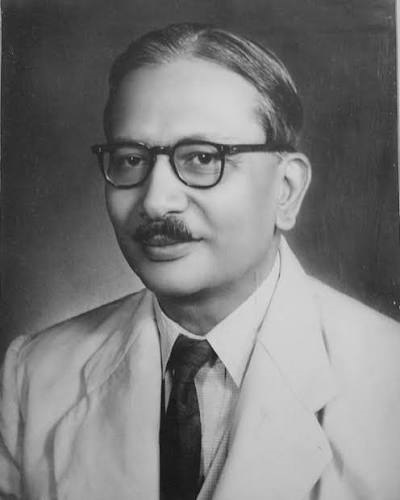
Jnan Chandra Ghosh (4 September 1894 – 21 January 1959) was a renowned Indian chemist, educator, and institution builder who played a vital role in the development of chemical science and engineering education in India. He made pioneering contributions to physical chemistry and helped establish several leading scientific and technical institutions after India’s independence. In recognition of his outstanding contributions to science, education, and nation-building, he was awarded the Padma Bhushan in 1954, one of India’s highest civilian honours. He is remembered as one of the architects of modern scientific research and technical education in India.
Early Life
Jnan Chandra Ghosh was born in Giridih, then part of the Bengal Presidency of British India (now in Jharkhand). From an early age, he showed exceptional academic ability and a keen interest in science. Encouraged by his family and teachers, he pursued higher education in chemistry, laying the foundation for a distinguished scientific career.
Birth Date and Death
- Born: 4 September 1894
- Birthplace: Giridih, Bengal Presidency, British India (now Jharkhand, India)
- Died: 21 January 1959
- Nationality: Indian
Education and Career
Jnan Chandra Ghosh completed his education at Presidency College, Calcutta, and later earned advanced degrees from the University of Calcutta under the guidance of the famous scientist Acharya Prafulla Chandra Ray.
During his academic career, he served as a professor at several prestigious institutions and later became an influential educational administrator. He was closely associated with the establishment and development of technical education in independent India. He also served as the first Director of the Indian Institute of Technology (IIT) Kharagpur and later as the Director of the Indian Institute of Science (IISc), Bangalore. His leadership helped strengthen scientific research and engineering education in the country.
Why Did He Receive the Padma Bhushan Award?
Jnan Chandra Ghosh received the Padma Bhushan in 1954 for his exceptional contributions to:
- Chemical science and physical chemistry.
- Scientific research in India.
- Development of higher technical education.
- Establishment and leadership of premier educational institutions.
- Advancing India’s scientific and industrial progress after Independence.
His work not only advanced chemistry but also helped create a strong foundation for engineering and scientific education in India.
Career and Achievements
Throughout his distinguished career, Jnan Chandra Ghosh achieved several milestones:
1. Pioneer in Physical Chemistry
He conducted important research in physical chemistry, especially on electrolytes and chemical reactions.
2. Founder of Modern Technical Education
He played a key role in developing engineering and scientific education in post-independence India.
3. First Director of IIT Kharagpur
He became the founding Director of India’s first Indian Institute of Technology, helping establish its academic excellence.
4. Director of IISc Bangalore
He later led the Indian Institute of Science, one of India’s premier research institutions.
5. National Scientific Leadership
He served on several government committees that shaped India’s science and industrial policies.
6. Institution Builder
His administrative leadership helped strengthen universities, laboratories, and research organizations across India.
Field of Achievement
Jnan Chandra Ghosh made significant contributions in the following fields:
- Physical Chemistry
- Chemical Engineering
- Scientific Research
- Higher Education
- Technical Education
- Academic Administration
- Industrial Development
Awards and Honours
Some of his major honours include:
- Padma Bhushan (1954) for contributions to science and engineering.
- Fellow of several prestigious scientific societies.
- Served as the first Director of IIT Kharagpur.
- Served as Director of the Indian Institute of Science (IISc), Bangalore.
- Held leadership positions in national scientific organizations.
Interesting Facts
- He was one of the earliest Indian scientists to gain international recognition in physical chemistry.
- He studied under the famous chemist Acharya Prafulla Chandra Ray.
- He played a major role in establishing IIT Kharagpur, India’s first IIT.
- His scientific research is associated with the Ghosh Dilution Law, an important contribution to physical chemistry.
- He combined scientific excellence with visionary educational leadership.
Legacy and Inspiration
Jnan Chandra Ghosh’s legacy extends far beyond his scientific discoveries. He helped shape India’s modern system of engineering and scientific education through his leadership at IIT Kharagpur and IISc Bangalore. His dedication to research, education, and institution-building continues to inspire students, scientists, researchers, and educators across the country.
Contribution to the Nation
Jnan Chandra Ghosh made lasting contributions to India’s development by:
- Advancing research in chemistry.
- Strengthening higher scientific education.
- Establishing world-class engineering institutions.
- Promoting scientific research for national development.
- Training future generations of scientists and engineers.
- Supporting India’s industrial and technological growth.
His efforts played an important role in building India’s scientific and technological capabilities after Independence.
Conclusion
Jnan Chandra Ghosh was one of India’s greatest chemists, educators, and institution builders. His pioneering research in physical chemistry, combined with his visionary leadership in higher education, helped transform India’s scientific landscape. As the founding Director of IIT Kharagpur and later Director of IISc Bangalore, he laid the foundation for generations of scientific innovation and engineering excellence. The Padma Bhushan awarded to him in 1954 recognized his extraordinary service to science, education, and the nation. Today, he is remembered as a true pioneer whose contributions continue to influence India’s progress in science and technology.
About the Author