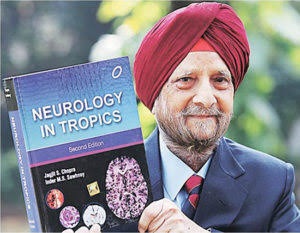
1. Introduction
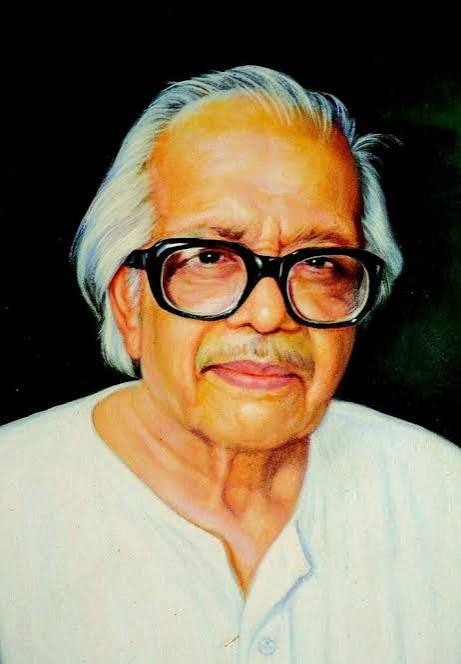
Prof. (Dr.) Jagjit Singh Chopra was a legendary Indian neurologist, a pioneer of modern neurological sciences in India, and a revered medical writer. As the founder-head of the Department of Neurology at the prestigious Postgraduate Institute of Medical Education and Research (PGIMER), Chandigarh, and the founder-principal of Government Medical College and Hospital (GMCH, Chandigarh), he dedicated his life to clinical excellence, rigorous education, and healthcare institution building.
2. Quick Facts
- Full Name: Jagjit Singh Chopra
- Native Name: ਜਗਜੀਤ ਸਿੰਘ ਚੋਪੜਾ (Punjabi)
- Date of Birth: June 15, 1935
- Place of Birth: Lahore (British India)
- Nationality: Indian
- Occupation/Profession: Neurologist, Medical Writer, Academician, Professor Emeritus
- Field of Achievement: Medical Sciences / Neurology and Medical Education
- Years Active: 1960s–2019 (Active clinical practice, institutional building, and academic lecturing spanning over five decades)
3. Award Information (Padma Bhushan)
- Award Name: Padma Bhushan
- Award Category: Medicine / Public Service
- Award Year: 2008
- Presented By: The President of India (at Rashtrapati Bhavan)
- Date of Ceremony: Republic Day, January 26, 2008
- Citation/Official Reason: For exceptional and distinguished services to the field of medicine, particularly for pioneering neurological research, treatment infrastructure, and medical education in India.
4. Why He Received the Award
Dr. Jagjit Singh Chopra was honored with the Padma Bhushan—India’s third-highest civilian award—in recognition of his monumental lifetime contributions to the medical fraternity. He was acknowledged as a foundational pillar who brought world-class neurological care to northern India, established top-tier academic training programs (such as DM Neurology at PGIMER), and shaped generations of medical professionals who went on to lead healthcare institutions globally.
5. Early Life
Born in Lahore (now in Pakistan) in pre-independence India, Dr. Chopra grew up amidst the turbulent socio-political changes of the partition era. Despite early displacement challenges, his deep inclination toward science and healing led him to pursue a path in medicine, driving him to achieve global academic standards.
6. Education
- Initial Medical Training: Completed his foundational medical education (MBBS) at the Government Medical College, Patiala.
- Postgraduate Studies Abroad:
- Obtained a Diploma in Child Health (DCH) from the Royal College of Physicians, London (1962).
- Earned his MRCP from Edinburgh with a specialization in neurology (1963).
- Awarded a Ph.D. from Queen’s University, Belfast (1967) for extensive and groundbreaking research on diabetic neuropathy.
- Distinction: Recognized as the youngest Indian to be awarded the prestigious Fellowship of the Royal College of Physicians (FRCP) of Edinburgh in 1969.
7. Career Journey
- Early Practice in the UK: Worked and researched across various prominent medical centers in the United Kingdom.
- Joining PGIMER (1968): Returned to India after a chance meeting with his former teacher Dr. P.N. Chuttani in London, joining PGIMER Chandigarh as an Assistant Professor of Neurology. He established the Department of Neurology in November 1968.
- Leadership & Expansion: Rose to become Professor and Head of the Department of Neurology, serving until his superannuation in June 1995, after which he was honored as Professor Emeritus.
- Founder-Principal: Appointed as the founder-principal of the Government Medical College and Hospital (GMCH), Sector 32, Chandigarh, setting up its administrative and academic foundations from scratch.
8. Major Achievements
- Institutional Pioneer: Single-handedly built the Department of Neurology at PGIMER Chandigarh into a globally recognized temple of learning and patient care.
- Academic Milestones: Initiated the rigorous DM (Neurology) super-specialty training program in India, mentoring scores of top neurologists serving worldwide.
- Global Representation: Selected as the first Indian neurologist to run for the presidency of the World Federation of Neurology (WFN) in 2005, and served as Secretary-General of the XIV World Congress of Neurology in New Delhi (1989).
- Literary Contribution: Authored and edited definitive medical texts, most notably Neurology in Tropics, compiling contributions from 146 international experts.
9. Contribution to the Nation
Dr. Chopra revolutionized neurological healthcare in India by making advanced diagnostics and clinical care accessible to the general public. Beyond clinical practice, he played a vital advisory role for national medical bodies, trained specialized neurology units for the Indian Armed Forces, and consistently advocated for lifestyle awareness to mitigate neurological disorders across generations.
10. Other Awards and Honours
- Dr. B.C. Roy National Award (1986): Conferred by the Medical Council of India as an eminent medical teacher.
- Padma Bhushan (2008): Conferred by the Government of India.
- ICMR Amrut Mody Research Award: Recognized for pioneering medical research.
- Fellow of the National Academy of Medical Sciences (FAMS) (1980):
- Parman Patra (2007): Awarded by the Government of Punjab.
- Lifetime Achievement Award: Conferred by the Madras Neuro Trust.
11. Legacy and Influence
Dr. Chopra’s legacy is preserved through the thousands of medical professionals he trained. Known colloquially as a strict taskmaster and discipline stickler, his legendary Saturday Grand Rounds at PGI instilled clinical precision, absolute ethics, and deep compassion in generations of doctors. The institutions he built continue to serve millions of patients across northern India.
12. Interesting Facts
- The Elevator Encounter: His return to India was sparked by a chance encounter with his mentor, Dr. P.N. Chuttani, inside an elevator in London, which immediately sealed his appointment at PGI.
- Record Holder: He held the distinction of being the youngest Indian to earn the FRCP from Edinburgh in his era.
- Fitness Enthusiast: Even in his later years, he remained a strict advocate of walking and disciplined physical health, routinely lecturing on lifestyle adjustments to combat chronic illnesses.
13. Quotes
“Rigorous clinical examination and listening carefully to your patient remains the ultimate diagnostic tool in neurology, far surpassing any machine.” — Dr. Jagjit Singh Chopra
14. Timeline
- 1935: Born on June 15 in Lahore, British India
- 1967: Earned his Ph.D. from Queen’s University, Belfast
- 1968: Founded the Department of Neurology at PGIMER, Chandigarh
- 1986: Awarded the prestigious Dr. B.C. Roy National Award
- 1995: Superannuated from PGIMER and appointed Professor Emeritus
- 2008: Conferred with the Padma Bhushan by the President of India
- 2019: Passed away on January 18 in Chandigarh at the age of 83
15. References
- Wikipedia – Jagjit Singh Chopra Biography Profile.
- World Neurology Archives – Prof. Jagjit S. Chopra Memorial Monograph.
- PGIMER Chandigarh – Department of Neurology Historical Records & Archives.
16. Related Personalities
- Dr. P.N. Chuttani (Renowned medical educator and mentor)
- Dr. Vivek Lal & Dr. Manoj K. Goyal (Prominent neurologists influenced by his school of teaching at PGI)
- Notable alumni of the Indian Academy of Neurology (IAN).
17. Frequently Asked Questions (FAQ)
Q1: Who was Dr. Jagjit Singh Chopra? A: Dr. Jagjit Singh Chopra was a titan of Indian medicine, a world-renowned neurologist, and the founder-head of the Department of Neurology at PGIMER, Chandigarh.
Q2: What are his major academic contributions?A: He pioneered structured DM Neurology training in India, established premier medical infrastructure at PGI and GMCH Chandigarh, and authored the benchmark text Neurology in Tropics.
Q3: What awards did he receive from the Government of India? A: He received India’s highest medical honor, the Dr. B.C. Roy Award (1986), and the civilian distinction Padma Bhushan (2008).
About the Author