
1. Introduction
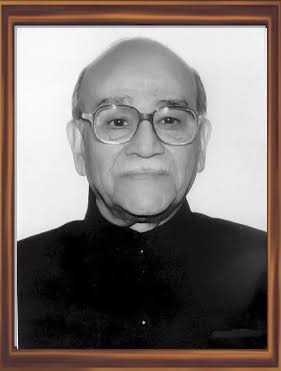
Lieutenant General Inderjit Singh Gill, PVSM, MC (16 January 1922 – 30 May 2001) was a legendary general officer in the Indian Army and a master military strategist. Renowned as a “soldier’s soldier”, he served with distinction across multiple theaters of conflict, moving from daring undercover sabotage operations behind enemy lines in World War II Europe to core operational planning during the landmark 1971 Bangladesh Liberation War. Possessing a razor-sharp intellect, fierce independence, and uncompromising professional standards, he left an indelible mark on the modern evolution of the Indian military.
2. Quick Facts
- Full Name: Inderjit Singh Gill
- Native Name: ਇੰਦਰਜੀਤ ਸਿੰਘ ਗਿੱਲ / इन्द्रजीत सिंह गिल
- Date of Birth: January 16, 1922
- Place of Birth: United Kingdom (raised and rooted significantly in India)
- Nationality: Indian
- Occupation/Profession: Military Officer (Indian Army / British Army)
- Field of Achievement: Military Strategy, Special Operations, and Wartime Command
- Years Active: 1941 – 1979
3. Award Information
- Award Name: Padma Bhushan
- Award Category: Civilian Honor (Third Highest Civilian Award in India)
- Award Year: 1972
- Presented By: Government of India
- Date of Ceremony: 1972 (Republic Day honors list)
- Citation/Official Reason: Recognized for his outstanding leadership, strategic direction, and distinguished service as the officiating Director of Military Operations (DMO) during the 1971 Indo-Pakistani War.
- Previous Recipients: Notable national and international figures in public service, arts, sciences, and defense.
- Next Recipients: Subsequent annual cohorts of Padma Bhushan awardees.
4. Why They Received the Award
Lieutenant General I.S. Gill was awarded the Padma Bhushan for his brilliant orchestration of military operations during the 1971 war that led to the liberation of Bangladesh. Operating from the nerve center as the officiating Director of Military Operations, his meticulous planning, calm temperament under extreme duress, and tactical foresight enabled the Indian Army to execute a lightning campaign, forcing the historic surrender of over 90,000 opposing troops.
5. Early Life
Born in January 1922, Inderjit was the son of Lieutenant Colonel Gurdial Singh Gill of the Indian Medical Service and his Scottish wife, Rena Lister. Because his father later served as the Inspector General of Prisons in Madras (now Chennai) and formed close bonds with national leaders like C. Rajagopalachari, Gill grew up with a unique cross-cultural background. Though exposed to diverse environments, his formative schooling took place in India before he traveled to the United Kingdom for higher academic pursuits.
6. Education
Gill completed his preliminary schooling in India before moving to the UK. He was pursuing engineering studies at the University of Edinburgh when the outbreak of World War II disrupted civilian life, prompting him to pivot toward military service. Later in his military career, he successfully completed advanced professional courses, including the elite Defense Services Staff College (DSSC) curriculum in 1954.
7. Career Journey
- World War II & Special Operations: Dropping out of university in 1941, he enlisted in the British Army’s Black Watch regiment. He volunteered for the Special Operations Executive (SOE) and undertook high-risk undercover sabotage missions in Axis-occupied Greece, most notably the historic destruction of the Gorgopotamos Bridge (Operation Harling), earning a Military Cross.
- Transition to the Indian Army: Just prior to India’s independence, he relinquished his British commission and joined the newly independent Indian military setup in 1947.
- Command and Staff Roles: Assumed command of the elite 1st Battalion, The Parachute Regiment (1 Para) in 1955. He subsequently commanded a parachute brigade during the 1965 conflict, served as Director of Military Training, and acted as the Director of Military Operations (DMO) during the 1971 war.
- Senior General Rank & Retirement: Promoted to Lieutenant General, he commanded a corps in the eastern sector and later served as the General Officer Commanding-in-Chief (GOC-in-C) of the Western Command before retiring on June 1, 1979.
8. Major Achievements
- Awarded the Military Cross (MC) during World War II for extraordinary coolness, courage, and leadership during deep-penetration guerrilla sabotage in Nazi-occupied Greece.
- Utilized his guerrilla warfare expertise during the 1965 Indo-Pakistani War to effectively track down and neutralize armed infiltrators in Jammu and Kashmir.
- Masterminded operational layouts as the DMO during the 1971 war, remaining steadfast at his headquarters throughout the intensive campaign.
9. Contribution to the Nation
General Gill bridged the pre-independence professional British-Indian military tradition with the operational ethos of a sovereign, modern Indian Army. His strategic vision during the 1971 war directly shaped the geopolitical map of South Asia with the creation of Bangladesh. Beyond combat, his emphasis on rigorous physical training, independent thinking, and uncompromising tactical readiness helped mold generations of infantry and special forces officers.
10. Other Awards and Honours
- Param Vishisht Seva Medal (PVSM): Awarded in 1967 by the President of India for distinguished service of the most exceptional order.
- Military Cross (MC): Conferred by the British government for gallantry during World War II undercover missions (1943).
- Multiple foreign service honors and campaign medals accumulated across his extensive global and domestic military engagements.
11. Legacy and Influence
Lieutenant General Gill is remembered as an iconoclast within military circles—an officer who valued operational efficiency, intellectual depth, and straightforward candor over bureaucratic posturing or sycophancy. His colorful personality, background, and daring WWII exploits are widely believed to have served as a partial inspiration for fictional characters like the Sikh sapper “Lt. Kip” in Michael Ondaatje’s Booker Prize-winning novel The English Patient. His legacy endures as a blueprint for professional military excellence and fearless leadership.
12. Interesting Facts
- The Special Operations Pioneer: Long before modern special forces units gained widespread institutional prominence, Gill was parachuting behind enemy lines and blowing up heavily guarded supply bridges in German-occupied Europe.
- Non-Conformist Persona: Raised partially abroad with a distinct British-influenced demeanor, he famously stood out in the traditional military landscape for his sharp wit, aversion to empty ceremony, and intellectual approach to warfare.
- Deep Roots in Chennai: Though his career took him across the globe, his family’s deep association with Madras led to lasting regional ties, with areas like Gill Nagar in Chennai reflecting his family’s historical footprint.
13. Quotes
“An army is built on discipline and professionalism, but it is sustained in the crucible of war by absolute clarity of thought and the courage to make hard choices without hesitation.”
— Reflecting his core tactical philosophy.
14. Timeline
| Year | Event |
| 1922 | Born on January 16. |
| 1941 | Dropped out of Edinburgh University to enlist in the British Army (Black Watch). |
| 1942–1943 | Participated in Operation Harling, blowing up the Gorgopotamos Bridge in Greece; subsequently awarded the Military Cross. |
| 1947 | Relinquished British commission to join the newly formed Indian Army. |
| 1955 | Took over command of the elite 1st Battalion, The Parachute Regiment (1 Para). |
| 1967 | Conferred with the Param Vishisht Seva Medal (PVSM) as a Major General. |
| 1971 | Served as officiating Director of Military Operations (DMO) during the Bangladesh Liberation War. |
| 1972 | Awarded the Padma Bhushan by the Government of India. |
| 1974–1979 | Promoted to Lieutenant General; served as GOC-in-C Western Command until his retirement on June 1, 1979. |
| 2001 | Passed away on May 30 in Chennai, Tamil Nadu. |
15. References
- Wikipedia contributors. “Inderjit Singh Gill.” Wikipedia, The Free Encyclopedia.
- Muthiah, S. Born to Dare: The Life of Lt. Gen. Inderjit Singh Gill, PVSM, MC. Penguin Books.
- Ministry of Home Affairs, Government of India. Padma Awards Directory.
- Archival Military Records and Historical Chronicles of the 1971 Indo-Pakistani War.
16. Related Personalities
- Field Marshal Sam Manekshaw: Chief of the Army Staff during the 1971 war, with whom Gill worked closely.
- Lt. Gen. J.S. Aurora: Eastern Army Commander during the 1971 Bangladesh campaign.
- C. Rajagopalachari: India’s first Indian Governor-General, with whom his family shared a close historical bond in Madras.
17. Frequently Asked Questions (FAQ)
Q1: Who was Lieutenant General Inderjit Singh Gill?
A: He was a decorated Indian Army general who played a crucial role as the Director of Military Operations during the 1971 Indo-Pakistani War and fought behind enemy lines in World War II.
Q2: What major military awards did he receive?
A: He was decorated with the Military Cross (MC) during World War II, the Param Vishisht Seva Medal (PVSM) in 1967, and the Padma Bhushan in 1972.
Q3: What was his role in the 1971 War?
A: He served as the officiating Director of Military Operations (DMO), where he coordinated the overarching military strategy that ensured India’s swift victory and the creation of Bangladesh.
Q4: Is it true he inspired a character in The English Patient?
A: Yes, his remarkable World War II background as an undercover sapper conducting sabotage missions in Greece is widely recognized as an inspiration behind the character “Lt. Kip” in Michael Ondaatje’s acclaimed novel.
About the Author