Introduction
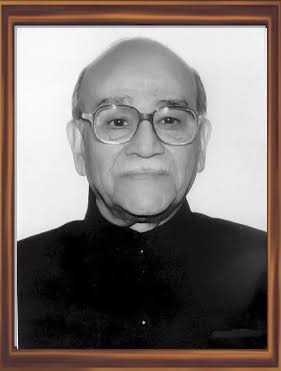
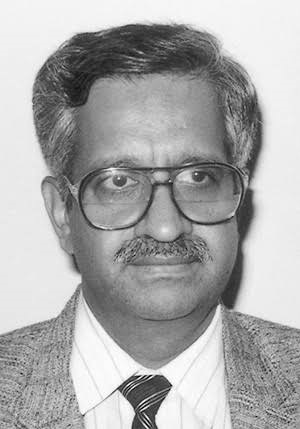
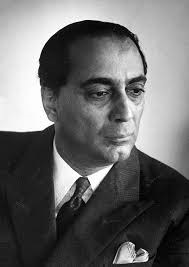
Homi Jehangir Bhabha was one of India’s greatest scientists and the visionary founder of the country’s nuclear programme. He played a key role in developing scientific research institutions in India and believed that science and technology were essential for national development. His efforts laid the foundation for India’s progress in nuclear energy, space research, and advanced scientific studies.
Why Did Homi J. Bhabha Receive the Padma Bhushan Award?
Homi J. Bhabha was awarded the Padma Bhushan in 1954 by the Government of India for his outstanding contributions to nuclear physics, scientific research, and the development of India’s atomic energy programme.
The award recognized his:
- Research in theoretical physics and cosmic rays.
- Leadership in establishing India’s nuclear science institutions.
- Contribution to building scientific capabilities after India’s independence.
- Role in creating a strong foundation for atomic energy research in India.
Early Life
Homi Jehangir Bhabha was born on 30 October 1909 in Bombay (now Mumbai), India. He belonged to a well-educated and influential Parsi family. His father, Jehangir Hormusji Bhabha, was a lawyer, and his family encouraged his interest in science and education from a young age.
As a child, Bhabha showed exceptional intelligence and curiosity. He developed a passion for mathematics, physics, art, and music.
Birth Date and Death
- Full Name: Homi Jehangir Bhabha
- Born: 30 October 1909
- Birthplace: Bombay, British India (present-day Mumbai, India)
- Died: 24 January 1966
- Place of Death: Near Mont Blanc, Switzerland, in an air crash
Education and Career
Education
Homi Bhabha completed his early education in Mumbai and later went to England for higher studies.
- He studied mechanical engineering at University of Cambridge.
- Later, he focused on theoretical physics and conducted research at the Cavendish Laboratory.
- He earned recognition for his research in quantum physics and particle theory.
Career
After returning to India, Bhabha dedicated himself to scientific research and institution building.
Important positions and contributions:
- Founded the Tata Institute of Fundamental Research (TIFR) in 1945.
- Became the first chairman of the Atomic Energy Commission of India in 1948.
- Played a major role in establishing India’s nuclear energy programme.
- Helped create the foundation for future scientific organizations.
Field of Achievements
Homi Bhabha made major contributions in several areas:
1. Nuclear Physics
He conducted important research on:
- Cosmic rays.
- Electron and positron interactions.
- Quantum mechanics.
The Bhabha scattering process in particle physics is named after him.
2. Atomic Energy Development
Bhabha believed nuclear energy could help India in areas such as:
- Electricity generation.
- Medicine.
- Agriculture.
- Industrial development.
3. Scientific Institution Building
He established world-class research centres that helped India develop scientific talent and innovation.
Awards and Honours
Some major awards and recognitions received by Homi Bhabha include:
- Padma Bhushan (1954) – Government of India
- Adams Prize (1942) – University of Cambridge
- Fellow of the Royal Society (1941) – United Kingdom
- Padma Vibhushan (1966, posthumously) – Government of India
Several institutions and awards have been named in his memory, including the prestigious Homi Bhabha Fellowships.
Interesting Facts About Homi J. Bhabha
- Homi Bhabha was not only a scientist but also an excellent painter and lover of classical music.
- He played a major role in making India self-reliant in scientific research.
- He was known for his vision of using nuclear energy for peaceful purposes.
- The Bhabha Atomic Research Centre (BARC) was named in his honour.
- He was sometimes called the Father of India’s Nuclear Programme.
Legacy and Inspiration
Homi Bhabha’s legacy continues through the scientific institutions he created and the generations of scientists inspired by his work. His vision encouraged India to invest in research, technology, and innovation.
He showed that scientific progress could play an important role in solving national challenges and improving people’s lives. His dedication remains an inspiration for students, researchers, and future scientists.
Contribution to the Nation
Homi Bhabha made several important contributions to India:
- Built the foundation of India’s nuclear energy programme.
- Developed advanced scientific research facilities.
- Encouraged young Indians to pursue careers in science.
- Promoted peaceful applications of nuclear technology.
- Helped India become a stronger scientific nation after independence.
Conclusion
Homi J. Bhabha was a visionary scientist whose contributions transformed India’s scientific landscape. Through his research, leadership, and institution-building efforts, he created a strong foundation for nuclear science in India. His achievements continue to inspire scientists and students around the world. His life represents the power of knowledge, innovation, and dedication toward national progress.
About the Author