1. Introduction
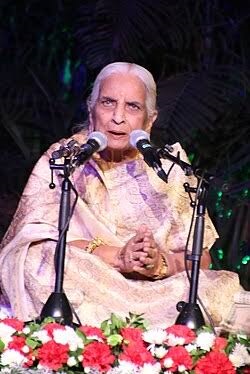
Girija Devi (8 May 1929 – 24 October 2017) was a legendary Indian classical singer belonging to the Seniya and Banaras gharanas. Widely celebrated and affectionately dubbed the “Queen of Thumri,” she played a monumental role in elevating the status of light-classical and semi-classical music, taking the purabi ang thumri style from local traditions to global concert stages.
2. Quick Facts
- Full Name: Girija Devi
- Native Name: गिरिजा देवी (Hindi)
- Date of Birth: May 8, 1929
- Place of Birth: Varanasi (Benares), British India
- Nationality: Indian
- Occupation / Profession: Hindustani Classical Singer, Music Educator
- Field of Achievement: Classical and Semi-Classical Music (Thumri, Khyal, Tappa)
- Years Active: 1949–2017
3. Award Information
- Award Name: Padma Vibhushan (along with Padma Bhushan and Padma Shri)
- Award Category: Civilian Honour (Second Highest)
- Award Year: 2016 (Padma Bhushan in 1989; Padma Shri in 1972)
- Presented By: President of India
- Date of Ceremony: April 12, 2016 (for Padma Vibhushan)
- Citation / Official Reason: For exceptional and distinguished service to the nation in the field of art and classical music.
- Previous Recipients: Iconic maestros of Indian classical arts.
- Next Recipients: Subsequent cohorts of the Padma Vibhushan.
4. Why She Received the Award
Girija Devi received the Padma Vibhushan (culminating her string of national honors) for her lifelong dedication to preserving, refining, and popularizing the Banaras gharana style of singing. She rescued thumri, dadra, chaiti, and kajri from relative obscurity, giving semi-classical genres the same academic and aesthetic respect commanded by heavy classical khyal performances.
5. Early Life
Born in Varanasi into an upper-class landowning family, Girija Devi grew up immersed in a culturally rich environment. Her father, Ramdeo Rai, was an amateur harmonium player who recognized her innate pitch and rhythm early on. Surrounded by the spiritual and musical ethos of the Ganges banks, her childhood was deeply intertwined with traditional folk and classical sounds.
6. Education
- Early Training: Began formal training at the tender age of five under the legendary vocalist and sarangi maestro Sarju Prasad Misra, learning khyal and tappa.
- Advanced Studies: Continued her rigorous musical education under Chand Misra, mastering a vast array of styles, including regional folk variants.
- Early Exposure: Even dabbled briefly in acting, starring in a film titled Yaad Rahe at age nine.
7. Career Journey
- First Public Broadcast (1949): Gave her maiden radio performance on All India Radio (AIR) Allahabad, marking her formal entry into professional performance after overcoming initial conservative familial restrictions.
- Concert Circuit: Performed extensively across India and internationally, captivating audiences with her emotive depth.
- Academic Mentor: Served as a faculty member at the ITC Sangeet Research Academy in Kolkata (1980s) and Banaras Hindu University (early 1990s), training a dedicated line of disciples.
8. Major Achievements
- Queen of Thumri: Elevated thumri from a minor or light-classical genre into a deeply expressive, sophisticated art form.
- Mastery Over Multiple Forms: Performed khyal, tappa, thumri, dadra, kajri, chaiti, and holi with equal mastery.
- Institutional Legacy: Mentored generations of students who went on to propagate the Banaras tradition globally.
9. Contribution to the Nation
Girija Devi acted as a cultural ambassador for India’s rich folk-classical heritage. By fusing rigorous classical grammar with the emotional, earthy charm of eastern Uttar Pradesh and Bihar folk traditions, she preserved an invaluable part of India’s intangible cultural history.
10. Other Awards and Honours
- Padma Shri (1972)
- Sangeet Natak Akademi Award (1977)
- Padma Bhushan (1989)
- Sangeet Natak Akademi Fellowship (2010)
- Maha Sangeet Samman Award (2012)
- GITAA Lifetime Achievement Award (2012)
- Padma Vibhushan (2016)
11. Legacy and Influence
Her passing on October 24, 2017, marked the end of an era for the Banaras gharana. However, her soulful renditions and commitment to teaching ensure that the nuances of purabi ang continue to inspire contemporary vocalists. Schools and cultural festivals across India frequently celebrate her enduring contributions.
12. Interesting Facts
- Breaking Tradition: Coming from a traditional landowning background, her family initially discouraged public performances, but her fierce passion for music ultimately turned her into a trailblazing professional performer.
- The Power of Expression: She famously emphasized that thumri required more than technical skill—it required conveying the lived human experience and poetry of love and separation.
- Varanasi Connection: Despite traveling the world, her heart remained deeply tied to the ghats of Varanasi, which heavily influenced her artistic identity.
13. Quotes
“Music is not just about technical perfection; it is about reaching the soul. If the listener does not feel the emotion behind the words, the singing has failed.”
14. Timeline
- 1929: Born on May 8 in Varanasi, British India
- 1934: Began musical training under Sarju Prasad Misra at age five
- 1949: Performed her first broadcast on All India Radio
- 1972: Awarded the Padma Shri by the Government of India
- 1980s: Joined the ITC Sangeet Research Academy as a faculty member
- 1989: Honored with the Padma Bhushan
- 2016: Conferred the nation’s second-highest civilian honor, the Padma Vibhushan
- 2017: Passed away on October 24 in Kolkata at the age of 88
15. References
- Wikipedia contributors. “Girija Devi.” Wikipedia, The Free Encyclopedia.
- Yatindra Mishra. Girija: A Journey Through Thumri (2006, Rupa Publications).
- The Hindu. ‘Queen of Thumri’ Girija Devi dead (October 2017).
- The New Grove Dictionary of Music and Musicians (Vol. 7).
16. Related Personalities
- Sarju Prasad Misra & Chand Misra: Her primary gurus who shaped her foundational repertoire.
- Siddheshwari Devi: Another legendary contemporary exponent of the Banaras gharana thumri tradition.
17. Frequently Asked Questions (FAQ)
Q1: Why is Girija Devi called the “Queen of Thumri”?
A: She earned this title because she single-handedly elevated thumri and semi-classical regional music styles from folk contexts to elite classical concert platforms, defining the genre with unmatched emotional depth.
Q2: Which musical schools or gharanas did she belong to?
A: She belonged to the Seniya and Banaras gharanas, specializing distinctively in the purabi ang style.
Q3: What are the highest civilian awards she received?
A: She received the Padma Shri in 1972, the Padma Bhushan in 1989, and ultimately the prestigious Padma Vibhushan in 2016.
About the Author