

1. Introduction
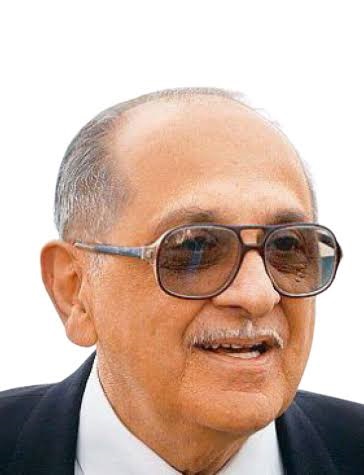
Fali Sam Nariman was one of India’s most distinguished constitutional jurists, senior advocates, and legal scholars. Over a prolific career spanning more than 70 years, he became a moral compass for the Indian judiciary, fearlessly defending constitutional values, human rights, and the independence of the courts.
2. Quick facts
- Full Name: Fali Sam Nariman
- Native Name: फली साम नरीमन
- Date of birth: 10 January 1929
- Place Of birth: Rangoon, Burma Province, British India
- Nationality: Indian
- Occupation/ Profession: Senior Advocate, Jurist, Author
- Field of Achievement: Constitutional Law and Jurisprudence
- Years Active: 1950–2024
3. Award Information
- Award Name: Padma Vibhushan
- Award Category: India’s Second-Highest Civilian Award
- Award Year: 2007
- Presented By: President of India, Dr. A.P.J. Abdul Kalam
- Date of Ceremony: 23 March 2007
- Citation/Official Reason: For exceptional and distinguished service in the field of public affairs and jurisprudence.
- Previous Recipients (optional): Eminent leaders, artists, and scientists.
- Next Recipients: Subsequent stalwarts in art, public service, and science.
4. Why they Receive the award?
Fali S. Nariman received the Padma Vibhushan and other prestigious honours for his monumental contributions to Indian jurisprudence and his unwavering defense of judicial independence. His principled stands—such as resigning from his post as Additional Solicitor General in protest against the Emergency—and his landmark arguments in several constitutional cases cemented his legacy as a titan of Indian law.
5. Early Life
Born in Rangoon (now Yangon, Myanmar) to Parsi parents Sam Bariyamji Nariman and Banoo Nariman, his family fled to India in 1942 as refugees following the Japanese invasion during World War II. Settling in India, he completed his schooling at Bishop Cotton School, Shimla, before moving to Mumbai.
6. Education
- Graduated with a Bachelor of Arts in Economics and History from St. Xavier’s College, Mumbai.
- Secured a Bachelor of Laws degree (LL.B.) from the Government Law College, Mumbai in 1950, standing first in the examination and winning the Kinlock Forbes Gold Medal and Prize for Roman Law and Jurisprudence.
7. Carrier Journey
- 1950: Enrolled as an advocate at the Bombay High Court.
- 1971: Designated as a Senior Advocate by the Supreme Court of India.
- 1972: Appointed as the Additional Solicitor General of India.
- 1975: Resigned from his position as Additional Solicitor General overnight in protest against the imposition of the Emergency.
- 1999–2005: Served as a nominated member of the Rajya Sabha, the upper house of the Indian Parliament.
8. Major Achievements
- Appeared in many historic Supreme Court cases, including the Bhopal gas tragedy disaster litigation, TMA Pai case on minority educational rights, and the NJAC verdict.
- Served as the President of the Bar Association of India for nearly two decades (1991–2010).
- Held global leadership roles, including Vice-Chairman of the International Court of Arbitration (ICC, Paris) and President of the International Council for Commercial Arbitration (ICCA).
9. Contribution to the nation
Nariman shaped the contours of Indian constitutional democracy. Through his meticulous interpretations of law, he helped safeguard the foundational principles of the Constitution, protect minority rights, and maintain checks and balances between the organs of the State. His moral courage during critical political crises safeguarded democratic structures.
10. Other Awards and Honours
- Padma Bhushan: 1991
- Gruber Prize for Justice: 2002
- Lal Bahadur Shastri National Award for Excellence in Public Administration: 2018
- SKOCH Law Award for Exemplary Service of Law: 2022
11. Legacy and influence
Regarded as the conscience keeper of the Indian legal community, Nariman inspired generations of lawyers with his uncompromising professional ethics, eloquence, and intellectual rigor. His literary works, such as Before Memory Fades, remain essential reading for anyone seeking to understand the evolution of independent India’s legal landscape.
12. Interesting Facts
- His father initially wanted him to clear the Indian Civil Service examination, but due to financial constraints at the time, he chose law as an alternative, which shaped India’s legal history.
- He was the father of Justice Rohinton Fali Nariman, who served as a distinguished Judge of the Supreme Court of India.
- He famously practiced law actively for over seven decades right up to his final years.
13. Quotes
“In the fullness of time, if God wills, I would also like to die in a secular India.” — Fali S. Nariman
14. Timeline
- 1929: Born on 10 January in Rangoon, Burma
- 1950: Began legal practice at the Bombay High Court
- 1975: Resigned as Additional Solicitor General over the Emergency
- 1991: Conferred with the Padma Bhushan
- 2007: Awarded the Padma Vibhushan
- 2024: Passed away on 21 February in New Delhi at the age of 95
15. References
- Wikipedia: Fali Sam Nariman biographical records
- Bar Association of India official profile archives
- Autobiography: Before Memory Fades (Hay House India)
16. Related Personalities
- Justice Rohinton Fali Nariman (Son and former Supreme Court judge)
- Soli Sorabjee (Renowned jurist and contemporary)
- Nani Palkhivala (Legendary jurist and mentor figure)
17. Frequently Asked Questions (FAQ)
- Q: Who was Fali S. Nariman?A: He was a legendary Indian constitutional jurist, senior Supreme Court advocate, and author who practiced law for over 70 years.
- Q: What major national awards did he receive?A: He received the Padma Bhushan in 1991 and India’s second-highest civilian honor, the Padma Vibhushan, in 2007.
- Q: What are some notable books authored by him?A: His notable publications include his autobiography Before Memory Fades, India’s Legal System: Can it be Saved?, and God Save the Hon’ble Supreme Court.
About the Author




