1. Introduction
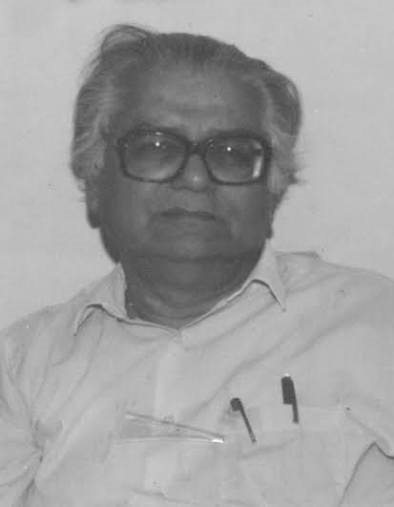
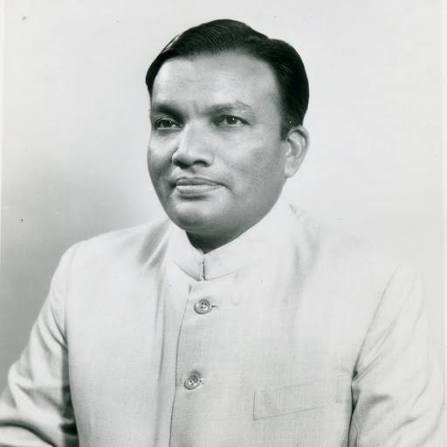
Dr. Durga Das Basu (2 February 1910 – 16 May 1997) was one of India’s most influential jurists, constitutional-law scholars, judges and legal authors. He is particularly remembered for his extensive writings on the Constitution of India and for making complex constitutional principles accessible to generations of law students, lawyers, teachers and researchers.
His best-known books include Introduction to the Constitution of India and Commentary on the Constitution of India. His work covered constitutional law, administrative law, jurisprudence, human rights and other areas of legal scholarship.
Basu combined an academic career with judicial service. He served as a judge of the Calcutta High Court and was also a member of the Law Commission of India. His scholarship earned recognition in India and abroad.
In the official 1985 Padma Awards notification, the Government of India awarded Dr. (Justice) Durga Das Basu the Padma Bhushan for Constitutional Law.
2. Quick Facts About Durga Das Basu
| Detail | Information |
|---|---|
| Full Name | Durga Das Basu |
| Native Name | দুর্গা দাস বসু / दुर्गा दास बसु |
| Date of Birth | 2 February 1910 |
| Place of Birth | Sreefaltala, Khulna District, Bengal Presidency, British India |
| Present-day Location | Khulna region, Bangladesh |
| Nationality | Indian |
| Profession | Jurist, lawyer, judge, legal scholar, author and educator |
| Field of Achievement | Constitutional Law, Jurisprudence and Legal Education |
| Years Active | Approximately 1930s–1990s |
| Date of Death | 16 May 1997 |
| Place of Death | Kolkata, West Bengal, India |
| Major National Honour | Padma Bhushan, 1985 |
A detailed biographical tribute records that Basu was born on 2 February 1910 in Sreefaltala in Khulna District, studied at Khulna District School and Daulatpur Hindu Academy, and later pursued higher studies in Calcutta.
3. Award Information
Padma Bhushan
The Padma Bhushan is one of India’s civilian honours and is awarded for distinguished service of a high order.
For Durga Das Basu, the official government record is particularly useful because it identifies his field specifically as Constitutional Law.
| Award Detail | Information |
|---|---|
| Award Name | Padma Bhushan |
| Award Category | Padma Bhushan |
| Award Year | 1985 |
| Field / Citation | Constitutional Law |
| Presented By | President of India |
| Official Notification Date | 26 January 1985 |
| Ceremony Date | Exact ceremony date not established from the sources consulted |
| Recipient | Dr. (Justice) Durga Das Basu |
| State Listed | Calcutta / West Bengal |
| Reason for Recognition | Distinguished contribution to Constitutional Law |
The original President’s Secretariat notification dated 26 January 1985 explicitly lists “Dr. (Justice) Durga Das Basu (Constitutional Law), Calcutta” among the Padma Bhushan recipients.
Previous Recipients
There is no single previous recipient because the Padma Bhushan is awarded annually to multiple people across different fields. The 1984 awardees therefore represent the previous year’s recipients.
Next Recipients
The 1986 Padma Bhushan recipients followed the 1985 awardees. There is no individual “successor” because Padma Bhushan is not a sequential award.
4. Why Did Durga Das Basu Receive the Award?
Durga Das Basu received the Padma Bhushan in 1985 for Constitutional Law. This recognition reflected his substantial contribution to Indian legal scholarship and constitutional studies.
His contribution was particularly significant because of his detailed study and explanation of the Indian Constitution. His books became important reference works for law students, academics, lawyers and others studying India’s constitutional system.
His career also included judicial service, membership of the Law Commission and teaching and lecturing at universities. A tribute published by LiveLaw notes that his work was widely respected by judges and lawyers and that he served as a member of the Law Commission before becoming a judge of the Calcutta High Court in 1963.
5. Early Life
Durga Das Basu was born on 2 February 1910 in Sreefaltala, Khulna District, then part of British India.
He was the eldest son of Sushila and Rakhal Das Basu. His early education took place in the Khulna region.
From an early age, Basu developed a strong interest in academic study. His later career demonstrated a combination of legal knowledge, political science, constitutional theory and historical understanding.
His intellectual interests eventually led him toward legal scholarship rather than a conventional private legal practice.
6. Education
Basu received his early schooling at Khulna District School and Daulatpur Hindu Academy.
He subsequently studied at Presidency College, Calcutta, where he completed his studies in Political Science.
He obtained:
- Honours degree in Political Science
- Master’s degree in Political Science
- LL.B. from Calcutta University Law College
He completed his LL.B. in 1933, reportedly securing First Class First.
Even during his student years, he had already begun writing small books on legal subjects. This early interest in legal writing became a defining feature of his professional life.
7. Career Journey
Early Legal Career
After completing his legal education, Basu joined the Bengal Civil Service (Judicial) in 1935.
He worked as a Munsiff at different locations.
His experience in the judiciary gave him practical knowledge of how legal principles operated in courts.
Academic and Legal Writing
Basu’s interest in legal scholarship developed alongside his judicial career.
He wrote extensively on constitutional law and other areas of jurisprudence. His books were intended not only for legal specialists but also for students and academics.
Law Commission of India
Basu was later appointed a full-time member of the Law Commission of India.
This was an important stage in his career because the Law Commission examines legal issues and makes recommendations concerning law reform.
Judge of the Calcutta High Court
In 1963, Basu became a judge of the Calcutta High Court, where he served as a member of the higher judiciary.
His appointment was notable because of his reputation as a legal scholar and jurist.
Later Academic Career
Even after his judicial career, Basu remained deeply involved in legal scholarship.
He served as an Honorary Professor at Banaras Hindu University and delivered important lectures at universities.
Among his notable academic engagements were the Tagore Law Lectures at Calcutta University in 1968–69, on Limited Government and Judicial Review. He also delivered the Asutosh Memorial Lectures in 1976 on the law of the press.
8. Major Achievements
1. Author of Introduction to the Constitution of India
Basu’s Introduction to the Constitution of India became one of his best-known works.
The book examines the historical background, making and philosophy of the Indian Constitution and discusses its institutions, rights, governmental structure and constitutional provisions.
A Government of India/NITI Aayog publication describes the book as a comprehensive resource used by universities and institutions, including by students preparing for examinations involving the Indian Constitution.
The book was first published in 1960 and has gone through numerous editions. A bibliographic record confirms the 1971 fifth edition.
2. Commentary on the Constitution of India
Another major achievement was his extensive Commentary on the Constitution of India.
The work provides detailed analysis of constitutional provisions and legal principles and became an important reference for legal professionals and academics.
3. Judicial Service
Basu served as a judge of the Calcutta High Court, bringing his academic knowledge of constitutional law into judicial work.
4. Law Commission Membership
His appointment to the Law Commission of India reflected his standing as a legal scholar and jurist.
5. Padma Bhushan
The Government of India honoured him with the Padma Bhushan in 1985 for Constitutional Law.
6. National Research Professorship
He was later appointed a National Research Professor, allowing him to continue his research and writing.
9. Contribution to the Nation
Durga Das Basu’s contribution to India was primarily in the areas of constitutional law, legal education, jurisprudence and judicial service.
His work helped generations of Indians understand the constitutional framework of the country.
His contributions included:
- Explaining the Indian Constitution in systematic form
- Writing detailed legal commentaries
- Educating generations of law students
- Contributing to constitutional scholarship
- Serving on the Law Commission
- Serving as a High Court judge
- Delivering university lectures on constitutional issues
- Participating in international legal conferences
- Promoting constitutionalism through teaching and writing
His work helped establish constitutional law as an accessible field of study for students and researchers.
A later tribute described his scholarship as contributing to the understanding and promotion of constitutionalism in India.
10. Other Awards and Honours
Durga Das Basu received several honours during his lifetime.
| Year | Award / Honour |
|---|---|
| 1985 | Padma Bhushan – Constitutional Law |
| 1986 | National Research Professor of India |
| 1991 | National Citizen’s Award |
| 1994 | Honorary Fellow, Asiatic Society, Calcutta |
| Various years | Honorary Doctorates from universities |
He also held several academic distinctions and titles, and served in teaching and research positions at Indian universities.
The bibliographic information accompanying later editions of his Introduction to the Constitution of India records his honours including Padma Bhushan (1985), National Research Professor (1986), National Citizen’s Award (1991) and Honorary Fellow of the Asiatic Society (1994).
11. Legacy and Influence
Durga Das Basu’s most enduring legacy is his contribution to Indian constitutional scholarship.
His books became standard references for students and legal professionals. Even decades after their first publication, revised editions of his works continue to be published.
His Introduction to the Constitution of India has been repeatedly updated to reflect constitutional amendments and developments in Indian constitutional law. A NITI Aayog publication described the book as useful for students of law, political science and candidates preparing for competitive examinations.
His influence can be seen in:
- Legal education
- Constitutional research
- Judicial scholarship
- Law-school curricula
- Legal writing
- Competitive examination preparation
- Public understanding of constitutional principles
His career also illustrates the connection between legal scholarship, judicial service and constitutional education.
12. Interesting Facts About Durga Das Basu
- He was born in 1910 in the Khulna region of undivided Bengal.
- He studied Political Science before studying law, giving him an interdisciplinary foundation for his later constitutional scholarship.
- He obtained his LL.B. in 1933, reportedly standing First Class First.
- He joined the Bengal Civil Service (Judicial) in 1935.
- He served as a judge of the Calcutta High Court.
- He was a member of the Law Commission of India.
- He was an extremely prolific legal author.
- His book Introduction to the Constitution of India was first published in 1960 and has subsequently appeared in many editions.
- He delivered the Tagore Law Lectures at Calcutta University in 1968–69.
- He received the Padma Bhushan in 1985, specifically for Constitutional Law.
- He was appointed a National Research Professor in 1986.
- He received the National Citizen’s Award in 1991.
- He became an Honorary Fellow of the Asiatic Society, Calcutta, in 1994.
- His major constitutional law textbooks continue to be published in updated editions.
- He continued writing and researching until late in life and died on 16 May 1997, aged 87.
13. Quotes
There are not many short, independently verified quotations by Durga Das Basu that can safely be reproduced without consulting the original books or lectures.
For a blog, it is therefore better to avoid unattributed quotations circulating on quotation websites.
One documented description from a tribute to Basu captures his approach to scholarship: he was described as being deeply committed to the promotion of constitutionalism through his writing, lectures and teaching.
For an article requiring direct quotations, the best approach is to quote from his published works such as:
- Introduction to the Constitution of India
- Commentary on the Constitution of India
- Casebook on Indian Constitutional Law
- His Tagore Law Lectures
Always provide the edition and page number when using a direct quotation.
14. Timeline of Durga Das Basu’s Life
| Year | Event |
|---|---|
| 1910 | Born on 2 February in Sreefaltala, Khulna District |
| Early years | Studied at Khulna District School and Daulatpur Hindu Academy |
| 1920s | Studied Political Science at Presidency College, Calcutta |
| 1933 | Completed LL.B. from Calcutta University Law College |
| 1935 | Joined Bengal Civil Service (Judicial) |
| 1930s–1950s | Served in the judicial service and developed his legal scholarship |
| 1960 | First edition of Introduction to the Constitution of India published |
| 1963 | Became a judge of the Calcutta High Court |
| 1968–69 | Delivered Tagore Law Lectures at Calcutta University |
| 1971 | Fifth edition of Introduction to the Constitution of India published |
| 1976 | Delivered Asutosh Memorial Lectures on the law of the press |
| 1980 | Delivered Honorary Professorship Lectures at Banaras Hindu University |
| 1985 | Received Padma Bhushan for Constitutional Law |
| 1986 | Became National Research Professor of India |
| 1991 | Received National Citizen’s Award |
| 1994 | Became Honorary Fellow of the Asiatic Society, Calcutta |
| 1997 | Died on 16 May in Kolkata |
The publication history of Introduction to the Constitution of India and the dates of his major lectures and honours are supported by bibliographic and biographical sources.
15. References
For a blog, the following sources provide useful supporting material:
- Government of India – Padma Awards, 1985 notification
The official President’s Secretariat notification confirms Basu’s Padma Bhushan and identifies the field as Constitutional Law. - NITI Aayog – Book Alert: Introduction to the Constitution of India
Provides information about Basu’s major book, its editions and its academic importance. - Google Books – Introduction to the Constitution of India
Bibliographic information about Basu’s book and its editions. - LiveLaw – “Durga Das Basu: A Tribute”
Useful biographical information about his education, judicial career, Law Commission service and scholarly contribution. - LexisNexis / bibliographic information on Basu’s works
Provides information about his academic positions, honours and continuing publication history.
16. Related Personalities
Readers interested in Durga Das Basu may also explore:
- B. R. Ambedkar – jurist, economist and principal architect associated with the drafting of the Indian Constitution
- Alladi Krishnaswami Ayyar – constitutional lawyer and member of the Constituent Assembly
- K. M. Munshi – lawyer, writer and Constituent Assembly member
- N. A. Palkhivala – constitutional lawyer and advocate
- H. M. Seervai – eminent constitutional lawyer and author
- M. C. Chagla – jurist and former Chief Justice of the Bombay High Court
- V. R. Krishna Iyer – former Supreme Court judge and legal scholar
- Y. V. Chandrachud – former Chief Justice of India
- P. N. Bhagwati – former Chief Justice of India associated with constitutional and public-interest jurisprudence
These personalities provide broader context for the development of constitutional law and legal scholarship in India.
17. Frequently Asked Questions (FAQ)
Who was Durga Das Basu?
Durga Das Basu was an Indian jurist, constitutional-law scholar, judge, lawyer and legal author.
When was Durga Das Basu born?
He was born on 2 February 1910.
Where was Durga Das Basu born?
He was born in Sreefaltala, Khulna District, then part of British India.
When did Durga Das Basu die?
He died on 16 May 1997.
What was Durga Das Basu famous for?
He was best known for his influential writings on the Constitution of India, particularly Introduction to the Constitution of India and Commentary on the Constitution of India.
Which award did Durga Das Basu receive?
He received the Padma Bhushan in 1985 for Constitutional Law.
What was the citation for his Padma Bhushan?
The official 1985 notification identifies his field as “Constitutional Law.”
Was Durga Das Basu a judge?
Yes. He served as a judge of the Calcutta High Court, beginning in 1963.
Was Durga Das Basu a member of the Law Commission?
Yes. He served as a full-time member of the Law Commission of India.
What is Durga Das Basu’s most famous book?
His best-known book is Introduction to the Constitution of India, first published in 1960.
Why is Introduction to the Constitution of India important?
The book provides a systematic explanation of India’s constitutional history, structure, institutions, rights and governmental system. It has been widely used in legal and academic education.
When was Introduction to the Constitution of India first published?
The first edition was published in 1960.
What was Durga Das Basu’s contribution to India?
His major contribution was to constitutional law and legal education through his books, teaching, judicial service, research and public lectures.
Did Durga Das Basu receive any other honours?
Yes. His honours included the National Research Professorship, National Citizen’s Award, and Honorary Fellowship of the Asiatic Society, Calcutta, among others.
About the Author