

1. Introduction
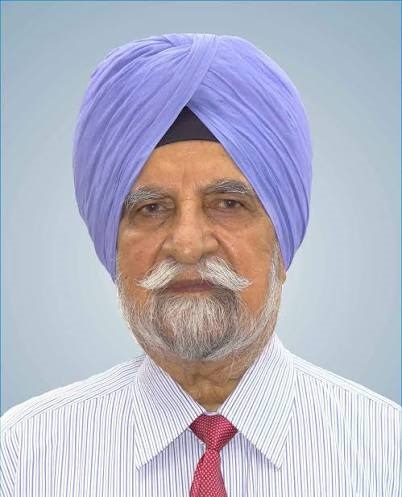
Dr. Sardara Singh Johl (widely known as S. S. Johl) is a legendary Indian agricultural economist, academic administrator, and public policy expert. As a preeminent voice in Indian agrarian reform, he played a transformative role in shaping India’s Green Revolution, guiding agricultural pricing policies, and advancing rural development across developing nations. Known for his fierce academic independence and practical pragmatism, he remains an iconic pillar of agricultural economics.
2. Quick facts
- Full Name: Sardara Singh Johl
- Native Name: ਸਰਦਾਰਾ ਸਿੰਘ ਜੋਹਲ (Punjabi) / सरदार सिंह जोहल (Hindi)
- Date of birth: August 2, 1928
- Place Of birth: Lyallpur, Punjab, British India (present-day Faisalabad, Pakistan)
- Nationality: Indian
- Occupation/ Profession: Agricultural Economist, Academic, Public Policy Advisor
- Field of Achievement: Agricultural Economics, Rural Development, and Food Security Policy
- Years Active: 1950s–Present
3. Award Information
- Award Name: Padma Bhushan
- Award Category: National Civilian Honour (Third-Highest Civilian Award in India)
- Award Year: 2004
- Presented By: Government of India (Conferred by the President of India)
- Date of Ceremony: Republic Day Investiture Ceremony, 2004
- Citation/Official Reason: Recognized for his exceptional contributions to literature, education, agricultural economics, and public policy formulation.
- Previous Recipients (optional): Eminent economists, scientists, and public intellectuals.
- Next Recipients: Conferred among distinguished national civic awardees.
4. Why they Receive the award?
Dr. S. S. Johl received the Padma Bhushan for his decades of pioneering economic research that helped navigate India through critical food shortages into agricultural self-sufficiency. His policy frameworks on price support systems, crop diversification, and resource management provided the intellectual backbone for modern Indian farming strategies.
5. Early Life
Born in Lyallpur (now in Pakistan), Dr. Johl experienced the tumultuous upheaval of the 1947 partition firsthand, migrating to India with his family under severe hardship. Overcoming early displacement, he worked hard to pursue his passion for learning, eventually channeling his lived rural experiences into a lifelong academic commitment to agricultural reform and farmers’ welfare.
6. Education
- Academic Background: Earned his Bachelor’s and Master’s degrees in Agricultural Economics from Punjab University.
- Doctorate: Secured his Ph.D. in Agricultural Economics from Punjab Agricultural University (PAU), Ludhiana, laying the groundwork for a distinguished career in research and higher education.
7. Carrier Journey
- Academic Leadership: Served as Professor and Head of the Department of Economics and Sociology at Punjab Agricultural University, and later held faculty and advisory positions at various national and international institutions.
- Institutional Administration: Served as the Vice-Chancellor of Punjabi University, Patiala (1986–1989), and later as the Vice-Chancellor of Maharaja Sayajirao University of Baroda.
- Global Advisorship: Worked extensively as a consultant and policy advisor for international organizations, including the Food and Agriculture Organization (FAO) of the United Nations, World Bank, and various developing governments across Asia and the Middle East.
8. Major Achievements
- Chairman of the Commission for Agricultural Costs and Prices (CACP), Government of India, where he shaped national minimum support price (MSP) frameworks.
- Authored multiple seminal research reports, including the landmark Johl Committee Reports on Crop Diversification in Punjab, advocating for sustainable alternatives to intensive paddy-wheat cycles.
- Conferred the prestigious Padma Bhushan by the Government of India in 2004.
- Served as Chancellor of the Central Agricultural University and member of the Economic Advisory Council to the Prime Minister of India.
9. Contribution to the nation
Dr. Johl provided vital economic blueprints during India’s transition toward food security. He famously advocated for agricultural diversification decades before environmental degradation and water depletion became critical crises in northern India. His analytical insights ensured that economic policies balanced productivity goals with long-term ecological sustainability and farmer income protection.
10. Other Awards and Honours
- Padma Bhushan (2004) – Government of India
- Rafi Ahmed Kidwai Award for outstanding agricultural research
- Honorary Doctorates (D.Sc. h.c.) from multiple esteemed agricultural and traditional universities
- Life Fellow and past President of the Indian Society of Agricultural Economics
11. Legacy and influence
Dr. S. S. Johl is remembered as a fearless, objective intellectual who never hesitated to speak truth to power regarding agrarian challenges. His academic rigor combined deep empathy for the Indian farmer with hard-headed macroeconomic realism. He remains an inspirational mentor to generations of economists and agricultural scientists.
12. Interesting Facts
- Partition Survivor: Like many pioneers of his generation, his early life was shaped by the immense trials of the 1947 partition, fueling his lifelong dedication to building a self-reliant food economy in India.
- Prophetic Vision on Diversification: As early as the 1980s and 90s, he warned against the over-reliance on monoculture (paddy and wheat) in Punjab and proposed viable crop diversification roadmaps that remain relevant today.
- Prolific Longevity: Remaining sharp and intellectually active well past his centenarian milestones, he continued to author commentary and critique public policy matters into his later years.
13. Quotes
“Agricultural growth cannot be sustained by subsidies alone; it requires sound structural policies, scientific resource management, and a genuine commitment to the economic viability of the farming community.” — Dr. S. S. Johl
14. Timeline
- 1928: Born on August 2 in Lyallpur, Punjab (now Pakistan).
- 1947: Migrated to India during the Partition.
- 1960s–1970s: Advanced academic research in agricultural economics at PAU, Ludhiana.
- 1986–1989: Served as Vice-Chancellor of Punjabi University, Patiala.
- 2004: Conferred the Padma Bhushan by the Government of India.
- 2000s Onwards: Continued active policy mentorship, writing, and advisory roles on Indian agricultural commissions.
15. References
- Wikipedia: Sardara Singh Johl Profile
- The Tribune India: S. S. Johl Archives & Agrarian Commentary
- Economic and Political Weekly (EPW): Research contributions by S. S. Johl
16. Related Personalities
- Dr. M. S. Swaminathan (Architect of the Green Revolution)
- Dr. Manmohan Singh (Renowned economist and former Prime Minister of India)
- Dr. Sukhadeo Thorat (Prominent Indian economist and academic)
17. Frequency Asked Questions (FAQ)
- Q: Who is Dr. S. S. Johl?
- A: He is a legendary Indian agricultural economist, former university vice-chancellor, and public policy advisor who shaped India’s agricultural pricing and diversification policies.
- Q: What is he best known for professionally?
- A: He is widely recognized for heading the CACP, authoring critical reports on crop diversification, and advising international bodies like the UN-FAO.
About the Author




