Standalone Title:Dr. Madhav Gadgil: The Visionary Scientist Who Fought for India’s Environment
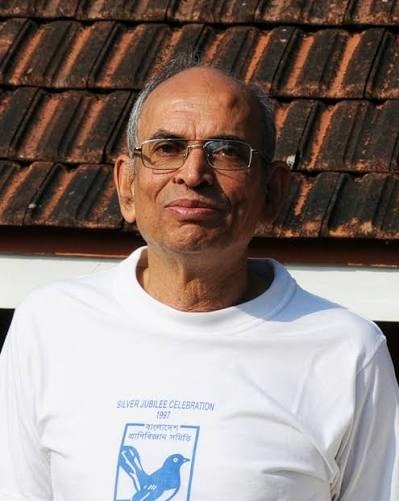
Dr. Madhav Dhananjaya Gadgil (24 May 1942 – 7 January 2026) was a globally renowned Indian ecologist, academic, and environmental author. Often celebrated as the “people’s ecologist,” he dedicated his life to bridging rigorous biological science with grassroots community participation, sustainable development, and indigenous rights. As the head of the landmark Western Ghats Ecology Expert Panel, he left an indelible mark on Indian environmental policy.
2. Quick Facts: At a Glance
Standalone Title:Dr. Madhav Gadgil: Quick Facts and Profile Overview
Full Name: Madhav Dhananjaya Gadgil
Native Name: माधव गाडगीळ (Marathi)
Date of Birth: 24 May 1942
Place of Birth: Pune, Bombay Province, British India
Field of Achievement: Evolutionary Ecology, Human Ecology, Biodiversity Conservation
Years Active: 1960s – 2026
3. Award Information: The Padma Bhushan and Global Honors
Standalone Title:Recognizing Environmental Excellence: Dr. Madhav Gadgil’s Major Awards
Award Name: Padma Bhushan (and Padma Shri)
Award Category: Civilian Awards (Third and Fourth Highest Civilian Honors in India)
Award Year: Padma Shri (1981); Padma Bhushan (2006)
Presented By: Government of India (Presidents of India)
Date of Ceremony: Republic Day Award Cycles
Citation/Official Reason: For pioneering contributions to environmental science, ecology, and the conservation of India’s natural resources.
Other Major International Accolades: Tyler Prize for Environmental Achievement, Volvo Environment Prize, and the UNEP Champions of the Earth Award.
4. Why Did He Receive the Awards?
Standalone Title:A Life Dedicated to Nature: Why Dr. Madhav Gadgil Was Nationally and Globally Honored
Dr. Gadgil received these prestigious accolades for redefining how India approaches conservation—moving away from elite, exclusionary preservation toward community-led environmental governance. His work laid the foundations for India’s biological diversity laws, biosphere reserves, and scientific frameworks that treat human communities as custodians of nature rather than adversaries.
5. Early Life: Formative Years in Pune
Standalone Title:The Roots of a Naturalist: Dr. Gadgil’s Early Years in Maharashtra
Born in Pune on May 24, 1942, Madhav Gadgil grew up with an innate curiosity for the natural world. Raised in an intellectually rich environment, his early fascination with birdwatching, flora, and fauna naturally steered him toward biological sciences, setting the stage for a lifelong academic and activist trajectory.
6. Education: From Fergusson College to Harvard University
Standalone Title:Academic Rigor: Grounding Indian Ecology in Global Science
Undergraduate Degree: Graduated with a Bachelor of Science (B.Sc.) in Biology from Fergusson College, University of Pune, in 1963.
Master’s Degree: Secured an M.Sc. in Zoology from the University of Mumbai in 1965.
Doctorate (Ph.D.): Earned his Ph.D. in 1969 from Harvard University under the mentorship of eminent scientists, followed by a research fellowship at the Harvard Computing Center.
7. Career Journey: Founding the Centre for Ecological Sciences
Standalone Title:A Storied Career: Institutional Building and Academic Leadership
Teaching at Harvard: Served briefly as a lecturer in biology at Harvard University post-doctorate.
Indian Institute of Science (IISc): Returned to India to build domestic ecological frameworks, founding the prestigious Centre for Ecological Sciences (CES) at IISc in Bengaluru in 1982.
Advisory Roles: Served as a member of the Scientific Advisory Council to the Prime Minister of India and chaired numerous national and state-level ecological committees.
8. Major Achievements: The Western Ghats Report and Biodiversity Registers
Standalone Title:Landmark Milestones: The Gadgil Committee Report and People’s Biodiversity Registers
The Gadgil Commission (WGEEP, 2010): Chaired the Western Ghats Ecology Expert Panel, which famously recommended declaring the entire Western Ghats an Ecologically Sensitive Area (ESA) and urged decentralized, democratic environmental governance.
People’s Biodiversity Registers (PBR): Pioneered the documentation of local ecological knowledge through grassroots registers, empowering village bodies to manage their biological resources.
Nilgiri Biosphere Reserve: His early research in the 1980s directly contributed to establishing India’s very first biosphere reserve in the Nilgiris.
9. Contribution to the Nation: Democratizing Environmental Governance
Standalone Title:Nation Building: Integrating Human Welfare with Ecological Preservation
Dr. Gadgil consistently argued that true conservation cannot succeed without local democracy. He played an instrumental role in shaping core national legislations, including the Biological Diversity Act (2002) and the Forest Rights Act (2006), ensuring that forest-dependent communities, tribals, and gram sabhas retained legal agency over their natural habitats.
10. Other Awards and Honours
Standalone Title:Beyond the Padma Awards: A Lifetime of Global Recognition
Shanti Swarup Bhatnagar Prize: India’s top science award in the biological sciences category.
Fellowships: Elected Fellow of the Indian National Science Academy (INSA) and the Indian Academy of Sciences.
Tyler Prize & Volvo Environment Prize: International honors recognizing his global leadership in environmental achievement.
11. Legacy and Influence: An Uncompromising Moral Compass
Standalone Title:An Enduring Legacy: The Man Who Taught India to Listen to Nature
Dr. Madhav Gadgil’s legacy is defined by his fierce scientific integrity, humility, and absolute refusal to compromise ecological truth for political or corporate expediency. Even after passing away on January 7, 2026, at the age of 83 in Pune, his work remains the guiding benchmark for environmental justice, climate resilience, and sustainable policy in South Asia.
12. Interesting Facts: Surprising Insights
Standalone Title:Did You Know? Fascinating Facts About Dr. Madhav Gadgil
A Remarkable Scientific Partnership: He was married to the legendary atmospheric scientist Prof. Sulochana Gadgil, making them one of India’s most distinguished scientific power couples.
Species Named in His Honor: His immense contributions to taxonomy and field ecology are immortalized by a tree species (Elaeocarpus gadgilii) and a frog species (Micrixalus gadgili) named after him.
Prolific Public Columnist: Alongside heavy scientific journals, he wrote extensively for general public audiences, authoring popular natural history columns in leading newspapers like The Hindu and Sakal.
13. Quotes: Words of Wisdom
Standalone Title:In His Words: Memorable Quotes by Dr. Madhav Gadgil
“Development must not mean destruction of the environment for the few at the cost of the many. True development requires decentralized democracy and respect for nature’s limits.” — Dr. Madhav Gadgil
“A researcher-activist of nature and nature-dependent communities who showed that science belongs to the people.” — Academic Tribute
14. Timeline: Key Milestones in His Life
1942: Born on May 24 in Pune, Maharashtra.
1969: Completes his Ph.D. from Harvard University.
1981: Awarded the Padma Shri by the Government of India.
1982: Founds the Centre for Ecological Sciences (CES) at IISc, Bengaluru.
2006: Conferred the Padma Bhushan by President Dr. A.P.J. Abdul Kalam.
2010–2011: Serves as Chairman of the Western Ghats Ecology Expert Panel (WGEEP).
2024: Receives the United Nations Champions of the Earth award.
2026: Passes away on January 7 in Pune at the age of 83.
15. References: Sources and Further Reading
Standalone Title:Sources and Archives: Further Reading on Dr. Madhav Gadgil
This Fissured Land: An Ecological History of India by Madhav Gadgil and Ramachandra Guha (Oxford University Press)
Ecology and Equity: The Use and Abuse of Nature in Contemporary India by Madhav Gadgil and Ramachandra Guha
A Walk Up the Hill: Living with People and Nature (Autobiography by Madhav Gadgil, Penguin Random House India)
Proceedings of the National Academy of Sciences (PNAS): Dr. Madhav Gadgil Memorial Tributes
16. Related Personalities: Collaborators and Contemporaries
Standalone Title:In Good Company: Peers, Co-Authors, and Collaborators
Ramachandra Guha: Eminent historian and co-author of landmark environmental texts like This Fissured Land.
Prof. Sulochana Gadgil: His late wife and an exceptional atmospheric scientist who studied the Indian monsoon.
Madhavan Nair: Fellow institutional science leaders who worked alongside him during government advisory panels.
17. Frequently Asked Questions (FAQ)
Standalone Title:All Your Questions Answered: FAQs About Dr. Madhav Gadgil
Q: Who was Dr. Madhav Gadgil?
A: He was a pioneering Indian evolutionary ecologist, founder of the Centre for Ecological Sciences at IISc, and a tireless advocate for community-led environmental conservation.
Q: What is the Gadgil Committee Report?
A: Formally known as the Western Ghats Ecology Expert Panel (WGEEP) report of 2011, it recommended stringent ecological safeguards and decentralized local governance to protect the fragile Western Ghats region.
Q: What major honors did he receive?
A: He received the Padma Shri (1981), Padma Bhushan (2006), the Tyler Prize, and the UN Champions of the Earth Award.