Introduction
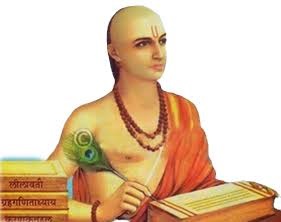
Bhaskara II, also known as Bhaskaracharya (“Bhaskara the Teacher”), was one of the greatest mathematicians and astronomers of medieval India. Born in the 12th century, he made remarkable contributions to algebra, arithmetic, geometry, trigonometry, and astronomy. His masterpiece, the Siddhanta Shiromani, became one of the most influential scientific works in Indian history. Bhaskara II’s ideas anticipated several concepts that would later appear in calculus, earning him recognition as one of the world’s most brilliant mathematical thinkers.
Early Life and Education
Bhaskara II was born in 1114 CE in Vijjadavida, near present-day Bijapur in Karnataka, India. He was born into a scholarly family; his father, Maheshvara, was an astronomer and mathematician who introduced him to mathematics and astronomy at an early age.
Under his father’s guidance, Bhaskara developed exceptional skills in numerical calculations and astronomical observations. He studied classical Indian mathematical traditions and the works of earlier scholars such as Aryabhata, Brahmagupta, and Bhaskara I.
Scientific Career & Research
Bhaskara II became the head of the astronomical observatory at Ujjain, which was one of the leading scientific centers of India at the time.
His research covered:
- Arithmetic
- Algebra
- Geometry
- Trigonometry
- Number theory
- Planetary motion
- Astronomical calculations
He combined mathematical reasoning with astronomical observations to produce highly accurate scientific results. His writings influenced generations of Indian and international scholars.
Major Discoveries and Inventions
1. Siddhanta Shiromani
Bhaskara II’s greatest work, the Siddhanta Shiromani (“Crown of Treatises”), consists of four sections:
- Lilavati (Arithmetic)
- Bijaganita (Algebra)
- Grahaganita (Mathematics of Planets)
- Goladhyaya (Spherical Astronomy)
This comprehensive text became a cornerstone of Indian mathematics and astronomy.
2. Contributions to Algebra
Bhaskara developed advanced methods for solving:
- Linear equations
- Quadratic equations
- Indeterminate equations
- Algebraic identities
His techniques were centuries ahead of many contemporary mathematical traditions.
3. Early Concepts of Calculus
Bhaskara II explored ideas related to rates of change, infinitesimals, and instantaneous motion.
f′(x)=limh→0hf(x+h)−f(x)
Although he did not formulate modern calculus notation, his work anticipated important concepts later developed in Europe.
4. Work on Zero and Infinity
He expanded earlier Indian ideas about zero and discussed mathematical operations involving infinity, making significant contributions to number theory.
5. Trigonometry
Bhaskara improved trigonometric calculations and developed methods for solving astronomical problems involving angles and celestial positions.
6. Astronomical Discoveries
He produced highly accurate calculations for:
- Planetary movements
- Solar and lunar eclipses
- Orbital periods
- Astronomical calendars
His observations demonstrated a sophisticated understanding of celestial mechanics.
Awards and Honours
Formal scientific awards did not exist during Bhaskara II’s lifetime. However, he was widely respected as one of the foremost scholars of medieval India.
Modern honors include:
- Educational institutions named after him
- Statues and memorials across India
- Recognition as one of the greatest mathematicians in Indian history
- Inclusion in numerous scientific and historical studies worldwide
Later Life and Death
Bhaskara II spent his later years teaching, conducting astronomical observations, and refining his mathematical theories. He continued writing and mentoring students who carried forward India’s scientific traditions.
He is believed to have died around 1185 CE. Despite the passage of centuries, his works remain preserved and studied by historians of mathematics and science.
Legacy and Impact
Bhaskara II’s influence extended far beyond his own era. His books were studied throughout India for hundreds of years and contributed significantly to the development of mathematics and astronomy.
His legacy includes:
- Advancing algebra and number theory
- Refining astronomical calculations
- Anticipating concepts of calculus
- Preserving and expanding India’s mathematical traditions
- Inspiring future generations of scientists and scholars
Many historians regard him as one of the most accomplished mathematicians before the modern era.
Conclusion
Bhaskara II was a visionary mathematician and astronomer whose discoveries transformed scientific knowledge in medieval India. Through his masterpiece Siddhanta Shiromani, he made lasting contributions to arithmetic, algebra, trigonometry, and astronomy. His advanced mathematical insights, including ideas that foreshadowed calculus, demonstrate the extraordinary depth of his intellect. Today, Bhaskara II is remembered as one of India’s greatest scientific minds, whose work continues to inspire mathematicians, astronomers, and historians around the world.
About the Author