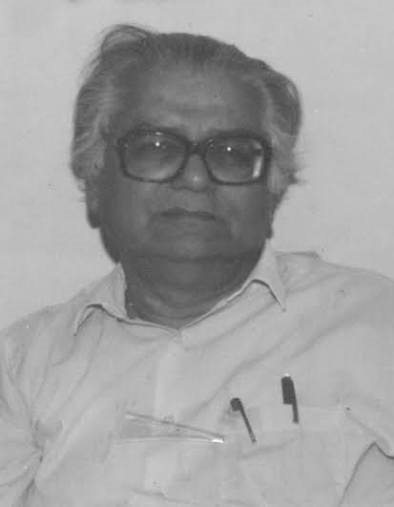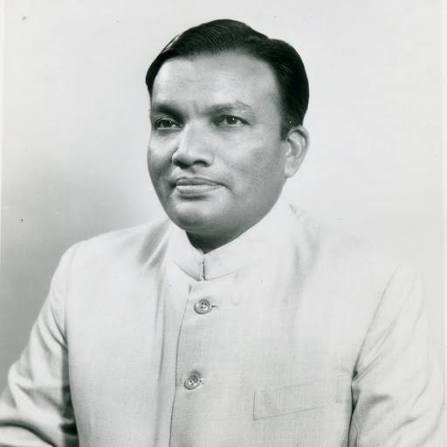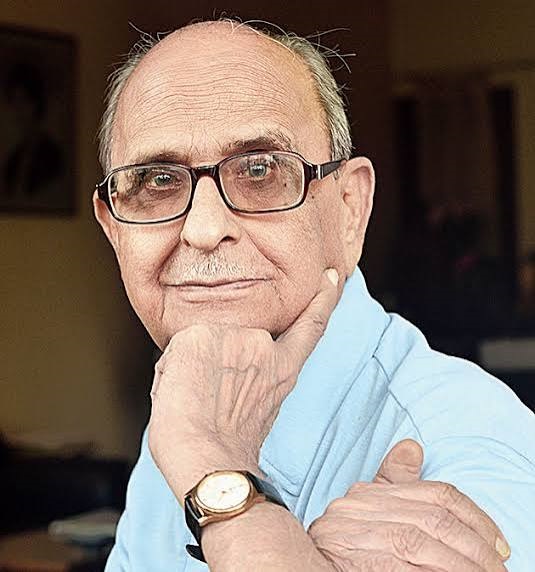
Here is a comprehensive blog post structure and guide on Prof. Bhalchandra Madhav Udgaonkar, meticulously formatted according to your 17-point request.
1. Introduction
Prof. Bhalchandra Madhav Udgaonkar (1927–2014) was a distinguished Indian theoretical particle physicist, visionary educationist, and tireless science communicator. Best known for his pioneering role in shaping science education policy in India, he was instrumental in establishing the Homi Bhabha Centre for Science Education (HBCSE). His life’s work bridged advanced nuclear-particle physics research with grassroots science literacy and global peace advocacy.
2. Quick Facts
- Full Name: Bhalchandra Madhav Udgaonkar
- Native Name: ਭਾਲਚੰਦਰ ਮਾਧਵ ਉਦਗਾਓਂਕਰ (Marathi: भालचंद्र माधव उदगांवकर)
- Date of Birth: October 30, 1927
- Place of Birth: India
- Nationality: Indian
- Occupation/Profession: Theoretical Physicist, Academic, and Science Educator
- Field of Achievement: Theoretical Particle Physics and Science Education
- Years Active: 1950s–2014
3. Award Information (Padma Bhushan)
- Award Name: Padma Bhushan
- Award Category: Civilian Award (India’s third-highest civilian honor)
- Award Year: 1985
- Presented By: Government of India
- Date of Ceremony: Republic Day, 1985
- Citation/Official Reason: For distinguished services and exceptional contributions to science and technology.
- Previous Recipients: Eminent scientists, artists, and public servants of prior years.
- Next Recipients: Subsequent cohorts of the 1985/1986 Padma awardees.
4. Why They Received the Award
Prof. Udgaonkar was honored with the Padma Bhushan for his multifaceted contributions to the nation. Not only was he an accomplished theoretical physicist who worked closely with the Tata Institute of Fundamental Research (TIFR), but he also revolutionized how science is taught to children and teachers in India, championing equity, critical thinking, and the popularization of science in regional languages through platforms like the Marathi Vidnyan Parishad (MaViPa).
5. Early Life
Born in October 1927 in India, Udgaonkar grew up during a transformative era in the country’s struggle for independence and the subsequent emergence of modern scientific institutions. He developed an early, deep-seated fascination with mathematics and empirical sciences, which steered him toward elite academic circles.
6. Education
- Completed his foundational schooling at King George School (now Raja Shivaji Vidyalaya), Mumbai.
- Earned his Master of Science (M.Sc.) degree in Physics from the University of Bombay.
- Immersed himself in theoretical physics research under the mentorship of legendary Indian scientists, setting the stage for a career at the vanguard of quantum and particle physics.
7. Career Journey
- TIFR Years: Began his research career and ultimately retired as a senior professor of theoretical physics at the Tata Institute of Fundamental Research (TIFR), Mumbai.
- Institutional Builder: Played a foundational role in establishing premier scientific bodies, including the Institute of Physics, Bhubaneswar, and the Homi Bhabha Centre for Science Education (HBCSE).
- Leadership Roles: Served as the Chairman of the Management Board of HBCSE (1975–1991) and as President of the Marathi Vidnyan Parishad.
8. Major Achievements
- Co-authored and co-edited the critical international volume A Nuclear-Weapon-Free World: Desirable?, Feasible?
- Instrumental in institutionalizing science olympiads and talent search programs in India.
- Elected as a Fellow of the Indian Academy of Sciences (FASc) in 1969.
9. Contribution to the Nation
Prof. Udgaonkar believed that scientific temper was vital for a developing democracy. He heavily influenced national education policies, pushing for activity-based science learning rather than rote memorization. Furthermore, as an active participant in global anti-nuclear movements (such as the Pugwash Conferences on Science and World Affairs), he advocated fiercely for global nuclear disarmament and peaceful applications of atomic energy.
10. Other Awards and Honours
- Fellow of the Indian Academy of Sciences (FASc): Elected in 1969.
- Member, Institute of Advanced Study (Princeton, USA): Honored by joining the elite global community of scholars.
- Widely recognized across Maharashtra for translating complex scientific concepts into Marathi, bridging the gap between elite laboratories and rural classrooms.
11. Legacy and Influence
His legacy lives on through the Homi Bhabha Centre for Science Education, which continues to train India’s brightest young minds for International Science Olympiads. His son, Dr. Jayant Udgaonkar (a celebrated molecular biologist and Shanti Swarup Bhatnagar Prize winner), carried forward the family’s deep legacy of scientific excellence.
12. Interesting Facts
- Global Peace Advocate: He was heavily involved with international networks seeking peace and nuclear non-proliferation, emphasizing that scientists bear a moral responsibility for how their discoveries are utilized.
- Language and Science: Unlike many academics who isolated science within English-medium ivory towers, he fiercely advocated for teaching science in regional languages to ensure grassroots accessibility.
13. Quotes
“The pursuit of science is incomplete without the cultivation of a scientific temper among the masses, which alone can drive away superstition and foster a progressive society.” — B.M. Udgaonkar
14. Timeline
- 1927: Born on October 30 in India
- 1969: Elected as a Fellow of the Indian Academy of Sciences
- 1974: Played a central role in founding the Homi Bhabha Centre for Science Education (HBCSE)
- 1985: Awarded the Padma Bhushan by the Government of India; co-edited literature on nuclear-weapon-free futures
- 1991: Retired as Senior Professor from TIFR
- 2014: Passed away on December 21 at the age of 87
15. References
- Wikipedia: Bhalchandra Udgaonkar
- Indian Academy of Sciences (IAS) – Fellow Profile
- Homi Bhabha Centre for Science Education (HBCSE / TIFR) archives
- Ministry of Home Affairs, Government of India – Padma Awards Directory
16. Related Personalities
- Homi J. Bhabha (Pioneering nuclear physicist and mentor of Indian atomic research)
- Jayant Udgaonkar (Renowned molecular biologist and son of B.M. Udgaonkar)
- Joseph Rotblat (Nobel Peace Prize laureate and collaborator in anti-nuclear advocacy)
17. Frequently Asked Questions (FAQ)
- Q: What was Prof. B.M. Udgaonkar’s primary field of research?A: He was a theoretical particle physicist who spent a major portion of his career at the Tata Institute of Fundamental Research (TIFR).
- Q: Why is he famous in Indian education?A: He was instrumental in establishing the Homi Bhabha Centre for Science Education (HBCSE) in 1974 and championed activity-based science learning and science communication in regional languages.
- Q: When did he receive the Padma Bhushan?A: He was awarded the Padma Bhushan in 1985 by the Government of India
About the Author