

Introduction
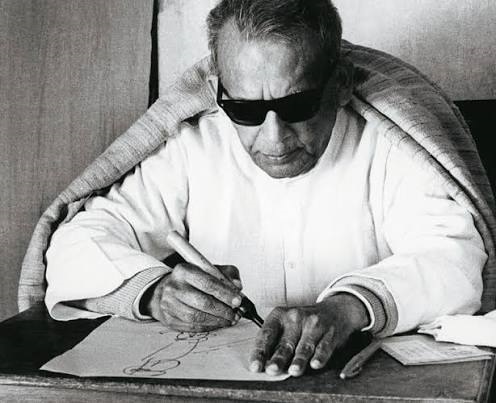
Benode Behari Mukherjee was one of India’s most celebrated painters, muralists, and art educators. Renowned for his innovative murals, mastery of calligraphy, and deep appreciation of nature, he played a pioneering role in shaping modern Indian art. Despite having severely impaired eyesight from childhood and eventually becoming completely blind, he continued to create remarkable works of art and inspire generations of artists. In recognition of his exceptional contributions to art and education, he was awarded the prestigious Padma Vibhushan in 1974.
Early Life
Benode Behari Mukherjee was born into a Bengali family that valued education and culture. Due to severe myopia from birth, he had limited vision throughout his childhood. Rather than allowing his disability to limit him, he developed a unique artistic perspective, drawing inspiration from nature, rural life, and Indian traditions.
His early interest in painting was encouraged by teachers and mentors, helping him become one of India’s most influential modern artists.
Birth Date and Death
- Date of Birth: 7 February 1904
- Place of Birth: Behala, Kolkata (then Calcutta), West Bengal, India
- Date of Death: 11 November 1980
- Age at Death: 76 years
Education and Career
Benode Behari Mukherjee received his education at Visva-Bharati University, where he studied under the guidance of pioneering artists such as Nandalal Bose. The institution, founded by Rabindranath Tagore, encouraged students to draw inspiration from Indian traditions, nature, and everyday life.
After completing his studies, he joined the faculty at Santiniketan, where he taught painting and influenced many aspiring artists. He also traveled to countries such as Japan and Nepal, where he studied Asian art and incorporated its techniques into his own work.
His career highlights include:
- Teacher at Kala Bhavana, Santiniketan
- Internationally recognized muralist
- Painter and illustrator
- Expert in calligraphy
- Mentor to numerous modern Indian artists
Career and Achievements
Benode Behari Mukherjee made extraordinary contributions to Indian art through his innovative techniques and creative vision.
His major achievements include:
- Created some of India’s finest large-scale murals.
- Introduced fresh approaches to mural painting and landscape art.
- Combined Indian, East Asian, and modern artistic traditions.
- Continued producing artwork even after losing his eyesight completely.
- Inspired generations of artists through teaching and mentorship.
- Earned international recognition for his artistic excellence.
His murals remain among the most admired works in modern Indian art.
Why Did He Receive the Padma Vibhushan Award?
Benode Behari Mukherjee received the Padma Vibhushan in 1974 for his exceptional contribution to Art and Art Education.
The Government of India honored him because:
- He revolutionized mural painting in India.
- He made outstanding contributions to modern Indian art.
- He inspired generations of artists as a respected teacher.
- He promoted Indian artistic traditions while embracing international influences.
- He demonstrated extraordinary determination by continuing to create art despite complete blindness.
His life became a symbol of creativity, perseverance, and artistic excellence.
Field of Achievement
Benode Behari Mukherjee excelled in several artistic fields, including:
- Painting
- Mural Art
- Art Education
- Calligraphy
- Illustration
- Landscape Art
He is regarded as one of the pioneers of modern Indian visual art.
Awards and Honours
Benode Behari Mukherjee received numerous honours during his lifetime, including:
- Padma Vibhushan (1974)
- Recognition as one of India’s greatest muralists
- National and international acclaim for his artistic contributions
- His works are displayed in museums, galleries, and educational institutions across India
Interesting Facts
- He was born with severe myopia and had very limited vision throughout his life.
- He became completely blind after eye surgery in the 1950s but continued creating art through memory and touch.
- He specialized in large wall murals inspired by Indian history and nature.
- He was one of the earliest modern Indian muralists.
- His work combined influences from Indian, Japanese, and Chinese art.
- Acclaimed filmmaker Satyajit Ray made the documentary The Inner Eye (1972), celebrating Benode Behari Mukherjee’s life and artistic journey.
Legacy and Inspiration
Benode Behari Mukherjee left behind a remarkable legacy that continues to influence artists across India and around the world. His innovative approach to mural painting transformed Indian art education and encouraged artists to experiment with new techniques while remaining rooted in Indian culture.
His life inspires:
- Artists
- Students
- Art educators
- People with disabilities
- Creative professionals
His determination proved that physical limitations need not prevent artistic achievement.
Contribution to the Nation
Benode Behari Mukherjee enriched India’s cultural heritage through his artistic vision and lifelong dedication to education.
His contributions include:
- Advancing modern Indian art through pioneering mural techniques.
- Preserving and promoting Indian artistic traditions.
- Training generations of artists at Santiniketan.
- Introducing Asian artistic influences into Indian visual art.
- Inspiring inclusivity by demonstrating that disability is not a barrier to creativity.
His work continues to strengthen India’s reputation as a nation with a rich and diverse artistic tradition.
Conclusion
Benode Behari Mukherjee was one of India’s greatest artists, muralists, and teachers. His innovative murals, deep respect for Indian culture, and unwavering dedication to art despite complete blindness made him a true pioneer of modern Indian art. The Padma Vibhushan, awarded in 1974, recognized his extraordinary contribution to India’s cultural and artistic heritage. His life remains an enduring source of inspiration, reminding us that creativity, perseverance, and passion can overcome even the greatest challenges.
About the Author




