Introduction
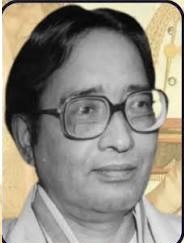
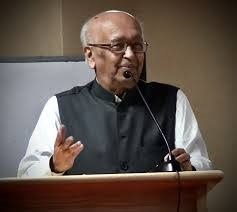
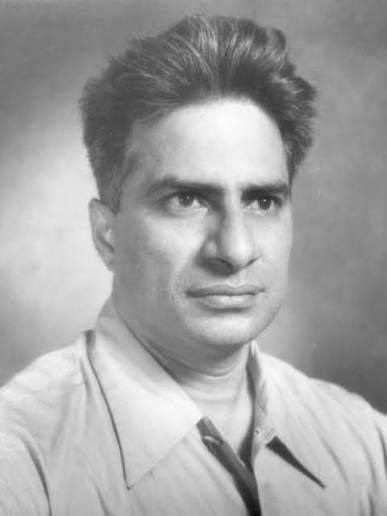
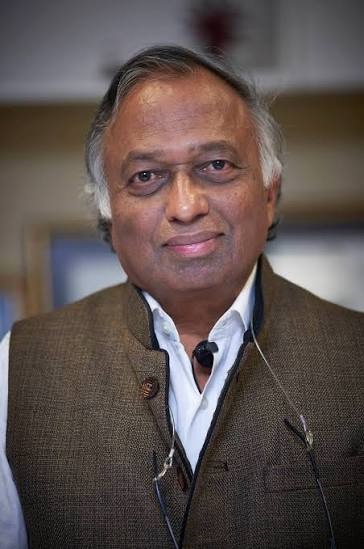
Vijay Pandurang Bhatkar, popularly known as Vijay P. Bhatkar, is an eminent Indian computer scientist, information technology leader, and educationist. He is best known for leading the development of India’s first indigenous supercomputer, the PARAM series. His leadership helped India achieve technological self-reliance in high-performance computing at a time when access to advanced supercomputers was restricted. Often referred to as the “Father of India’s Supercomputer,” Dr. Bhatkar has made remarkable contributions to computer science, digital education, and national technology development.
Early Life and Education
Vijay P. Bhatkar was born on 11 October 1946 in Muramba. He grew up in a family that valued education and social service, which inspired his lifelong interest in science and technology.
He completed his engineering education at Visvesvaraya Regional College of Engineering (now Visvesvaraya National Institute of Technology). He later earned his Master’s degree from Maharaja Sayajirao University of Baroda and completed his Ph.D. in Engineering at Indian Institute of Technology Delhi. His academic background in engineering, electronics, and computer science laid the foundation for his pioneering work in supercomputing.
Scientific Career and Research
Dr. Bhatkar began his career as a researcher and engineer, focusing on electronics, computer systems, and information technology. In 1988, the Government of India established the Centre for Development of Advanced Computing (C-DAC) to develop an indigenous supercomputer after advanced systems were denied to India due to export restrictions.
As the founding Executive Director of C-DAC, Dr. Bhatkar led a team of Indian scientists and engineers in designing and building the PARAM supercomputer series. Under his leadership, India demonstrated that it could develop world-class high-performance computing systems using indigenous technology.
In addition to supercomputing, he has worked extensively in digital education, e-governance, artificial intelligence, and knowledge networking. He has also contributed to several national initiatives aimed at expanding access to technology and education across India.
Major Discoveries and Inventions
Dr. Vijay P. Bhatkar’s most significant contributions include:
- PARAM 8000 (1991): Led the development of India’s first indigenous supercomputer, proving India’s capability in high-performance computing.
- PARAM Series: Guided the development of advanced versions such as PARAM 8600, PARAM 10000, and later generations, which offered improved computing power and efficiency.
- High-Performance Computing: Helped establish India as a globally recognized developer of supercomputing technologies.
- C-DAC Leadership: Played a key role in building C-DAC into India’s premier institution for advanced computing research and development.
- Digital Education: Promoted technology-enabled learning and supported the creation of digital education platforms for schools, colleges, and universities.
- Information Technology for Society: Worked on projects involving healthcare, rural development, language computing, and e-governance to make technology accessible to all.
His work has supported scientific research, weather forecasting, defense, aerospace, engineering simulations, medicine, and industrial innovation.
Awards and Honours
Dr. Vijay P. Bhatkar has received numerous national and international awards, including:
- Padma Shri for his contributions to science and engineering.
- Padma Bhushan, India’s third-highest civilian award, for distinguished service in science and technology.
- Maharashtra Bhushan Award.
- Several honorary doctorates from Indian and international universities.
- Recognition by scientific and engineering organizations for his pioneering contributions to supercomputing, information technology, and digital education.
Later Life
After successfully leading the PARAM project, Dr. Bhatkar continued to serve in leadership roles across science, education, and technology. He has actively promoted digital learning, innovation, entrepreneurship, and the use of advanced technologies for national development.
He has authored books, delivered lectures worldwide, and mentored students, researchers, and technology professionals. His vision emphasizes using technology to improve education, healthcare, governance, and the quality of life for people around the world.
Note: As of July 2026, Dr. Vijay P. Bhatkar is alive and continues to contribute to science, education, and technology.
Legacy and Impact
Dr. Vijay P. Bhatkar transformed India’s technological landscape by leading the successful development of the PARAM supercomputer. His achievement demonstrated that India could build advanced computing systems independently, strengthening the country’s scientific and strategic capabilities.
His leadership also helped establish C-DAC as one of India’s leading research organizations in advanced computing. Beyond supercomputing, his work in digital education, language technologies, and knowledge networks has expanded access to information and learning for millions of people.
Today, Dr. Bhatkar is recognized as one of India’s foremost technology visionaries. His contributions continue to inspire scientists, engineers, entrepreneurs, and students working to advance computing and innovation.
Conclusion
Dr. Vijay P. Bhatkar’s journey from a small village in Maharashtra to becoming the architect of India’s first indigenous supercomputer is a remarkable story of innovation, determination, and national service. Through the development of the PARAM series, he helped India achieve self-reliance in high-performance computing and strengthened the nation’s position in global technology. His continued efforts in education, digital transformation, and scientific research ensure that his legacy will inspire future generations to use technology for the advancement of society and humanity.
About the Author