Introduction
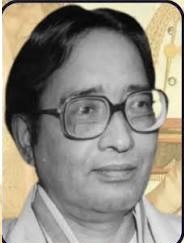
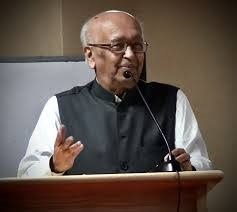
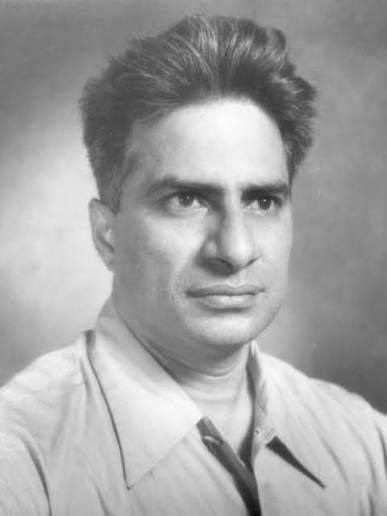
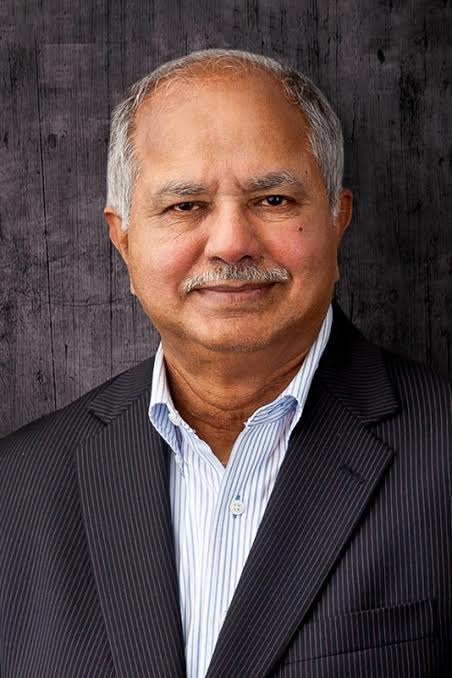
Dabbala Rajagopal , widely known as Raj Reddy, is one of the world’s most influential computer scientists. He is recognized for his groundbreaking contributions to artificial intelligence (AI), particularly in speech recognition, robotics, and intelligent systems. As one of the pioneers who helped shape modern AI, he received the prestigious ACM A.M. Turing Award, often referred to as the “Nobel Prize of Computing.” His research has inspired generations of scientists and engineers and continues to influence AI technologies used around the world today.
Early Life and Education
Raj Reddy was born on June 13, 1937, in Katur. Growing up in rural India, he developed a strong interest in mathematics and science from an early age.
He earned a Bachelor’s degree in Civil Engineering from University of Madras. Later, he pursued higher education in Australia, receiving a Master’s degree in Technology from University of New South Wales. Determined to explore the rapidly developing field of computer science, he moved to the United States and completed his Ph.D. in Computer Science at Stanford University in 1966.
Scientific Career and Research
After completing his doctorate, Raj Reddy joined Carnegie Mellon University, where he spent most of his academic career. He became one of the founding leaders of the university’s AI research community and later served as the dean of its School of Computer Science.
His research focused on developing machines that could understand human speech, solve complex problems, and interact intelligently with people. During the 1970s and 1980s, he led several pioneering AI projects that demonstrated the potential of intelligent computer systems long before AI became widely popular.
He also promoted interdisciplinary research, combining computer science with robotics, language processing, and cognitive science to advance intelligent systems.
Major Discoveries and Inventions
Raj Reddy made several landmark contributions to computer science and artificial intelligence:
- Speech Recognition: He developed early systems capable of recognizing and understanding continuous spoken language, laying the foundation for today’s virtual assistants and voice-controlled devices.
- Artificial Intelligence: His research introduced new methods for enabling computers to reason, learn, and make decisions.
- Robotics: He helped design intelligent robotic systems that could perceive their surroundings and perform complex tasks.
- The Hearsay Speech Understanding System: One of the earliest AI systems capable of processing continuous speech using multiple knowledge sources.
- Knowledge-Based Systems: His work advanced expert systems that assist in solving difficult real-world problems using stored knowledge.
- Human-Computer Interaction: He contributed to technologies that make computers easier and more natural for people to use through speech and intelligent interfaces.
These innovations have had a lasting impact on fields such as healthcare, education, robotics, customer service, and mobile technology.
Awards and Honours
Raj Reddy has received numerous prestigious awards throughout his career, including:
- ACM A.M. Turing Award (shared with Edward Feigenbaum) for pioneering contributions to large-scale artificial intelligence systems.
- Padma Bhushan, one of India’s highest civilian honors.
- Legion of Honor for distinguished contributions to science and technology.
- Election to the National Academy of Engineering.
- Election to the American Academy of Arts and Sciences.
- Numerous honorary doctorates and international recognitions for his achievements in AI and computer science.
Later Life
Raj Reddy has continued to contribute to education, research, and public policy. Even after stepping down from administrative leadership, he remained active in mentoring students, supporting AI research, and advocating for technology that benefits society.
He has also worked to improve access to education and technology in developing countries, believing that AI can help solve global challenges such as healthcare, literacy, and poverty.
Note: As of July 2026, Raj Reddy is alive. Therefore, a “Later Life and Death” section is not appropriate. For accuracy, this section focuses on his later career and ongoing contributions.
Legacy and Impact
Raj Reddy’s work has transformed the field of artificial intelligence. Many technologies people use every day—such as voice assistants, speech-to-text software, intelligent robots, and automated customer support systems—are built upon ideas pioneered by researchers like him.
His leadership at Carnegie Mellon University helped establish it as one of the world’s leading centers for AI research. Beyond his scientific achievements, he has inspired thousands of students and researchers worldwide through his teaching, mentorship, and vision for using AI to improve humanity.
Today, Raj Reddy is widely regarded as one of the founding figures of modern artificial intelligence, and his contributions continue to shape the future of computing.
Conclusion
Raj Reddy’s journey from a small village in India to becoming one of the world’s most respected computer scientists is a remarkable story of dedication, innovation, and lifelong learning. His pioneering work in artificial intelligence, speech recognition, and robotics has revolutionized the way humans interact with computers. Through his research, leadership, and commitment to education, he has left an enduring legacy that continues to influence science, technology, and society. As AI continues to evolve, Raj Reddy’s vision and achievements remain a guiding inspiration for future generations of researchers and innovators.
About the Author