Introduction
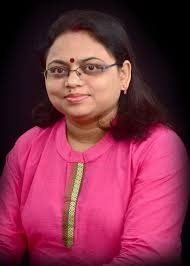
Ritu Karidhal is one of India’s most accomplished aerospace engineers and an inspiration to aspiring scientists. Popularly known as the “Rocket Woman of India,” she has played a key role in several landmark missions of the Indian Space Research Organisation (ISRO). As a senior scientist and aerospace engineer, she contributed significantly to the success of India’s Mars Orbiter Mission (Mangalyaan) and Chandrayaan-2. Although her primary expertise is aerospace engineering, her work has also supported biological and environmental research by enabling satellite-based Earth observation, climate monitoring, and planetary exploration.
Early Life and Education
Ritu Karidhal was born in Lucknow, Uttar Pradesh, India, in 1975. From an early age, she displayed a deep fascination with the night sky, planets, and space exploration. She frequently read books on astronomy and collected newspaper articles related to scientific discoveries.
She completed her schooling in Lucknow before earning a Bachelor of Science (B.Sc.) in Physics from the University of Lucknow. Motivated by her passion for space technology, she pursued a Master’s degree in Aerospace Engineering from the Indian Institute of Science (IISc), Bengaluru, one of India’s premier engineering institutions.
Her academic excellence and dedication earned her an opportunity to join ISRO in 1997, where she began her distinguished scientific career.
Scientific Career & Research
At ISRO, Ritu Karidhal quickly established herself as a talented mission planner and systems engineer. She worked on several satellite and launch vehicle projects before taking leadership roles in India’s interplanetary missions.
Mars Orbiter Mission (Mangalyaan)
Ritu Karidhal served as the Deputy Operations Director for the Mars Orbiter Mission (MOM), launched in 2013. She was responsible for developing the spacecraft’s autonomous navigation and mission planning systems.
The mission achieved worldwide recognition because India became the first nation to successfully reach Mars orbit on its maiden attempt, and the mission was completed at a remarkably low cost.
Chandrayaan-2
She later became the Mission Director for Chandrayaan-2, India’s ambitious lunar exploration mission launched in 2019. She coordinated multiple engineering teams responsible for mission planning, spacecraft operations, and flight execution.
Although the Vikram lander experienced communication loss during its landing attempt, the Chandrayaan-2 orbiter continues to provide valuable scientific data about the Moon.
Contributions to Space Science
Throughout her career, Ritu Karidhal has contributed to:
- Satellite mission planning
- Spacecraft navigation systems
- Autonomous onboard software
- Deep-space mission operations
- Orbital mechanics and trajectory design
- Scientific payload management
Her research has strengthened India’s capabilities in planetary exploration and advanced space technologies.
Major Discoveries and Inventions
Although Ritu Karidhal is not associated with a single patented invention, her engineering innovations have significantly advanced India’s space program.
Major Contributions
- Designed mission planning strategies for the Mars Orbiter Mission.
- Developed autonomous spacecraft operation techniques.
- Improved navigation algorithms for deep-space missions.
- Led mission execution for Chandrayaan-2.
- Enhanced spacecraft reliability through advanced systems engineering.
- Supported satellite technologies used for Earth observation, environmental monitoring, agriculture, disaster management, and biological ecosystem studies.
These contributions have expanded India’s expertise in space exploration and satellite technology.
Awards and Honours
Ritu Karidhal has received several prestigious recognitions, including:
- ISRO Young Scientist Award
- Women Achiever Award
- Featured among India’s leading women scientists.
- Recognized internationally for contributions to the Mars Orbiter Mission.
- Honoured by educational institutions and scientific organizations for inspiring women in STEM.
- Frequently invited as a keynote speaker at science and technology conferences.
Her achievements have made her a role model for young engineers and scientists across the world.
Later Life and Career
Ritu Karidhal continues to serve ISRO as a senior aerospace scientist and mentor. She actively participates in planning future space missions while encouraging students—especially young women—to pursue careers in science, technology, engineering, and mathematics (STEM).
She often shares her experiences through lectures, educational events, and outreach programs aimed at promoting scientific curiosity among students.
As of today, she remains an influential figure in India’s growing space program.
Legacy and Impact
Ritu Karidhal’s contributions have had a lasting impact on Indian and global space exploration.
Her legacy includes:
- Helping establish India as a major spacefaring nation.
- Demonstrating India’s capability in cost-effective planetary missions.
- Inspiring millions of girls to pursue STEM careers.
- Advancing satellite technologies that support environmental studies, agriculture, disaster management, and biological research.
- Strengthening ISRO’s reputation for innovation and scientific excellence.
- Serving as a symbol of perseverance, leadership, and scientific achievement.
Her work continues to influence the next generation of aerospace engineers and researchers.
Conclusion
Ritu Karidhal’s remarkable journey from a curious young girl in Lucknow to one of ISRO’s leading mission directors exemplifies the power of dedication, education, and innovation. Her leadership in the Mars Orbiter Mission and Chandrayaan-2 has significantly advanced India’s position in global space exploration. Through her pioneering contributions to spacecraft engineering, mission planning, and scientific research, she has become an enduring inspiration for aspiring scientists and engineers. Her legacy will continue to encourage future generations to explore the frontiers of science and technology while contributing to humanity’s understanding of space.
About the Author