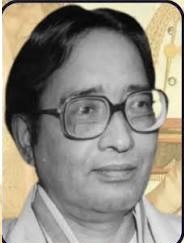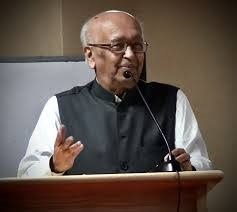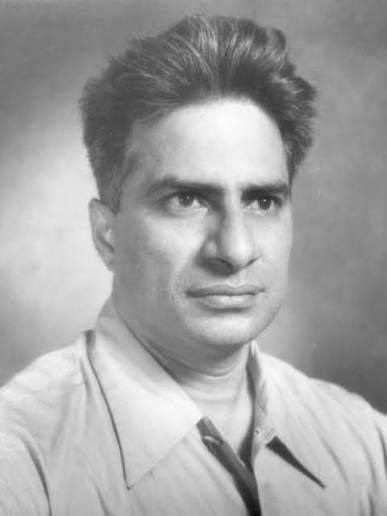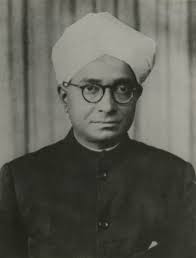
Sir Kariamanickam Srinivasa Krishnan (K. S. Krishnan) (1898–1961) was one of India’s most distinguished physicists and a pioneer of modern experimental physics. He is internationally recognized for his collaborative work with Sir C. V. Raman on the discovery of the Raman Effect, a milestone in optical physics that earned Raman the 1930 Nobel Prize in Physics. Beyond this landmark achievement, Krishnan made significant contributions to crystal physics, magnetism, solid-state physics, and material science. As an outstanding researcher, educator, and institution builder, he played a crucial role in establishing India’s scientific infrastructure after independence.
Early Life and Education
K. S. Krishnan was born on December 4, 1898, in Watrap (also known as Srivilliputhur Taluk), Virudhunagar District, Tamil Nadu, India.
He completed his early education in Tamil Nadu, where he demonstrated exceptional aptitude in mathematics and science. He later studied at the Madras Christian College (MCC), Chennai, earning a Bachelor’s degree in Physics with distinction.
Inspired by the rapid developments in physics during the early twentieth century, Krishnan joined the University of Calcutta, where he became a research assistant to the eminent physicist Sir C. V. Raman. This partnership marked the beginning of one of the most significant collaborations in the history of Indian science.
Scientific Career & Research
K. S. Krishnan began his research career under C. V. Raman at the Indian Association for the Cultivation of Science (IACS) in Kolkata. Together, they conducted pioneering experiments on the scattering of light, leading to the discovery of the Raman Effect in 1928.
Later, Krishnan pursued independent research in:
- Solid-state physics
- Crystal physics
- Magnetism
- Magnetic properties of crystals
- Thermal conductivity
- Material science
He served as a professor at the University of Dhaka (now in Bangladesh) and later joined the University of Calcutta.
After India’s independence, he became the first Director of the National Physical Laboratory (NPL), New Delhi, where he helped establish advanced research facilities and promoted scientific research across the country.
Major Discoveries and Contributions
1. Co-discovery of the Raman Effect
One of K. S. Krishnan’s most significant scientific achievements was his collaboration with Sir C. V. Raman in discovering the Raman Effect in 1928.
The Raman Effect demonstrated that when light passes through a transparent substance, a small fraction of the scattered light changes its wavelength due to interactions with molecules.
This discovery:
- Revolutionized spectroscopy.
- Enabled scientists to study molecular structures.
- Laid the foundation for modern Raman spectroscopy.
- Earned C. V. Raman the 1930 Nobel Prize in Physics.
Krishnan’s careful experiments and precise measurements were essential to this landmark discovery.
2. Research on Magnetism
After the Raman discovery, Krishnan became an international authority on magnetism.
His investigations focused on:
- Magnetic susceptibility
- Crystal magnetism
- Magnetic anisotropy
- Magnetic properties of solids
His research improved understanding of how materials respond to magnetic fields and contributed significantly to solid-state physics.
3. Contributions to Crystal Physics
Krishnan studied the relationship between crystal structure and physical properties.
His work advanced knowledge of:
- Crystal symmetry
- Electrical conductivity
- Thermal conductivity
- Optical properties of crystals
These findings became important in materials science and condensed matter physics.
4. Development of Scientific Research in India
As the first Director of the National Physical Laboratory (NPL), Krishnan helped establish national standards laboratories and promoted advanced scientific research in India.
He encouraged interdisciplinary research in:
- Physics
- Engineering
- Materials science
- Industrial technology
His leadership strengthened India’s scientific infrastructure during the early years after independence.
5. Scientific Leadership
K. S. Krishnan actively promoted scientific education and research through national scientific organizations.
He played an important role in shaping India’s scientific policies and encouraging young physicists to pursue research careers.
Awards and Honours
Sir K. S. Krishnan received numerous prestigious honors, including:
- Knight Bachelor (1946), receiving the title “Sir” from the British Crown.
- Fellow of the Royal Society (FRS) (1940), one of the highest honors in science.
- Padma Bhushan (1954), awarded by the Government of India.
- President of the Indian Science Congress (1949).
- President of the National Academy of Sciences, India.
- Numerous honorary doctorates from Indian and international universities.
Several scientific institutions, awards, and buildings have been named in his honor.
Later Life and Death
During his later years, K. S. Krishnan continued leading the National Physical Laboratory while contributing to national science policy and scientific education.
He remained active in research, administration, and mentoring young scientists until his death.
Sir K. S. Krishnan passed away on June 14, 1961, in New Delhi, at the age of 62.
His passing marked the loss of one of India’s greatest experimental physicists.
Legacy and Impact
K. S. Krishnan’s contributions continue to influence physics and materials science around the world.
His enduring legacy includes:
- Co-discovering the Raman Effect, one of the greatest achievements in modern physics.
- Advancing research in magnetism and crystal physics.
- Strengthening solid-state and materials science research.
- Establishing the National Physical Laboratory as a premier research institution.
- Helping build India’s post-independence scientific infrastructure.
- Inspiring generations of physicists through his research and mentorship.
- Contributing to spectroscopy, condensed matter physics, and material science.
His work remains fundamental to modern scientific research and industrial applications.
Conclusion
Sir K. S. Krishnan was one of India’s foremost physicists, whose pioneering research transformed the understanding of light, magnetism, and solid materials. His collaboration in the discovery of the Raman Effect and his later contributions to solid-state physics established him as a global scientific leader. Through his dedication to research, institution building, and scientific education, Krishnan helped lay the foundation for modern physics in India. His legacy continues to inspire scientists and remains an integral part of the country’s scientific heritage.
About the Author