Introduction
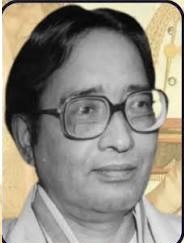
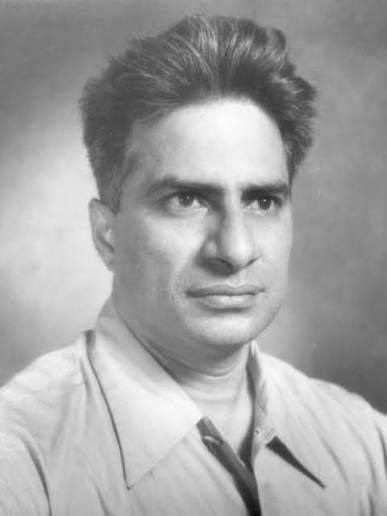
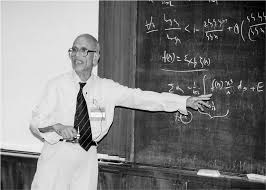
K. Ramachandra (1923–2011) was one of India’s most distinguished number theorists and a leading figure in analytic number theory. Best known for his deep contributions to the study of the Riemann Zeta Function and the distribution of prime numbers, Ramachandra played a crucial role in advancing number theory in India during the twentieth century. His research earned international recognition, and he is remembered for nurturing a strong school of number theory at the Tata Institute of Fundamental Research.
Early Life and Education
K. Ramachandra was born on September 18, 1923, in Karnataka, India. His early education was marked by financial difficulties, and he did not initially follow a conventional academic path.
Despite these challenges, he developed a remarkable passion for mathematics through self-study. His talent was recognized by eminent Indian mathematicians, and he eventually joined TIFR in Mumbai, where he received guidance from leading scholars. Although largely self-taught in his early years, he became one of India’s foremost experts in number theory through dedication and exceptional mathematical insight.
Scientific Career & Research
Ramachandra spent most of his professional career at TIFR, where he worked alongside some of the world’s leading mathematicians.
His primary research areas included:
- Analytic number theory
- Riemann zeta function
- Prime number theory
- Transcendental number theory
- Complex analysis related to number theory
He published numerous influential papers and collaborated with prominent mathematicians from India and abroad. His work significantly advanced the understanding of the behavior of zeta functions and related problems in number theory.
Ramachandra also mentored several young mathematicians who later became leading researchers in the field.
Major Discoveries and Contributions
1. Research on the Riemann Zeta Function
Ramachandra made significant contributions to the study of the Riemann zeta function, one of the most important objects in mathematics. His work improved understanding of its growth, values, and analytic properties.
2. Prime Number Distribution
He developed important results concerning the distribution of prime numbers and related arithmetic functions, helping advance classical problems in analytic number theory.
3. Ramachandra’s Contributions to Mean Value Theorems
His investigations into mean value estimates for zeta functions became influential in later developments within analytic number theory.
4. Development of Number Theory in India
Beyond his own research, Ramachandra established a strong tradition of number theory research at TIFR. His guidance helped create a generation of Indian number theorists who gained international recognition.
5. Extensive Scholarly Publications
Over his long career, he authored numerous research papers that continue to be cited and studied by mathematicians worldwide.
Awards and Honours
K. Ramachandra received several prestigious honors in recognition of his mathematical achievements, including:
- Shanti Swarup Bhatnagar Prize for Science and Technology (1977)
- Fellowship of the Indian Academy of Sciences
- Fellowship of the Indian National Science Academy
- Recognition by international mathematical societies and institutions
- Invitations to lecture at leading mathematical conferences worldwide
These awards reflected his status as one of the foremost number theorists of his generation.
Later Life and Death
After retirement, Ramachandra remained intellectually active and continued encouraging mathematical research. He maintained close contact with students and colleagues and remained deeply interested in developments in number theory.
K. Ramachandra passed away on January 17, 2011. His death marked the loss of one of India’s greatest mathematicians, but his contributions continue to influence the field.
Legacy and Impact
Ramachandra’s legacy is immense in both Indian and international mathematics.
His lasting impact includes:
- Advancing research on the Riemann zeta function and prime numbers.
- Establishing a strong school of analytic number theory in India.
- Mentoring several distinguished mathematicians.
- Strengthening India’s reputation in global mathematical research.
- Inspiring future generations through his extraordinary self-taught journey.
Many of his research ideas continue to influence modern investigations in analytic number theory.
Conclusion
K. Ramachandra was a remarkable mathematician whose contributions to analytic number theory, particularly the study of the Riemann zeta function and prime numbers, earned him international acclaim. Rising from modest beginnings through determination and intellectual brilliance, he became one of India’s most respected number theorists. His research, mentorship, and dedication to mathematics have left a lasting legacy that continues to inspire mathematicians around the world.
About the Author