Introduction
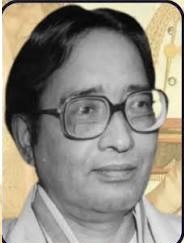
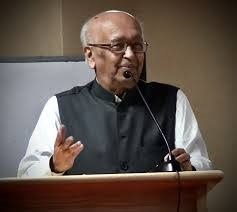
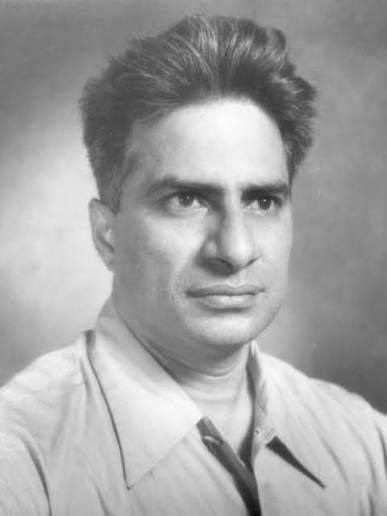
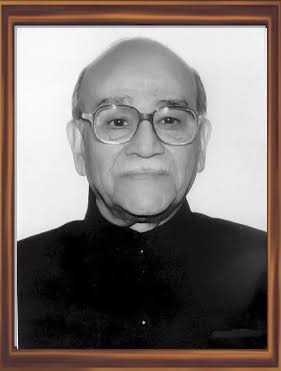
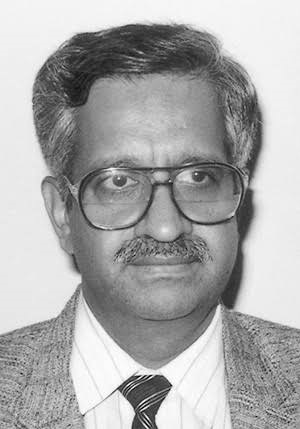
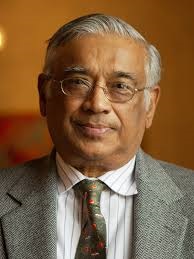
S. R. Srinivasa Varadhan is one of the world’s most distinguished mathematicians and a leading figure in probability theory. His pioneering work in stochastic processes, large deviations theory, and statistical mechanics has significantly influenced modern mathematics, physics, engineering, and finance. Varadhan is best known for developing the theory of large deviations, which provides a mathematical framework for studying rare events in complex systems. In recognition of his groundbreaking contributions, he became the first person of Indian origin to receive the prestigious Abel Prize in mathematics.
Early Life and Education
Srinivasa Varadhan was born on January 2, 1940, in Chennai (then Madras), Tamil Nadu, India. From an early age, he demonstrated exceptional aptitude in mathematics and analytical thinking.
He pursued his undergraduate studies at Presidency College, one of India’s premier institutions. He later joined the Indian Statistical Institute (ISI), Kolkata, where he studied under renowned statisticians and mathematicians. In 1963, he earned his Ph.D. from ISI, focusing on probability theory and stochastic processes.
Scientific Career & Research
After completing his doctoral studies, Varadhan continued his research at the Indian Statistical Institute before moving to the United States. He joined the prestigious Courant Institute of Mathematical Sciences at New York University, where he spent most of his academic career.
His research focused on:
- Probability theory
- Stochastic differential equations
- Markov processes
- Statistical mechanics
- Large deviations theory
- Random environments and diffusion processes
Varadhan collaborated with several leading mathematicians and produced influential work that became fundamental to modern probability theory.
Major Discoveries and Inventions
1. Large Deviations Theory
Varadhan’s most celebrated achievement is his work on large deviations theory. This mathematical framework studies the probability of rare events that deviate significantly from expected behavior.
Applications include:
- Financial risk analysis
- Telecommunications
- Statistical physics
- Climate modeling
- Engineering reliability studies
2. Freidlin–Wentzell–Varadhan Theory
His contributions helped establish mathematical methods for analyzing random perturbations in dynamical systems, now widely used in physics and engineering.
3. Varadhan’s Lemma
One of the most important results in probability theory, Varadhan’s Lemma provides a powerful tool for evaluating asymptotic integrals and has applications in statistical mechanics and stochastic analysis.
4. Diffusion in Random Media
Varadhan made major contributions to understanding how particles move through random environments, influencing studies in materials science and physics.
5. Hydrodynamic Limits
His research helped bridge microscopic random particle behavior with macroscopic physical laws, contributing to modern statistical mechanics.
Awards and Honours
S. R. Srinivasa Varadhan has received numerous prestigious awards throughout his career:
- Abel Prize – For fundamental contributions to probability theory and large deviations.
- National Medal of Science (2010).
- Leroy P. Steele Prize.
- Birkhoff Prize.
- Fellow of the American Academy of Arts and Sciences.
- Member of the National Academy of Sciences.
- Honorary degrees from several universities worldwide.
Later Life and Death
As of 2026, S. R. Srinivasa Varadhan is alive and remains one of the most respected figures in modern mathematics. Even after formal retirement, he has continued contributing through lectures, mentorship, and research collaborations.
His work continues to inspire mathematicians and researchers across the globe.
Legacy and Impact
Varadhan’s contributions transformed probability theory into a powerful tool for understanding uncertainty and randomness in natural and engineered systems.
His legacy includes:
- Establishing large deviations as a major branch of mathematics.
- Influencing modern finance, economics, and risk management.
- Advancing statistical mechanics and theoretical physics.
- Training and mentoring generations of mathematicians.
- Strengthening India’s reputation in advanced mathematical research.
Today, his theories are widely applied in disciplines ranging from quantum physics to machine learning and data science.
Conclusion
S. R. Srinivasa Varadhan stands among the greatest mathematicians of the modern era. Through his pioneering work in probability theory, stochastic processes, and large deviations, he fundamentally changed how scientists understand randomness and rare events. His achievements, crowned by the Abel Prize and numerous international honors, have left a lasting impact on mathematics and many scientific disciplines. Varadhan’s career serves as an inspiring example of intellectual excellence, innovation, and dedication to advancing human knowledge.
About the Author