Introduction
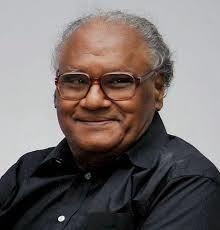
Chintamani Nagesa Ramachandra Rao (C. N. R. Rao) is one of India’s most distinguished chemists and a global authority in solid-state and materials chemistry. His pioneering research on transition metal oxides, nanomaterials, and high-temperature superconductors has significantly advanced modern chemistry and materials science. He is widely regarded as a scientific icon who has shaped India’s research landscape in chemistry for over six decades.
Early Life and Education
C. N. R. Rao was born on 30 June 1934 in Bengaluru (then Bangalore, British India). He grew up in an academically inclined family that encouraged education and scientific curiosity.
He completed his early education in Bengaluru and pursued his undergraduate studies at Mysore University, where he earned a B.Sc. degree in 1951 at a very young age.
He later moved to the United States for higher studies and completed his Ph.D. in Chemistry from Purdue University in 1958, followed by postdoctoral research at University of California, Berkeley.
Scientific Career & Research
After returning to India, C. N. R. Rao joined the Indian Institute of Technology Kanpur, where he helped build a strong research culture in chemistry.
He later became the founding director of the Jawaharlal Nehru Centre for Advanced Scientific Research, one of India’s premier research institutions.
His research primarily focuses on:
- Solid-state chemistry
- Materials chemistry
- Nanotechnology
- Transition metal oxides
- Spectroscopy
He has authored more than 1,800 research papers and several influential scientific books.
Major Discoveries and Inventions
1. Transition Metal Oxides
Rao made groundbreaking contributions to understanding transition metal oxides, which exhibit unique electrical and magnetic properties.
These materials are widely used in:
- Electronics
- Energy storage
- Superconductors
- Sensors
2. High-Temperature Superconductors
He contributed to early research on materials that show superconductivity at relatively high temperatures, which is crucial for:
- Power transmission
- Magnetic levitation
- Advanced electronics
3. Nanomaterials and Fullerenes
Rao played a key role in developing nanomaterials research in India, including studies on:
- Carbon nanotubes
- Fullerenes
- Nano-oxides
4. Spectroscopy and Solid-State Chemistry
He advanced techniques to study:
- Chemical bonding in solids
- Electronic structure of materials
- Phase transitions
Awards and Honours
C. N. R. Rao is one of the most decorated scientists in India and the world:
- Bharat Ratna (2014)
- Shanti Swarup Bhatnagar Prize (1969)
- Royal Medal (2000)
- Padma Vibhushan (1985)
- Fellow of multiple global scientific academies
He is one of the most highly cited chemists in the world.
Later Life and Death
C. N. R. Rao continues to remain active in scientific research, mentoring, and science policy. He has played an important role in advising the Government of India on scientific development and education.
As of now, he is alive and continues to contribute to science at an advanced age.
Legacy and Impact
C. N. R. Rao’s legacy is immense in both Indian and global science:
- Revolutionized solid-state chemistry
- Strengthened India’s materials science research
- Inspired generations of chemists
- Built world-class research institutions
- Advanced nanotechnology and superconductivity studies
He is often called a “living legend of chemistry” for his extraordinary contributions.
Conclusion
C. N. R. Rao stands as one of the greatest chemists of modern times. His pioneering work in solid-state and materials chemistry has transformed scientific understanding and technological development. Through his research, teaching, and institution-building, he has left a lasting impact on global science and continues to inspire future generations of researchers.
About the Author