
Introduction
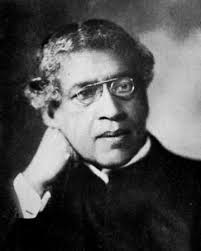
Sir Jagadish Chandra Bose was a pioneering Indian scientist whose work bridged physics, radio science, and plant biology. He is widely regarded as one of the earliest scientists to explore wireless communication and also as a pioneer in demonstrating that plants have life responses similar to animals. His interdisciplinary contributions made him one of the most remarkable scientists of modern India.
Early Life and Education
Jagadish Chandra Bose was born on 30 November 1858 in Munshiganj (then British India). He grew up in a family that valued education and cultural learning.
He studied at St. Xavier’s College, where he was deeply influenced by Jesuit teachers who encouraged scientific curiosity. Later, he traveled to England and studied at the University of Cambridge, where he earned a degree in Natural Sciences.
He also studied medicine at University College London but later shifted his focus entirely to physics and research.
Scientific Career & Research
After returning to India, Bose joined Presidency College as a professor of physics in 1885. Despite facing racial discrimination in salary and laboratory facilities, he continued his research with determination.
He worked extensively on electromagnetic waves, plant physiology, and material science. His laboratory experiments in India gained international recognition.
Later, he established the Bose Institute in 1917, dedicated to advanced scientific research.
Major Discoveries and Inventions
1. Wireless Communication Research
Bose was among the first scientists to study microwaves and radio waves, demonstrating their properties long before practical wireless communication became widespread.
He developed instruments to generate and detect electromagnetic waves, contributing to early radio science.
2. Crescograph (Plant Science)
He invented the Crescograph, a device that measures the growth rate of plants with extreme precision.
This invention proved that plants respond to:
- Light
- Heat
- Chemicals
- External stimuli
3. Demonstration of Plant Sensitivity
Bose showed that plants have life-like responses, such as:
- Electrical signaling
- Sensitivity to pain-like stimuli
- Growth variation under stress
This revolutionized plant physiology.
4. Contributions to Solid State Physics
He also studied:
- Crystal behavior
- Semiconductor properties
- Microwave optics
His work laid foundations for modern electronics.
Awards and Honours
Jagadish Chandra Bose received several important recognitions:
- Companion of the Order of the Indian Empire (1903)
- Fellow of the Royal Society (1920)
- International recognition for pioneering work in radio science and biology
- Honorary degrees from several universities
He was one of the first Indian scientists to gain global scientific respect.
Later Life and Death
In his later years, Bose focused on plant research and established his own research institute, the Bose Institute, where he continued his experiments.
He remained deeply committed to science education and mentoring young researchers.
Jagadish Chandra Bose passed away on 23 November 1937 in Giridih.
Legacy and Impact
Jagadish Chandra Bose’s legacy spans multiple scientific disciplines:
- Pioneer of wireless communication research
- Founder of modern plant physiology experiments
- Early contributor to semiconductor and microwave science
- Inspiration for interdisciplinary scientific research
His invention of the Crescograph and his studies on plant sensitivity reshaped biology, while his radio wave research contributed to modern telecommunications.
Today, the Bose Institute continues his scientific mission, and he is remembered as one of India’s greatest scientific minds.
Conclusion
Jagadish Chandra Bose was a visionary scientist whose work transcended traditional boundaries between physics and biology. His groundbreaking research in radio science and plant physiology placed him among the pioneers of modern science. His legacy continues to inspire researchers across the world, proving that curiosity and innovation can transform multiple fields of knowledge.
About the Author