Introduction
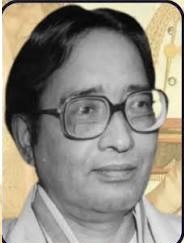
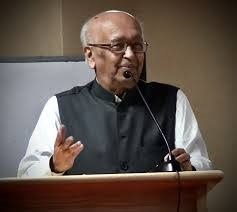
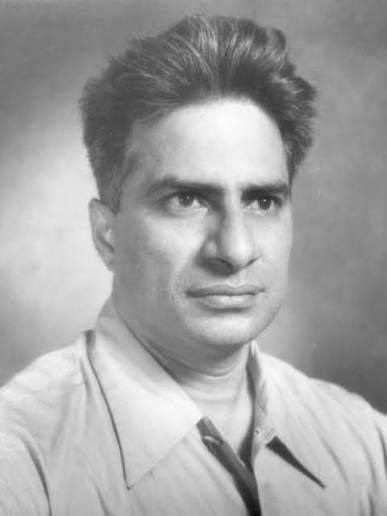
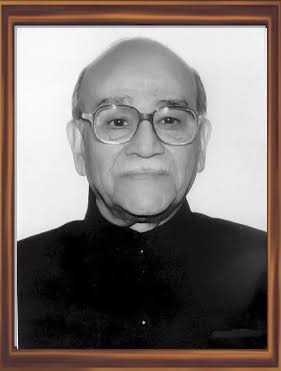
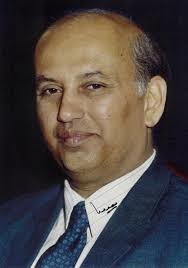
Dr. U. R. Rao was one of India’s most influential space scientists and is widely regarded as the architect of India’s satellite program. Through his visionary leadership and scientific expertise, he played a key role in transforming India into a major spacefaring nation. His contributions to satellite technology, communication systems, and remote sensing helped improve telecommunications, weather forecasting, disaster management, and resource monitoring across the country.
As Chairman of Indian Space Research Organisation (ISRO), Dr. Rao guided several landmark missions that strengthened India’s position in global space research.
Early Life and Education
Udupi Ramachandra Rao was born on March 10, 1932, in Adamaru, near Udupi, Karnataka, India.
He completed his Bachelor of Science degree from the University of Mysore and later obtained a Master’s degree from Banaras Hindu University. Driven by a passion for physics and space science, he pursued doctoral studies at Gujarat University, earning a Ph.D. in Physical Sciences.
Following his doctorate, Dr. Rao conducted advanced research at prestigious international institutions, including the Massachusetts Institute of Technology (MIT) and the University of Texas at Dallas, where he worked on cosmic rays and space physics.
Scientific Career & Research
Dr. Rao began his research career by studying cosmic rays and interplanetary physics. His scientific work contributed significantly to understanding high-energy particles in space.
In 1966, he returned to India at the invitation of Vikram Sarabhai and joined India’s emerging space program.
His most significant contribution came through the development of India’s satellite technology capabilities. He led teams that designed, built, and launched India’s first satellites, laying the foundation for future space missions.
As Chairman of ISRO from 1984 to 1994, he oversaw major advancements in launch vehicle technology, satellite communications, and Earth observation systems.
Major Discoveries and Inventions
Aryabhata – India’s First Satellite
Dr. Rao was the Project Director for Aryabhata, launched in 1975. The mission marked India’s entry into the space age and demonstrated the country’s ability to design and build satellites.
Development of INSAT Satellites
He played a crucial role in developing the Indian National Satellite (INSAT) system, which revolutionized telecommunications, television broadcasting, weather forecasting, and emergency communications in India.
Remote Sensing Satellites
Dr. Rao led the development of India’s remote sensing satellite program, enabling the monitoring of agriculture, forests, water resources, and environmental changes through satellite imagery.
Expansion of Satellite Applications
Under his leadership, satellite technology was applied to education, healthcare, meteorology, disaster management, and rural development, benefiting millions of people.
Advancement of Space Infrastructure
He helped establish the technological foundation for future ISRO achievements, including advanced communication satellites and launch vehicle programs.
Awards and Honours
Dr. U. R. Rao received numerous prestigious awards throughout his distinguished career, including:
- Padma Bhushan (1976)
- Padma Vibhushan (2017)
- ISRO Lifetime Achievement Award
- International Astronautical Federation Hall of Fame recognition
- Karnataka Rajyotsava Award
- Several honorary doctorates from universities in India and abroad
- Membership in numerous international scientific academies
These honours recognized his outstanding contributions to satellite technology and space science.
Later Life and Death
After retiring from active administrative duties, Dr. Rao continued contributing to scientific research, policy-making, and space education. He served as an advisor to various national and international scientific organizations and remained actively involved in promoting space technology for societal development.
Dr. U. R. Rao passed away on July 24, 2017, in Bengaluru, Karnataka, at the age of 85. His death was widely mourned by the scientific community and the nation.
Legacy and Impact
Dr. U. R. Rao’s legacy remains deeply embedded in India’s space program. He transformed India from a nation dependent on foreign technology into a country capable of designing, building, and operating sophisticated satellites.
His contributions have:
- Established India’s indigenous satellite technology capabilities.
- Strengthened telecommunications and broadcasting networks.
- Improved weather forecasting and disaster management systems.
- Advanced agricultural and environmental monitoring.
- Inspired generations of scientists and engineers.
- Helped position India among the world’s leading space nations.
Many of ISRO’s later successes, including lunar and planetary exploration missions, were built upon the technological foundations established during Dr. Rao’s leadership.
Conclusion
Dr. U. R. Rao was a visionary scientist whose dedication and innovation revolutionized India’s satellite technology program. From leading the development of India’s first satellite to guiding the expansion of communication and remote sensing systems, his contributions transformed the nation’s technological landscape. His work continues to influence space research and satellite applications, making him one of the most respected figures in the history of Indian science and technology.
About the Author