1. Introduction
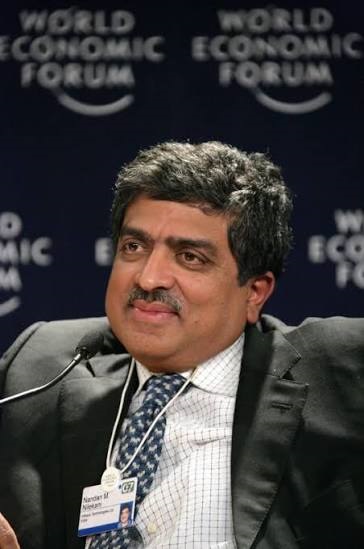
Nandan Nilekani is a towering figure in global technology, corporate leadership, and public governance. Best known as a co-founder and former CEO of Infosys, he transitioned from building a pioneer of India’s IT revolution to spearheading public digital infrastructure as the founding chairman of UIDAI (Aadhaar). Often described as a visionary technocrat, Nilekani has fundamentally reshaped how over a billion people interact with business, finance, and government services.
2. Quick Facts
- Full Name: Nandan Mohan Nilekani
- Native Name: ನಂದನ್ ನಿಲೇಕಣಿ
- Date of birth: June 2, 1955
- Place Of birth: Bengaluru (formerly Bangalore), Karnataka, India
- Nationality: Indian
- Occupation/ Profession: Technocrat, Entrepreneur, Author, and Civil Servant
- Field of Achievement: Information Technology, Public Policy, Digital Identity (Aadhaar), and Philanthropy
- Years Active: 1978–Present
3. Award Information (Focus: Padma Bhushan)
- Award Name: Padma Bhushan
- Award Category: Civil Honour (Third-Highest Civilian Award in India)
- Award Year: 2006
- Presented By: Dr. A.P.J. Abdul Kalam (President of India)
- Date of Ceremony: March 20, 2006
- Citation/Official Reason: Recognized for his pioneering contributions to the Information Technology industry, leadership in corporate governance, and entrepreneurial excellence.
- Previous Recipients (Notable peers in 2006): Corporate leaders and scientists like V. Krishnamurthy and P. S. Rao.
- Next Recipients: (Succeeding civilian award cycles encompass diverse national honorees across science, arts, and public service).
4. Why He Received the Award
Nilekani received the Padma Bhushan for his instrumental role in establishing Infosys as a global software powerhouse and for proving that Indian companies could compete, scale, and thrive on the world stage. His leadership laid the bedrock for India’s IT service export economy, paving the way for millions of tech jobs and changing the global perception of Indian engineering talent.
5. Early Life
Born in Bangalore into a Konkani-speaking family, Nilekani spent his formative years moving between Bangalore and Dharwad (following his father’s career as a textile mill manager). Influenced by his father’s progressive ideas, he grew up as an avid reader with a deep curiosity for science and society. Moving to Dharwad at age 12 taught him self-reliance and independence, traits that would later define his professional risk-taking.
6. Education
- Schooling: Bishop Cotton Boys’ School, Bangalore, and St. Joseph’s High School, Dharwad.
- Pre-university: Karnatak College, Dharwad.
- Higher Education: Bachelor of Technology (B.Tech) in Electrical Engineering from the Indian Institute of Technology (IIT), Bombay (Class of 1978).
7. Career Journey
- Early Career (1978–1981): Started at Patni Computer Systems in Mumbai, where a puzzle-based interview by N.R. Narayana Murthy changed his life trajectory.
- The Infosys Genesis (1981): Along with Narayana Murthy and five others, Nilekani quit Patni to co-found Infosys with meager seed capital and a vision.
- Corporate Leadership (2002–2007): Served as the CEO of Infosys, scaling revenues sixfold to $3 billion during a golden five-year tenure.
- Aadhaar & Public Service (2009–2014): Stepped down from corporate life to build and lead the Unique Identification Authority of India (UIDAI) holding cabinet rank, creating the world’s largest biometric digital identity system.
- Return to Infosys (2017–Present): Returned as Non-Executive Chairman to steer the company through leadership stabilization.
8. Major Achievements
- Co-founded Infosys, turning it into a crown jewel of Indian corporate enterprise.
- Spearheaded Aadhaar, issuing verifiable digital IDs to over 1.2 billion residents of India.
- Conceptualized the “India Stack”—a set of open APIs that powered frictionless digital payments (UPI), paperless governance, and financial inclusion.
- Authored the critically acclaimed books Imagining India and Rebooting India.
9. Contribution to the Nation
Nilekani’s greatest national contribution lies in building Digital Public Infrastructure (DPI). By laying down the foundations for Aadhaar and UPI, he eliminated systemic leakages in welfare distribution, brought hundreds of millions of unbanked citizens into the formal financial ecosystem, and catalyzed a startup economy that makes India a global fintech leader. Additionally, he has lent his expertise to institutional reforms, such as heading task forces to streamline national examinations.
10. Other Awards and Honours
- Forbes Asia Businessman of the Year (2006)
- Time 100 Most Influential People in the World (2006 & 2009)
- Joseph Schumpeter Prize for innovative economic services (2005)
- Nikkei Asia Prize for Economic & Business Innovation (2017)
- Doctor of Science (Honoris Causa) from IIT Bombay (2019)
11. Legacy and Influence
Nilekani bridges the rare intersection of capitalist enterprise and socialist welfare. His philosophy of using technology at a population scale has transformed India from a bureaucratic, paper-heavy state into a nimble digital economy. His frameworks are now being studied and adopted by developing nations worldwide looking to digitize their populations securely.
12. Interesting Facts
- The Missed Exam: Nilekani originally planned to study for an MBA, but falling ill on the day of the IIM entrance exam pushed him straight into job hunting—leading him directly to N.R. Narayana Murthy.
- College Romance: He met his future wife, author and philanthropist Rohini Nilekani, during a college quiz competition at Elphinstone College while representing IIT Bombay.
- Cabinet Rank Bureaucrat: When he took over UIDAI, he did so willingly as a public servant reporting directly to the Prime Minister, refusing commercial distractions.
13. Quotes
“The best way to predict the future is to invent it—and in India’s case, we are inventing a future where identity and technology empower the poorest citizen.”
“In the 20th century, physical infrastructure like roads and ports defined nations. In the 21st century, digital infrastructure will define them.”
14. Timeline
- 1955: Born in Bangalore, Karnataka.
- 1978: Graduates with a B.Tech from IIT Bombay; joins Patni Computer Systems.
- 1981: Co-founds Infosys with six others.
- 2002: Takes over as Chief Executive Officer (CEO) of Infosys.
- 2006: Awarded the Padma Bhushan; named Forbes Asia Businessman of the Year.
- 2008: Publishes his seminal book Imagining India.
- 2009: Appointed as Founding Chairman of UIDAI (Aadhaar) with Cabinet rank.
- 2017: Returns to Infosys as Non-Executive Chairman; receives Nikkei Asia Prize.
15. References
- Wikipedia: Nandan Nilekani Profile & History
- Infosys Official Management Archives
- UIDAI Public Records & Reports
- CapitalVia & Business of Philanthropy biographical archives
16. Related Personalities
- N. R. Narayana Murthy (Co-founder of Infosys and mentor)
- Rohini Nilekani (Renowned philanthropist, author, and spouse)
- Kris Gopalakrishnan (Co-founder and former Infosys CEO)
- Dr. Manmohan Singh (Former Prime Minister who invited Nilekani to lead UIDAI)
17. Frequently Asked Questions (FAQ)
- Q: Is Nandan Nilekani still involved with Infosys?
- A: Yes, he serves as the Non-Executive Chairman of the Board at Infosys.
- Q: What is Nandan Nilekani best known for publicly?
- A: He is widely recognized as the mastermind behind Aadhaar (UIDAI), India’s unique biometric identity system, and for co-founding Infosys.
- Q: Did Nandan Nilekani ever enter politics?
- A: Yes, he contested the 2014 Indian general elections from the Bangalore South constituency as an Indian National Congress candidate, though he was unsuccessful.
- Q: What are some books written by Nandan Nilekani?
- A: He authored Imagining India: Ideas for the New Century and co-authored Rebooting India: Realizing a Billion Aspirations with Viral Shah.
About the Author