1. Introduction: Remembering an Upright Bureaucrat
Standalone Title:P.S. Appu: The Benchmark of Integrity in Indian Civil Services
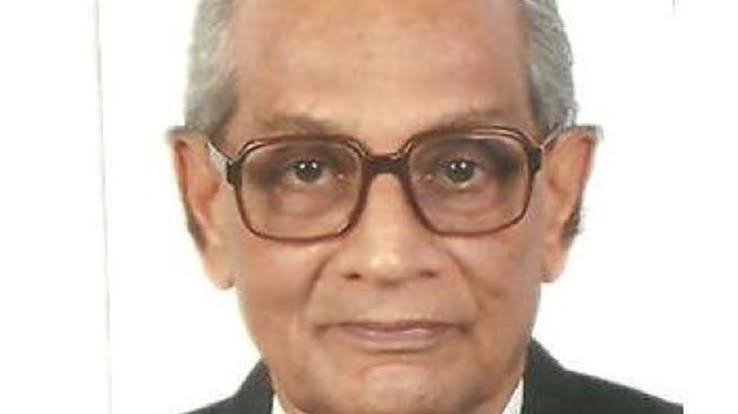
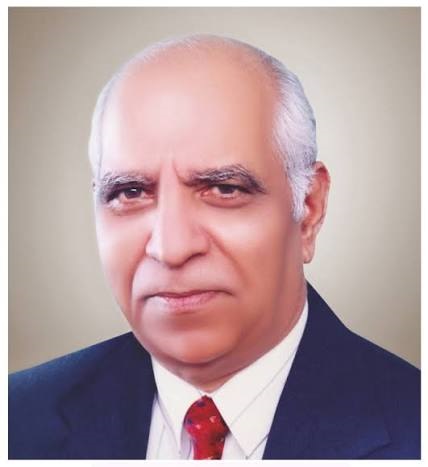
Panangat Sreedharan Appu (1929 – 28 March 2012) was an iconic Indian civil servant, legendary administrator, and reformer who served as the Director of the Lal Bahadur Shastri National Academy of Administration (LBSNAA). Known nationwide for his uncompromising principles, fierce professional independence, and deep commitment to social justice, Appu remains a gold standard for what an upright bureaucrat should represent.
2. Quick Facts: At a Glance
Standalone Title:P.S. Appu: Quick Facts and Profile Overview
Full Name: Panangat Sreedharan Appu (P.S. Appu)
Date of Birth: 1929
Place of Birth: Kerala, India
Nationality: Indian
Occupation/Profession: Civil Servant, Bureaucrat, Administrator, Public Policy Analyst
Field of Achievement: Public Administration, Land Reforms, Civil Service Ethics
Years Active: 1951 – 2012 (Active IAS service from 1951 to early 1980s; later an active writer and institutional watchdog)
3. Award Information: The Padma Bhushan Honor
Standalone Title:Recognizing Public Service Excellence: P.S. Appu’s Padma Bhushan Award
Award Name: Padma Bhushan
Award Category: Civilian Award (Third Highest Civilian Honor in India)
Award Year: 2006
Presented By: Government of India
Date of Ceremony: March 2006
Citation/Official Reason: For distinguished service and lifelong contributions to civil service, public administration, and equity-driven governance.
Previous/Next Recipients: Part of the esteemed 2006 Padma awards cohort honoring leaders in public affairs, arts, and science.
4. Why Did He Receive the Award?
Standalone Title:A Life of Unyielding Integrity: Why P.S. Appu Was Awarded the Padma Bhushan
P.S. Appu received the Padma Bhushan in recognition of his lifetime dedication to institutional integrity, his monumental work spearheading land reforms in India, and his courageous defense of civil service independence against political expediency. He stood out as a bureaucrat who consistently prioritized ethics, constitutional values, and the marginalized over administrative convenience.
5. Early Life: Formative Years and Roots
Standalone Title:The Making of a Principled Mind: P.S. Appu’s Early Life
Born in Kerala in 1929, Appu grew up during a pivotal era marked by India’s struggle for independence and the subsequent nation-building phase. Imbued with a strong sense of equity, empathy for the rural poor, and intellectual rigor, he developed an early worldview heavily anchored in socialist ideals and democratic institutions.
6. Education: Academic Foundation of a Bureaucrat
Standalone Title:Academic Rigor: The Intellectual Grounding of P.S. Appu
Appu pursued rigorous higher education, equipping himself with a deep understanding of economics, law, and history. His strong academic background allowed him to master complex policy matters—ranging from agrarian economics to state finance—long before entering the rigors of national governance.
7. Career Journey: From the Bihar Cadre to LBSNAA Director
Standalone Title:A Storied Career: Navigating Bihar’s Corridors and Directing LBSNAA
Joining the IAS (1951): Appu began his career by clearing the civil services and joining the 1951 batch of the Indian Administrative Service (IAS), opting for the challenging Bihar cadre.
Grassroots Administration: Served in various demanding field roles, including Collector of Darbhanga district, where he dealt first-hand with deep-seated agrarian inequities.
Key Administrative Posts: Held major policy positions, including Finance Secretary of Bihar and Land Reforms Commissioner in the Ministry of Agriculture.
Directorship of LBSNAA: Served as the Director of the Lal Bahadur Shastri National Academy of Administration (1980–1982), where he sought to instill high moral character and fearlessness in young civil service probationers.
8. Major Achievements: Championing Land Reforms
Standalone Title:Structural Milestones: Spearheading India’s Land Reform Policies
The Planning Commission Land Reforms Committee: As chairman of the committee on land reforms set up by the Planning Commission, he authored scathing, honest evaluations highlighting how a lack of political will crippled equitable land distribution.
Protecting Tenant Rights: Instrumental in designing and pushing frameworks aimed at protecting tenant farmers and redistributing ceiling surplus land to landless peasants.
The 1981 LBSNAA Resignation: Famously resigned from his post as Director of LBSNAA in protest when the central government failed to take strict disciplinary action against a privileged trainee officer who terrorized peers. This bold stand triggered a massive debate in Parliament and forced accountability right up to Prime Minister Indira Gandhi.
9. Contribution to the Nation: Upholding the “Steel Frame”
Standalone Title:Safeguarding Democracy: P.S. Appu’s Contribution to Civil Service Ethics
Appu believed that the bureaucracy was meant to act as an impartial, fearless “steel frame” safeguarding the Indian Constitution. Through his writings, administrative decisions, and public stances, he constantly reminded public servants that neutrality does not mean indifference to injustice. His work on land reforms laid crucial groundwork for trying to bridge the massive rural wealth gap in post-independent India.
10. Other Awards and Honours
Standalone Title:Beyond the Padma Bhushan: Recognition of an Institutional Icon
Civilian Honors: Honored with the Padma Bhushan (2006) for his lifelong public service.
Intellectual Legacy Awards: Widely commemorated through public lecture series, memorial lectures by civil society organizations, and compilations of his institutional essays (The Appu Papers).
11. Legacy and Influence: A Moral Compass for Bureaucrats
Standalone Title:An Enduring Legacy: Why P.S. Appu Remains a Role Model for the IAS
P.S. Appu’s legacy is defined by his absolute refusal to cow down to political bullying or administrative compromise. Decades after his retirement and passing on March 28, 2012, his name is invoked whenever discussions arise regarding civil service reforms, executive courage, and ethical governance. Training institutions frequently look back at his principles as the benchmark for shaping young bureaucrats.
12. Interesting Facts: Surprising Insights
Standalone Title:Did You Know? Fascinating Facts About P.S. Appu
The Walkout on the Prime Minister: Following his resignation over the 1981 trainee scandal, Prime Minister Indira Gandhi called him to Delhi for a meeting. After waiting outside her office for 30 minutes, Appu simply got up and walked away, refusing to compromise his dignity—a testament to his no-nonsense attitude.
A True Developmental Economist: Though trained primarily as an administrator, his granular understanding of rural economics earned him the title of an expert development economist among his peers.
Self-Effacing Integrity: True to his character, Appu once publicly stated that true integrity involves being objective enough to recognize when colleagues or subordinates are better suited for a role than oneself.
13. Quotes: Words of Wisdom
Standalone Title:In His Words: Memorable Quotes by and About P.S. Appu
“The major share of the guilt for the decay of public systems must be laid at the doors of the civil servants themselves who chose to collude rather than stand up for what is right.” — P.S. Appu
“He recognised the value of dissent and taught us that an upright officer’s primary allegiance is to the Constitution, not to protocol.” — Tribute by Harsh Mander
14. Timeline: Key Milestones in His Life
1929: Born in Kerala.
1951: Joins the Indian Administrative Service (IAS) under the Bihar cadre.
1972: Authors the landmark Planning Commission report on the bottlenecks of land reforms.
1980–1982: Serves as the Director of LBSNAA, Mussoorie.
1981: Resigns from LBSNAA in a principled protest over disciplinary lapses, sparking a national debate.
2006: Conferred the Padma Bhushan by the Government of India.
2012: Passes away on March 28 at the age of 83.
15. References: Sources and Further Reading
Standalone Title:Sources and Archives: Further Reading on P.S. Appu
Wikipedia & Open Source Archives: P.S. Appu Profile
The Hindu & The Indian Express: Obituaries and Analytical Tributes (by Harsh Mander, Y.K. Alagh, and E.A.S. Sarma)
Rare Values, Rarest Insight – Revisiting Our Time with Shri P.S. Appu (Anthology)
LBSNAA Official Archives & Administrative Journals
16. Related Personalities: Peers, Mentees, and Leaders
Standalone Title:In Good Company: Contemporaries and Mentees of P.S. Appu
Harsh Mander: Noted civil servant turned activist who trained under Appu and documented his institutional values.
Indira Gandhi: Prime Minister during whose tenure some of Appu’s most high-profile administrative and institutional standoffs occurred.
Yoginder K. Alagh: Eminent economist and contemporary who frequently cited Appu as a role model for public policy.
17. Frequently Asked Questions (FAQ)
Standalone Title:All Your Questions Answered: FAQs About P.S. Appu
Q: Who was P.S. Appu?
A: P.S. Appu was a legendary Indian civil servant, land reform commissioner, and former Director of the Lal Bahadur Shastri National Academy of Administration (LBSNAA) renowned for his absolute integrity and courage.
S: Why is he famous in Indian administrative history?
A: He is best remembered for his fearless defense of bureaucratic ethics, his frank reporting on the failure of land reforms due to political shortcomings, and his historic resignation from LBSNAA to protest political shielding of an indisciplined trainee.
Q: What major awards did he receive?
A: He was honored with the Padma Bhushan, India’s third-highest civilian award, in 2006.