

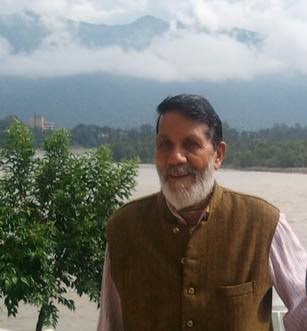
1. Introduction
Chandi Prasad Bhatt (born June 23, 1934) is one of India’s first modern environmentalists and a pioneering figure of the global grassroots ecological movement. As the founder of the Dasholi Gram Swarajya Sangh (DGSS), he masterminded the historic Chipko Movement in the early 1970s, where rural villagers—predominantly women—hugged trees to protect them from commercial logging. A true Gandhian crusader, his lifelong dedication to subaltern social ecology, forest conservation, and community empowerment has earned him international acclaim and India’s highest civilian and peace honors.
2. Quick Facts
- Full Name: Chandi Prasad Bhatt
- Native Name: चंडी प्रसाद भट्ट (Hindi)
- Date of Birth: June 23, 1934
- Place of Birth: Gopeshwar, Chamoli district, Uttarakhand (then part of United Provinces, British India)
- Nationality: Indian
- Occupation / Profession: Environmentalist, Social Activist, Gandhian Leader
- Field of Achievement: Environmental Conservation, Subaltern Social Ecology, and Rural Development
- Years Active: 1960s – Present
3. Award Information (Focus: Padma Bhushan & Gandhi Peace Prize)
- Award Name: Padma Bhushan (Follow-up to his earlier Padma Shri and Ramon Magsaysay Award)
- Award Category: Social Work / Environmental Conservation
- Award Year: 2005 (Padma Shri awarded in 1986; Gandhi Peace Prize in 2013)
- Presented By: The President of India at Rashtrapati Bhavan
- Date of Ceremony: Spring 2005
- Citation / Official Reason: For distinguished service of a high order, pioneering leadership in community-based environmental preservation, and lifelong dedication to Gandhian social upliftment.
4. Why Did He Receive the Award?
Chandi Prasad Bhatt received the Padma Bhushan (and later the prestigious Gandhi Peace Prize in 2013) in recognition of his monumental role in shaping India’s environmental consciousness. He was honored for spearheading the Chipko Movement, demonstrating how local communities can successfully safeguard fragile ecosystems, prevent ecological disasters in the Himalayas, and build sustainable livelihoods rooted in non-violent activism.
5. Early Life
Born in the small Himalayan town of Gopeshwar in Chamoli, Bhatt grew up amidst the breathtaking yet ecologically fragile terrain of Uttarakhand. Early in life, he experienced the economic hardships of rural hill communities. Heavily influenced by Gandhian philosophy, Jayaprakash Narayan, and Vinoba Bhave, he chose a life of austere public service, focusing on labor rights, prohibition, social harmony, and the upliftment of marginalized hill communities.
6. Education
- Foundational Schooling: Completed his early education locally in Rudraprayag and Pauri.
- Practical Self-Learning: Though formal university degrees were cut short due to circumstances, his deep self-study of agrarian systems, Gandhian economics, and Himalayan ecology made him one of the most respected natural resource intellectuals in the country.
7. Career Journey
- Early Professional Steps: Worked in various small jobs, including as a transport worker, before dedicating his life fully to Sarvodaya (Gandhian progressive) social work.
- Founding DGSS (1964): Established the Dasholi Gram Swarajya Sangh in Gopeshwar, an organization initially meant to secure local employment through small forest-based industries, which later evolved into an environmental watchdog.
- Activist & Policy Advisor: Led grassroots resistance against commercial timber logging, later lending his expertise to national bodies like the National Forest Commission (2003) to reshape modern Indian forest management policies.
8. Major Achievements
- Architect of the Chipko Movement (1973): Triggered a global template for eco-activism when villagers in Chamoli literally hugged trees to prevent commercial contractors from felling them.
- Ramon Magsaysay Award (1982): Received Asia’s highest honor for Community Leadership, recognizing his mobilization of rural populations to protect their natural habitat.
- The Gandhi Peace Prize (2013): Conferred India’s highest annual award for Gandhian social, economic, and political transformation.
9. Contribution to the Nation
Chandi Prasad Bhatt single-handedly altered the paradigm of developmental economics in India by proving that ecological preservation and human survival are deeply intertwined. His grassroots mobilization prevented massive soil erosion, preserved vital Himalayan watersheds, and directly inspired global eco-movements. His policy inputs on ecological fragility have continuously guided governments on sustainable infrastructure and disaster mitigation in the Himalayas.
10. Other Awards and Honours
- Ramon Magsaysay Award: 1982 (Community Leadership)
- Padma Shri: 1986 (Government of India)
- UNEP Global 500 Roll of Honour: 1987
- Padma Bhushan: 2005
- Gandhi Peace Prize: 2013 (Awarded in 2014)
- Indira Gandhi Award for National Integration: 2017–18
11. Legacy and Influence
Bhatt is revered globally as the father of modern Indian environmentalism. The Chipko model demonstrated that sustainable development must rely on the active agency of local communities—especially women—rather than top-down bureaucratic mandates. His legacy endures through countless environmental groups and individuals who look to his simple, grounded life as the ultimate blueprint for ecological stewardship.
12. Interesting Facts
- The Origin of “Chipko”: The word Chipko literally means “to stick” or “to hug” in Hindi, born out of a spontaneous tactical decision in Mandal village in 1973 when villagers physically embraced trees to block axes.
- A Traveling Chronicler: Despite his deep roots in the hills, he has traveled extensively across the globe sharing ecological wisdom, yet remains remarkably humble and soft-spoken.
- Prolific Author: He documented his extraordinary journey in landmark books like Parvat Parvat, Basti Basti and Gentle Resistance: The Autobiography of Chandi Prasad Bhatt.
13. Quotes
“The protection of forests is not just about saving trees; it is about protecting the very source of our water, soil, and life itself.” — Chandi Prasad Bhatt
14. Timeline
- 1934: Born on June 23 in Gopeshwar, Uttarakhand.
- 1964: Founds the Dasholi Gram Swarajya Sangh (DGSS).
- 1973: Sparks the historic Chipko Movement in the Garhwal Himalayas.
- 1982: Conferred the prestigious Ramon Magsaysay Award.
- 1986: Awarded the Padma Shri by the Government of India.
- 2005: Honored with the Padma Bhushan.
- 2013: Awarded the Gandhi Peace Prize by the President of India.
15. References
- Wikipedia – Chandi Prasad Bhatt Biography & Bibliography
- Ashoka Archives – Chandi Prasad Bhatt Papers (1966–2018)
- The Hindu & Scroll.in – Archival and Historical Features on the Chipko Movement
- Ramon Magsaysay Award Foundation – Official Citation Archives
16. Related Personalities
- Gaura Devi (Legendary Chipko Movement Leader)
- Sunderlal Bahuguna (Prominent Environmentalist and Chipko Leader)
- Ramachandra Guha (Renowned Environmental Historian and Biographer)
17. Frequently Asked Questions (FAQ)
- Q: Who is Chandi Prasad Bhatt?
- A: He is a legendary Indian environmentalist and social activist best known as the pioneer of the historic Chipko Movement.
- Q: What was the main goal of the Chipko Movement?
- A: Initiated in the 1970s, it aimed to protect Himalayan forests from commercial felling through non-violent tree-hugging protests, safeguarding local livelihoods and ecosystems.
- Q: What major awards has he received?
- A: He has received the Ramon Magsaysay Award (1982), Padma Shri (1986), Padma Bhushan (2005), and the Gandhi Peace Prize (2013).
About the Author




