

1. Introduction
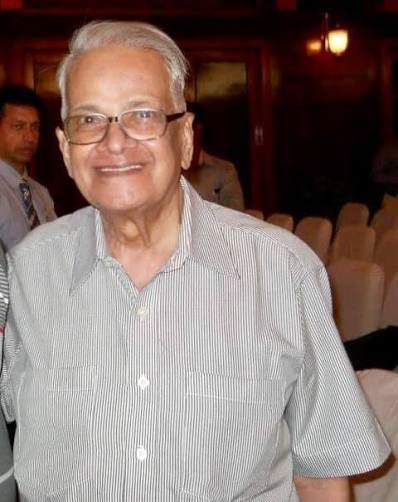
Madhav Vittal Kamath (widely known as M. V. Kamath) was a legendary Indian journalist, foreign correspondent, and author who stood as a towering pillar of objective print media for over seven decades. Renowned for his fearless editorial integrity, sharp geopolitical commentary, and prolific output of over 40 books, he served as the editor of the iconic Illustrated Weekly of India, shaping the intellectual and cultural consciousness of post-independence India.
2. Quick facts
- Full Name: Madhav Vittal Kamath
- Native Name: ಮಾಧವ ವಿಠ್ಠಲ್ ಕಾಮತ್ (Kannada) / माधव विठ्ठल कामत (Marathi/Konkani)
- Date of birth: September 7, 1921
- Place Of birth: Udupi, South Canara district, Madras Presidency, British India (present-day Karnataka, India)
- Nationality: Indian
- Occupation/ Profession: Journalist, Author, Foreign Correspondent, Editor
- Field of Achievement: Print Journalism, Editorial Leadership, and Media Ethics
- Years Active: 1946–2014
3. Award Information
- Award Name: Padma Bhushan
- Award Category: National Civilian Honour (Third-Highest Civilian Award in India)
- Award Year: 2004
- Presented By: Government of India (Conferred by the President of India)
- Date of Ceremony: Republic Day Investiture Ceremony, 2004
- Citation/Official Reason: Recognized for his distinguished contributions to journalism, literature, and public education, upholding the highest standards of the Indian press.
- Previous Recipients (optional): Eminent journalists, editors, and public intellectuals.
- Next Recipients: Conferred among notable national civic awardees.
4. Why they Receive the award?
M. V. Kamath received the Padma Bhushan for his lifelong dedication to ethical journalism, his fearless reporting during critical national and international junctures, and his mentorship of generations of young Indian reporters. He set a gold standard for independent editorial leadership that refused to bow to political or commercial pressures.
5. Early Life
Born into a Konkani-speaking family in Udupi, Karnataka, Kamath grew up with a deep respect for discipline, public service, and education. Initially trained in the physical sciences, his path shifted dramatically toward public affairs and writing during the high tide of the Indian freedom movement, instilling in him an abiding commitment to democratic values and national sovereignty.
6. Education
- Academic Background: Graduated with a Bachelor of Science (B.Sc.) degree in Physics and Chemistry from St. Xavier’s College, Mumbai, in 1941.
- Transition to Media: Rather than pursuing a career in pure science, he chose to enter the nascent world of journalism, embarking on rigorous self-education in political history, international relations, and economics.
7. Carrier Journey
- Early Reporting: Began his professional journalism career with The Free Press Journal in Mumbai (1946–1955), covering the momentous events surrounding India’s independence and partition.
- Global Correspondent: Served as a prominent foreign correspondent for The Times of India in Washington, D.C., and Europe (1967–1978), providing brilliant firsthand analyses of global superpower politics.
- The Illustrated Weekly Years: Served as the Editor of The Illustrated Weekly of India (1978–1981), transforming it into the country’s most widely read and intellectually stimulating news magazine.
- Later Roles: Served as the first Chairman of Prasar Bharati (India’s public service broadcaster) and Director of the Manipal Institute of Communication.
8. Major Achievements
- Authored more than 40 books spanning biography, political commentary, journalism ethics, and media history.
- Conferred India’s prestigious Padma Bhushan by the Government of India in 2004.
- Led The Illustrated Weekly of India to unprecedented journalistic heights and cultural influence during his tenure.
- Mentored dozens of prominent contemporary Indian journalists and media professionals.
9. Contribution to the nation
Kamath served as an uncompromising watchdog of Indian democracy. Through his columns and editorials, he championed freedom of speech, secularism, and institutional accountability. As an educator and head of communication institutes, he bridged the gap between academic theory and practical newsroom ethics, ensuring that future generations of journalists remained grounded in truth and public interest.
10. Other Awards and Honours
- Padma Bhushan (2004) – Government of India
- B.G. Horniman Award for Journalism
- Karnataka Media Academy Award
- Lifetime Achievement Awards from various national press clubs and academic councils.
11. Legacy and influence
M. V. Kamath is remembered as the “grand old man of Indian journalism”—a fearless crusader who believed that a journalist’s primary loyalty must be to the reader and the Constitution, never to power. His autobiography, Journalist’s Diary, and his manuals on journalism remain mandatory reading for students of mass communication. He passed away on October 9, 2014, leaving behind a pristine legacy of editorial courage.
12. Interesting Facts
- Scientist Turned Storyteller: Though he formally graduated with a B.Sc. in Physics and Chemistry, he completely pivoted to journalism, proving that scientific curiosity translates seamlessly into investigative inquiry.
- Decades of Non-Stop Writing: Even well into his 80s and 90s, he maintained a relentless daily schedule of writing op-eds, biographies, and historical assessments from his home base in Manipal.
- Witness to History: Having started his career in 1946, he personally witnessed and reported on the transition from British colonial rule through every major milestone of independent India’s history.
13. Quotes
“Journalism is not a business; it is a public trust. An editor must possess the courage to stand alone against the tide when truth demands it.” — M. V. Kamath
14. Timeline
- 1921: Born on September 7 in Udupi, Karnataka.
- 1946: Began his professional journalism career with The Free Press Journal.
- 1967–1978: Served as senior foreign correspondent in Washington, D.C.
- 1978–1981: Served as Editor of The Illustrated Weekly of India.
- 2004: Conferred the Padma Bhushan by the Government of India.
- 2014: Passed away on October 9 in Manipal, Karnataka at the age of 93.
15. References
- Wikipedia: M. V. Kamath Profile & Bibliography
- The Hindu: Veteran journalist M.V. Kamath passes away
- Rediff.com: M.V. Kamath Author and Journalist Archives
16. Related Personalities
- Khushwant Singh (Predecessor/Successor at The Illustrated Weekly of India)
- A. D. Gorwala (Pioneering independent Indian commentator and editor)
- Dr. T. M. A. Pai (Founder of Manipal Academy, close associate)
17. Frequency Asked Questions (FAQ)
- Q: Who was M. V. Kamath?
- A: He was a legendary Indian journalist, foreign correspondent, author, and former editor of The Illustrated Weekly of India.
- Q: What major civilian award did he receive?
- A: He was awarded the Padma Bhushan in 2004 by the Government of India for his contributions to journalism and literature.
- Q: How many books did he author?
- A: He wrote over 40 books covering political biographies, journalistic ethics, and Indian history.
About the Author




