

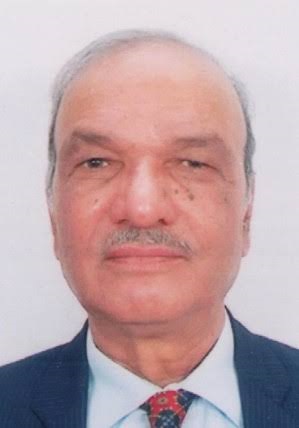
1. Introduction
Professor Shri Krishna Joshi was one of India’s most celebrated condensed matter physicists, an inspiring academician, and an exceptional science administrator. Over a career spanning more than six decades, he shaped the trajectory of Indian scientific research, steering premier bodies like the Council of Scientific and Industrial Research (CSIR) and the National Physical Laboratory (NPL). Famed for his simple living, high thinking, and strategic foresight, Prof. Joshi was a quintessential institution-builder who left an indelible footprint on India’s technological self-reliance.
2. Quick facts
- Full Name: Shri Krishna Joshi (Prof. S. K. Joshi)
- Native Name: श्री कृष्ण जोशी (Hindi)
- Date of birth: June 6, 1935
- Place Of birth: Anarpa village, Kumaun region, Almora, Uttarakhand, British India
- Nationality: Indian
- Occupation/ Profession: Physicist, Academic, and Science Administrator
- Field of Achievement: Condensed Matter Physics, Solid State Physics, and Atomic/Molecular Collisions
- Years Active: 1950s – 2020
3. Award Information
- Award Name: Padma Bhushan
- Award Category: India’s Third-Highest Civilian Award
- Award Year: 2003
- Presented By: Government of India (Conferred by the President of India)
- Date of Ceremony: Republic Day honors cycle, 2003
- Citation/Official Reason: For exceptional and distinguished service to science, engineering, and the promotion of higher technological research infrastructure in India.
- Previous Recipients (Examples): Prominent scientists, educationists, and public intellectuals.
- Next Recipients: Conferred annually as part of national civilian honors.
4. Why they Receive the award?
Prof. S. K. Joshi was conferred the Padma Bhushan—following his earlier Padma Shri in 1991—in recognition of his profound lifetime contributions to Indian physics and his pioneering administrative stewardship. Under his watch as Director General, CSIR underwent a critical restructuring phase coinciding with India’s economic liberalization, turning public laboratory research toward global competitiveness and industrial relevance.
5. Early Life
Born on June 6, 1935, in the remote Himalayan village of Anarpa in Kumaun, Uttarakhand, Joshi spent his early childhood navigating the tough terrain of the Himalayas. Coming from modest roots, he displayed an exceptional intellectual aptitude from a young age. His journey from a mountain village to the highest echelons of Indian science stands as an inspiring testament to grit, academic brilliance, and dedication.
6. Education
- Schooling: Completed rigorous foundational schooling across the hilly tracks of Uttarakhand.
- Undergraduate & Postgraduate Studies: Earned both his Bachelor of Science (B.Sc.) and Master of Science (M.Sc.) degrees in first class from Allahabad University.
- Doctoral Research: Pursued his Ph.D. in physics focusing on the measurement of diffuse X-ray scattering from organic crystals under the guidance of Prof. K. Banerjee, receiving his doctorate from Allahabad University in 1962.
7. Carrier Journey
- Early Academic Roles: Began his teaching career before serving as a Visiting Lecturer at the University of California, Riverside, USA (1965).
- Professor at Roorkee: Returned to India to join the University of Roorkee (now IIT Roorkee) as Professor of Physics, serving dynamically from 1967 to 1986.
- Director of NPL: Appointed as the Director of the National Physical Laboratory (NPL), New Delhi, serving from 1986 to 1991.
- Director General of CSIR: Served as the Director General of the Council of Scientific and Industrial Research (CSIR) and Secretary, Department of Scientific and Industrial Research (DSIR), Government of India (1991–1995).
- Later Years: Continued active research as a “Scientist of Eminence” and Sarabhai Research Professor at NPL, guiding national science bodies well into his later years.
8. Major Achievements
- Pioneering Physics Research: Published over 190 research papers focusing on phonons in metals, high-temperature superconductors, heavy fermions, and electron transport in quantum dots and nanotubes.
- Shanti Swarup Bhatnagar Prize (1972): Awarded India’s highest science award in the Physical Sciences category.
- Academy Leadership: Elected President of the Indian National Science Academy (INSA) (1993), the Indian Physics Association, and the Materials Research Society of India.
- Building Institutional Frameworks: Played a decisive role in shaping apex boards and steering committees for new IITs, IISERs, NISER, and research institutions across India.
9. Contribution to the nation
Prof. Joshi steered Indian scientific research through a crucial transitional era. During the early 1990s economic liberalization, he successfully guided CSIR to bridge the gap between academic theory and commercial industrial application. He emphasized national self-reliance, pushing for indigenous standards like the Bharatiya Nirdeshak Dravya (BND) reference materials, and laying down structural frameworks for modern nanotechnology and materials science laboratories in India.
10. Other Awards and Honours
- Padma Shri (1991) – Government of India
- Watumull Memorial Prize (1965)
- Shanti Swarup Bhatnagar Prize (1972)
- Meghnad Saha Award for Research in Theoretical Sciences (1974)
- FICCI Award in Physical Sciences (1990)
- Padma Bhushan (2003) – Government of India
- C.V. Raman Medal of INSA (1999)
- Kamal Kumari National Award (2011)
- Honorary D.Sc. degrees from multiple universities, including BHU and Kumaun University.
11. Legacy and influence
Prof. Joshi is remembered as a gentle giant of Indian academia—a rare combination of a rigorous theoretical physicist and a compassionate, visionary leader. His emphasis on creating comfortable ecosystem facilities for young scholars (such as hostels and campus guest houses at NPL) reflected his deep care for the student community. His legacy lives on through the generations of scientists he mentored and the high-learning institutions he helped construct.
12. Interesting Facts
- Himalayan Roots to National Labs: He often credited his early resilience to growing up walking through rugged mountain paths in Kumaun, a trait that helped him calmly weather complex administrative crises later in life.
- Simple Living, High Thinking: Despite holding some of the most powerful scientific offices in the country, Prof. Joshi remained profoundly humble, approachable, and deeply grounded in ethical simplicity.
- A Dedicated Mentor: Even after completing his tenure as DG of CSIR, he chose to spend his post-retirement hours working quietly out of a laboratory desk at NPL, preferring active scientific inquiry over retirement luxury.
13. Quotes
“Science is not merely a tool for economic output; it is an intellectual quest that demands absolute honesty, perseverance, and freedom of thought.”
(Reflecting on institutional growth): “An institution is built on the strength of the young minds it nurtures and the freedom it grants them to question established boundaries.”
14. Timeline
- 1935: Born on June 6 in Anarpa village, Uttarakhand.
- 1962: Receives his Ph.D. in Physics from Allahabad University.
- 1967–1986: Serves as Professor of Physics at the University of Roorkee (IIT Roorkee).
- 1972: Awarded the prestigious Shanti Swarup Bhatnagar Prize.
- 1986–1991: Serves as Director of the National Physical Laboratory (NPL).
- 1991: Conferred the Padma Shri; appointed Director General of CSIR.
- 1993: Serves as President of the Indian National Science Academy (INSA).
- 2003: Conferred India’s third-highest civilian honor, the Padma Bhushan.
- 2020: Passes away on May 15 in Gurugram, leaving behind an immortal legacy in Indian science.
15. References
- Council of Scientific and Industrial Research (CSIR) – Official Biographical Memoirs and Obituaries on Prof. S.K. Joshi.
- Ministry of Home Affairs, Government of India – Padma Awards Directories.
- Indian Academy of Sciences (IAS) & Indian National Science Academy (INSA) – Fellow Archives.
- Society for Promotion of Science and Technology in India (SPSTI) – Tributes and Biographical Retrospectives.
16. Related Personalities
- Dr. Shanti Swarup Bhatnagar (Pioneer of scientific research laboratories in independent India)
- Dr. A. P. J. Abdul Kalam (Visionary scientist, statesman, and contemporary of India’s high-tech era)
- Dr. R. A. Mashelkar (Renowned scientist and successor as Director General of CSIR)
- Prof. K. Banerjee (Distinguished crystallographer and doctoral advisor to Prof. Joshi)
17. Frequently Asked Questions (FAQ)
Q1: What is Prof. S. K. Joshi most famous for?
A: Prof. S. K. Joshi is renowned as a leading condensed matter physicist and for his impactful administrative leadership as the Director General of the Council of Scientific and Industrial Research (CSIR) during India’s economic transition in the 1990s.
Q2: What major civilian awards did he receive?
A: He received two major civilian honors from the Government of India: the Padma Shri (1991) and the Padma Bhushan (2003).
Q3: What were his primary fields of scientific research?
A: His research spanned solid-state physics, lattice vibrations (phonons), high-temperature superconductors, heavy fermions, and electron transport in nanotechnology and quantum dots.
About the Author




