

1. Introduction
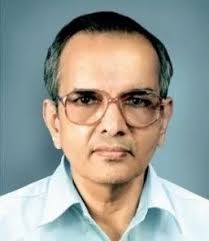
Dr. Suryanarayanan Srinivasan was an eminent Indian aeronautical engineer, space scientist, and the former Director of the Vikram Sarabhai Space Centre (VSSC). Often hailed as one of the chief architects of India’s launch vehicle technology, he played a foundational role alongside legends like Dr. A.P.J. Abdul Kalam in steering the Indian Space Research Organisation (ISRO) toward self-reliance. His structural mastery and propulsion expertise transformed India from a modest space experimenter into a globally recognized space-faring nation.
2. Quick Facts
- Full Name: Suryanarayanan Srinivasan (Dr. S. Srinivasan)
- Native Name: சூரியநாராயணன் சீனிவாசன் (Tamil)
- Date of Birth: April 14, 1941
- Place of Birth: Asikkadu, Mayiladuthurai district, Tamil Nadu (then Madras Presidency, British India)
- Nationality: Indian
- Occupation / Profession: Aeronautical Engineer, Space Scientist
- Field of Achievement: Aerospace Engineering and Rocketry
- Years Active: 1970–1999
3. Award Information (Focus: Padma Bhushan)
- Award Name: Padma Bhushan
- Award Category: Science and Engineering
- Award Year: 2000 (Conferred posthumously)
- Presented By: Government of India (President of India)
- Date of Ceremony: March/April 2000 (Rashtrapati Bhavan, New Delhi)
- Citation / Official Reason: For his distinguished service of a high order, pioneering research, and monumental contributions to the Indian space program and rocket development.
- Previous Recipients (Examples): Prominent space scientists, technocrats, and national figures.
- Next Recipients: Succeeding batches of science and engineering icons in subsequent national civilian announcements.
4. Why He Received the Award
Dr. S. Srinivasan was posthumously awarded the Padma Bhushan in recognition of his decades-long, untiring service to India’s space missions. From playing an instrumental deputy role in early satellite launch vehicle programs to serving as the captain of VSSC during the critical developmental phases of the Polar Satellite Launch Vehicle (PSLV), his visionary oversight ensured that India mastered complex launch mechanics independently.
5. Early Life
Born on April 14, 1941, in Asikkadu village within the Cauvery delta region of Tamil Nadu, Srinivasan exhibited a profound aptitude for exact sciences, mathematics, and mechanics early in life. Growing up in post-independent India, he harbored a deep passion for national development through technical self-reliance, channeling his academic discipline into the nascent fields of aviation and aeronautics.
6. Education
- Pursued rigorous higher education in engineering, specializing in aeronautics.
- Furthered his academic and research credentials, earning advanced degrees that equipped him with a deep theoretical understanding of fluid dynamics, propulsion systems, and aerospace structures—skills that proved vital for India’s space program.
7. Career Journey
- Entry into ISRO: Joined the Indian space endeavor during its formative years, quickly establishing himself as an expert in launch vehicle design, structural analysis, and composite materials.
- SLV-3 Mission: Worked closely alongside Dr. A.P.J. Abdul Kalam, serving as the deputy director for India’s first experimental Satellite Launch Vehicle (SLV-3) project.
- Director of VSSC (1994–1999): Assumed leadership as the Director of the Vikram Sarabhai Space Centre in Thiruvananthapuram, guiding the institution through its golden era of operational rocket launches, including the maturation of the PSLV.
8. Major Achievements
- Mastery over PSLV Development: Spearheaded engineering frameworks that turned the PSLV into one of the most reliable workhorse launch vehicles in the global space market.
- Rigorous Quality Control: Instrumental in establishing stringent testing mechanisms and systems engineering practices (such as institutionalized quality assurance frameworks) within ISRO infrastructure.
- Fellowships: Elected as a esteemed Fellow of both the Aeronautical Society of India and the Indian National Academy of Engineering (INAE).
9. Contribution to the Nation
Dr. Srinivasan’s engineering brilliance shielded India’s space program from technological embargoes. By developing indigenous rocketry capabilities, composite solid propellants, and multi-stage launch architectures, he enabled India to launch its own satellites affordably and autonomously. His leadership laid the technical bedrock for modern interplanetary missions and commercial satellite launches.
10. Other Awards and Honours
- Padma Bhushan (2000) by the Government of India.
- National Aeronautics Prize.
- FIE Foundation National Award.
- Fellowships from multiple prestigious scientific and technical bodies across India.
11. Legacy and Influence
Though his life was cut short when he passed away “in harness” on September 1, 1999, at the age of 58 in Chennai, Dr. Srinivasan’s legacy lives on deep inside the culture of ISRO. The Vikram Sarabhai Space Centre regularly organizes the annual Dr. S. Srinivasan Memorial Lecture to inspire young aerospace engineers and researchers. He is remembered affectionately by peers as a humble intellectual giant who lived entirely for the mission.
12. Interesting Facts
- Died in Harness: He remained actively committed to his responsibilities at the helm of VSSC right until his sudden passing in late 1999, just months before witnessing the final fruition of several major vehicle milestones.
- Visionary Mentor: Known for his exceptional command of the English language, his internal communications, write-ups, and technical briefs (“Countdowns”) served as intellectual roadmaps for generations of Indian scientists.
- Proponent of Future Tech: As early as the mid-1990s, he was already laying mental blueprints and encouraging discussions on advanced concepts like air-breathing propulsion systems and long-term interplanetary logistics.
13. Quotes
“True technological independence cannot be imported; it must be engineered, tested, and mastered on our own soil through collective grit and unwavering precision.” — Dr. S. Srinivasan (Reflecting his philosophy on indigenous space research)
14. Timeline
- 1941: Born on April 14 in Asikkadu, Tamil Nadu.
- 1970s: Began active contributions to India’s rocketry movement under ISRO.
- 1980s: Played key structural and developmental roles in early launch vehicle programs like the SLV-3.
- 1994: Appointed as the Director of the Vikram Sarabhai Space Centre (VSSC).
- September 1, 1999: Passed away at age 58 in Chennai, leaving the scientific community in deep mourning.
- 2000: Posthumously conferred the Padma Bhushan by the Government of India.
15. References
- Wikipedia Contributors. “S. Srinivasan.” Wikipedia, The Free Encyclopedia.
- Vikram Sarabhai Space Centre (VSSC) Official Archives. “Former Directors: Dr. S. Srinivasan.”
- T.S. Subramanian. “Pioneer of Indian rocketry.” Frontline Magazine.
- Ministry of Home Affairs, Government of India. Padma Awards Directory.
16. Related Personalities
- Dr. Vikram Sarabhai (Founding father of the Indian space program)
- Dr. A.P.J. Abdul Kalam (Former President of India and aerospace colleague)
- Dr. K. Kasturirangan (Former ISRO Chairman)
17. Frequently Asked Questions (FAQ)
Q1: Who was Dr. Suryanarayanan Srinivasan?
A: He was a leading Indian aeronautical engineer and the Director of the Vikram Sarabhai Space Centre (VSSC), widely recognized for his immense contributions to India’s satellite launch vehicle programs.
Q2: What was his primary contribution to ISRO?
A: He played a foundational role in developing India’s rocket technology, working closely on the SLV-3 and later directing VSSC during the crucial scaling phases of the PSLV program.
Q3: When was he honored with the Padma Bhushan?
A: He was posthumously awarded the Padma Bhushan in 2000 by the Government of India for his lifetime achievements in science and engineering.
Q4: Where did he spend his professional career?
A: He spent his entire professional career serving within the Indian Space Research Organisation (ISRO), predominantly anchored at VSSC in Thiruvananthapuram, Kerala.
About the Author




