

1. Introduction
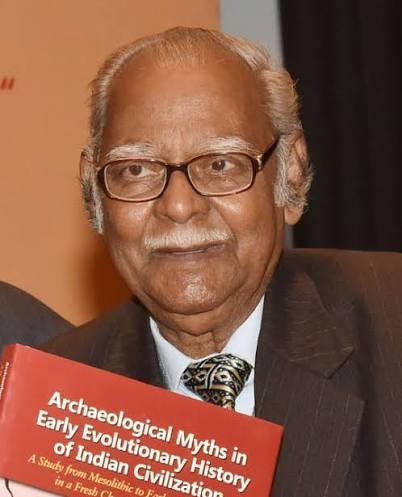
Prof. Braj Basi Lal (1921–2022), universally known as B. B. Lal, was one of India’s most pre-eminent and prolific archaeologists. Serving as the Director General of the Archaeological Survey of India (ASI) from 1968 to 1972, his career spanned over half a century of landmark excavations ranging from the Indus Valley Civilization to early historic and epic-linked sites. Renowned for his meticulous field methods and vast literary contributions, Prof. Lal reshaped our understanding of Indian antiquity, ancient river systems, and cultural continuity.
2. Quick Facts
- Full Name: Braj Basi Lal
- Native Name: ब्रजवासी लाल
- Date of Birth: May 2, 1921
- Place of Birth: Jhansi, United Provinces, British India (now Uttar Pradesh, India)
- Nationality: Indian
- Occupation / Profession: Archaeologist, Professor, Author, and Administrator
- Field of Achievement: South Asian Archaeology, Protohistory, and Epigraphy
- Years Active: 1940s–2022
3. Award Information (Focus: Padma Vibhushan)
- Award Name: Padma Vibhushan
- Award Category: Civil Honours (Second Highest Civilian Award in India)
- Award Year: January 2021
- Presented By: The President of India (at Rashtrapati Bhavan, New Delhi)
- Citation / Official Reason: Honored for his exceptional and distinguished service spanning decades in the field of archaeology and unearthing deep insights into India’s ancient heritage.
- Previous Recipients: Distinguished national leaders, scientists, artists, and statesmen.
- Next Recipients: Succeeding national laureates in subsequent years.
4. Why They Received the Award
Prof. B. B. Lal was awarded the Padma Vibhushan (following his earlier Padma Bhushan in 2000) in recognition of his lifetime dedication to uncovering India’s archaeological past. From his training under British archaeologist Mortimer Wheeler to directing massive national excavations at Kalibangan, Hastinapura, and Ayodhya, his work provided empirical foundations for studying ancient Indian history. His scientific rigor established modern standards for stratigraphic excavation and artifact preservation in South Asia.
5. Early Life
Born in Jhansi, Uttar Pradesh, in 1921, Lal grew up with an early appreciation for history and classical texts. His intellectual curiosity drove him toward the classical linguistic roots of India, setting the stage for an accidental yet historic entry into field archaeology under colonial-era pioneers during the 1940s.
6. Education
- Undergraduate & Post-Graduate Studies: Earned his Master’s degree in Sanskrit from Allahabad University, giving him deep proficiency in classical texts that later guided his epic-related archaeological surveys.
- Archaeological Training: Trained extensively in field excavation techniques under Sir Mortimer Wheeler starting at Taxila and Harappa in 1943.
7. Career Journey
- Early Fieldwork & Discoveries: Conducted major excavations including the Mesolithic site of Birbhanpur (West Bengal) and the Chalcolithic site of Gilund (Rajasthan).
- International Expeditions (Nubia, 1961–1962): Led the Indian Archaeological Expedition to Nubia (Egypt/Sudan) as part of the UNESCO international campaign to save antiquities threatened by the Aswan Dam, discovering crucial Middle/Late Stone Age tools and ancient cemeteries.
- Director General of ASI (1968–1972): Headed the Archaeological Survey of India, modernizing administrative protocols and driving field research nationwide.
- Academic Leadership: Served as Director of the Indian Institute of Advanced Study (IIAS), Shimla, and as Head of the Department of Studies in Archaeology at Jiwaji University, Gwalior.
8. Major Achievements
- Excavation of Kalibangan (1960–1969): Uncovered a major, well-planned provincial capital of the Indus Valley Civilization in Rajasthan, revealing unique pre-Harappan and Harappan layers, fire altars, and the world’s earliest ploughed agricultural field.
- Mahabharata and Ramayana Sites Projects: Led systematic excavations at epic-associated sites like Hastinapura (identifying Painted Grey Ware cultures) and later directed the “Archaeology of Ramayana Sites” project (1975–1976) covering Ayodhya, Bharadwaj Ashram, Chitrakoot, and Shringaverapur.
- The Saraswati River Research: Authored comprehensive studies on the desiccated course of the ancient Saraswati River, arguing for its ecological role in the evolution and migration patterns of early Indian civilizations.
9. Contribution to the Nation
Prof. Lal bridged the gap between literary traditions (such as the Vedas and epics) and hard archaeological data. His work gave Indians a tangible, scientifically grounded timeline of their civilizational history. By leading international missions and serving on UNESCO committees, he also firmly placed Indian archaeology on the global map.
10. Other Awards and Honours
- Padma Bhushan (2000): Conferred by the President of India for exceptional contributions to science and archaeology.
- Vidya Varidhi: Conferred by Nava Nalanda Mahavihara (1979).
- Mahamahopadhyaya: Conferred by Mithila Vishwavidyalaya (1982).
- Honorary Fellowship for Life: Asiatic Society of Bengal (1991).
- D.Litt. (Honoris Causa): Awarded by the St. Petersburg Academy of Sciences, Russia (1994) and Deccan College, Pune (2014).
11. Legacy and Influence
Prof. Lal is remembered as the doyen of Indian archaeology. He authored over 20 books and 150 research papers, many of which (such as The Earliest Civilization of South Asia and The Sarasvatī Flows On) remain foundational reading. His legacy lives on through academic endowments like the B. B. Lal Chair at IIT Kanpur and generations of researchers inspired by his field methods.
12. Interesting Facts
- Centenarian Scholar: Prof. Lal remained intellectually active, writing, reviewing, and publishing research well past his 100th birthday, passing away peacefully at the age of 101 in September 2022.
- Pioneering Foreign Mission: He led India’s first and only archaeological mission to rescue historical artifacts in Nubia, Africa, earning international acclaim.
13. Quotes
“Archaeology is not merely about digging up old pots and pans; it is about reading the silent language of our ancestors to understand the continuous thread of human civilization.” — B. B. Lal
14. Timeline
- 1921: Born on May 2 in Jhansi, Uttar Pradesh.
- 1943: Began archaeological training under Sir Mortimer Wheeler at Taxila and Harappa.
- 1950–1952: Excavated Hastinapura and established the sequence of Painted Grey Ware cultures.
- 1961–1962: Led the Indian Archaeological Expedition to Nubia, Egypt.
- 1968–1972: Served as Director General of the Archaeological Survey of India (ASI).
- 1975–1976: Directed excavations at key sites linked to the Ramayana.
- 2000: Awarded the Padma Bhushan by the Government of India.
- 2021: Conferred India’s second-highest civilian honor, the Padma Vibhushan.
- 2022: Passed away on September 10 in New Delhi at the age of 101.
15. References
- Wikipedia contributors. “B. B. Lal.” Wikipedia, The Free Encyclopedia.
- The Indian Express. “Who is B B Lal, the Padma Vibhushan awardee behind excavation at Ramjanmabhoomi site?” (September 2022).
- B. B. Lal. The Sarasvatī Flows On: The Continuity of Indian Culture. Aryan Books International, 2002.
- Archaeological Survey of India (ASI) Archives & Profile on Prof. B. B. Lal.
16. Related Personalities
- Sir Mortimer Wheeler (Renowned British archaeologist and early mentor)
- S. R. Rao (Fellow pioneering Indian archaeologist of the Indus Valley Civilization)
17. Frequently Asked Questions (FAQ)
- Q: What was B. B. Lal best known for in Indian archaeology?A: He is best known for his extensive excavations at Indus Valley sites like Kalibangan, his research on Mahabharata and Ramayana-related sites, and his leadership as the Director General of the ASI.
- Q: When did he receive the Padma Vibhushan?A: He was awarded the Padma Vibhushan in January 2021.
- Q: How long was his professional career?A: His active career spanned over seven decades, starting in the 1940s and continuing through research and publications until his passing in 2022.
About the Author




